A less plastic holiday: wrapping, glitter, trees, lights and gifts
From Thanksgiving to New Year, plastic turns up in the wrapping, the glitter, the tree and the lights. What the evidence says about each, which swaps are worth it, and which are just a different shade of plastic.
The holidays are when a lot of otherwise sensible people buy a plastic tree, cover it in plastic, wrap plastic in plastic-coated paper, sprinkle the lot with plastic dust, and call it tradition.
You don’t have to give any of it up to cut most of it. This guide goes through the season item by item, from the wrapping paper to the balloons, and sticks to what the evidence supports. Where the evidence is thin, or paid for by someone with a tree to sell, we say so.
Wrapping paper: the shiny stuff is the problem
Plain wrapping paper is paper. The trouble starts with the finishes that make it look festive: metallic foil, glitter and plastic coatings.
UK councils give a simple test. In Cornwall Council’s words: “If you scrunch paper into a ball and it stays scrunched (does not spring back), you can recycle it.” The same page says foil or glitter-decorated paper can’t be recycled and belongs in the rubbish bin.
The scrunch test is a rule of thumb, not a lab method. We couldn’t find any study checking how well it works. The German city of Jena’s waste service suggests a different check: coated paper shows “a thin plastic film” when you tear it. Rules also differ between places. Washington County, Oregon, takes wrapping paper that isn’t metallic-looking or lined with plastic or foil, and says “a small amount of glitter is ok”, where Cornwall says no glitter at all. Check your local programme before you assume any wrapping paper is accepted.

What works better:
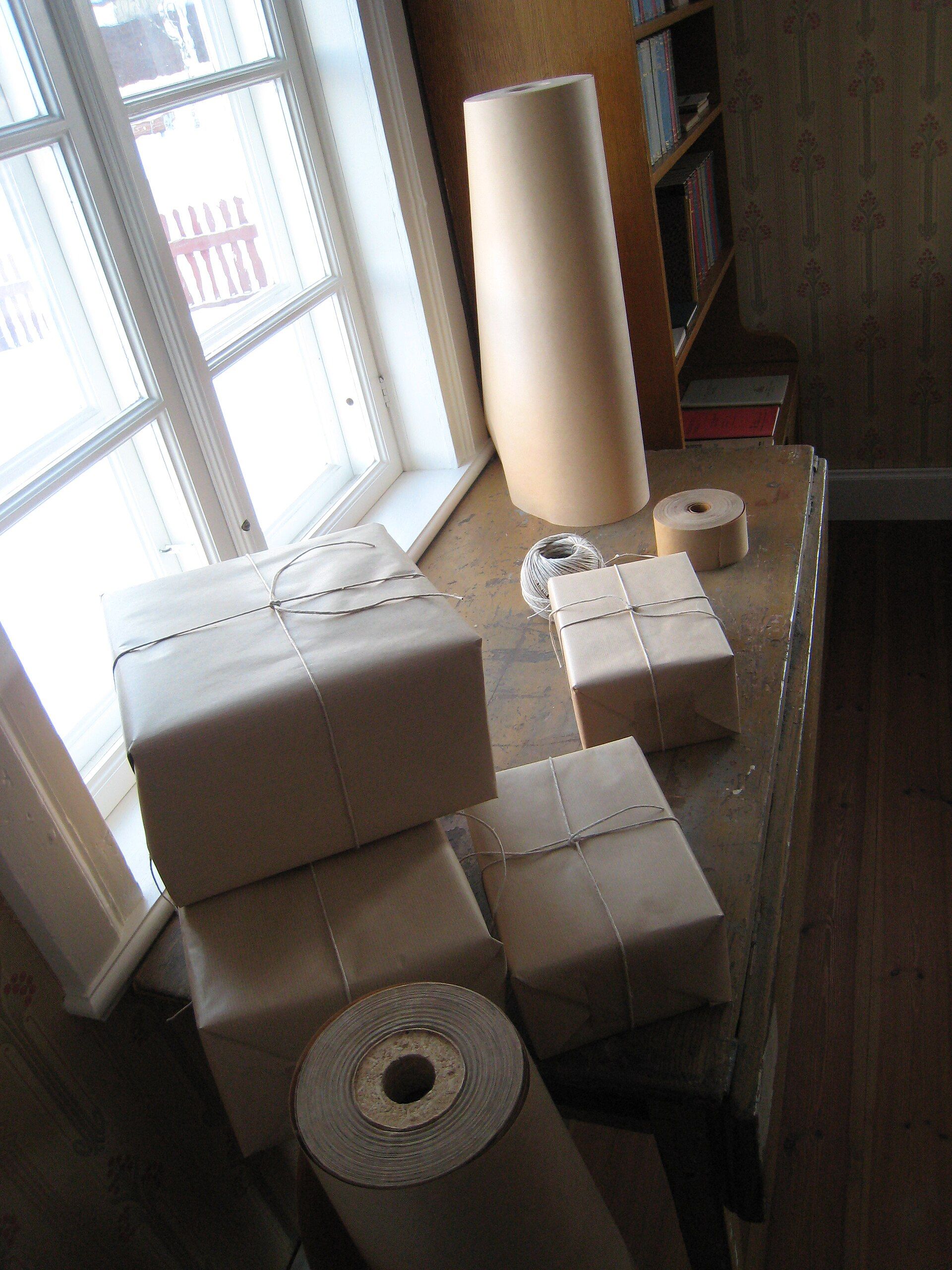
- Plain paper you already have. Brown kraft paper, old maps, sheet music, kids’ drawings, newspaper. If it passes the scrunch test and has no glitter, it can usually be recycled afterwards.
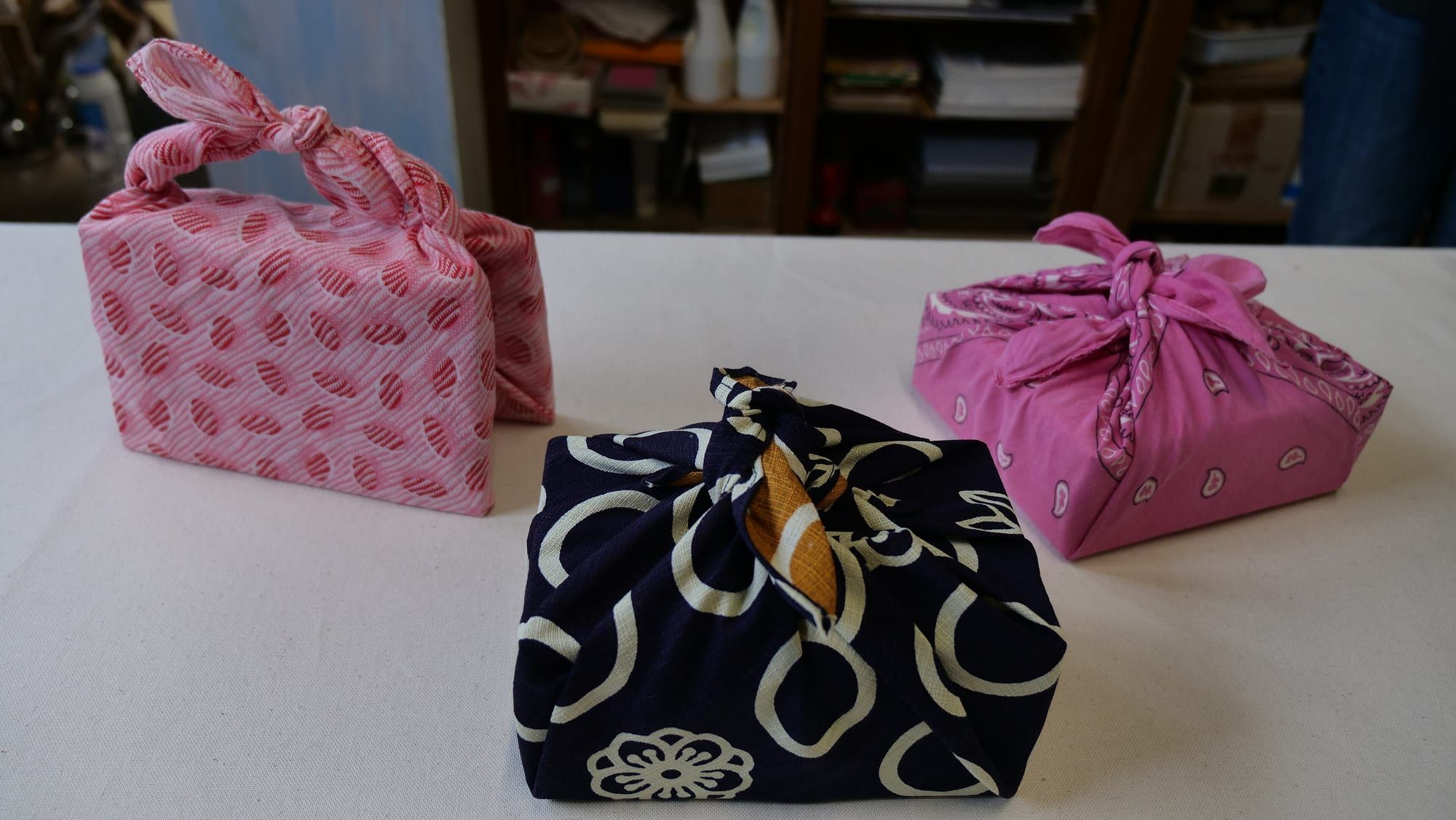
- Fabric. The Japanese tradition of wrapping in cloth, furoshiki, needs no tape at all: you fold and knot. In 2006 Japan’s environment ministry made a “Mottainai Furoshiki” to substitute for shopping bags and paper bags. (Its showcase cloth was printed on fabric made from recycled plastic bottles, which tells you how hard it is to escape plastic.) A cotton or linen scarf, tea towel or offcut works just as well, and the gift wrap becomes part of the gift.
- Reused bags and boxes. The paper gift bag you received last year will do it again.
Tape, ribbon and bows. Clear sticky tape is a plastic film, not paper. 3M’s safety data sheet for Scotch Magic Tape lists a cellulose acetate film backing and an acrylate adhesive; cellulose acetate is a plastic made from plant cellulose. Ribbons and bows come in fabric and plastic, and Washington County says “fabric and plastic ribbons and bows go in the garbage, not the recycling.” Use less tape, or a paper tape: gummed kraft tape and paper washi tape both exist. Tie parcels with string, yarn or fabric ribbon, and keep the bows you’re given. A bow that does ten Christmases is a decent bow.
Glitter: a microplastic with a party hat on
Conventional glitter is a tiny piece of plastic film. A 2019 study described glitter as single-use plastic “often made of polyethylene terephthalate” (PET, the plastic in drinks bottles) and found it in environmental samples around the world. A 2026 review describes glitter particles as flat and layered, made of polymers such as PET and PVC with metallic coatings and a range of additives.
Glitter is made to be small, so it’s a microplastic from the moment it leaves the tube. What does it do once it’s out there? The research is small but growing:
- In a 36-day experiment that recreated a freshwater stream habitat, glitter didn’t change the overall mix of species. But any type of glitter reduced the root length of duckweed and the amount of phytoplankton, and that included the “biodegradable” kind. The biodegradable glitter also doubled the numbers of New Zealand mud snails.
- In a lab test in soil, PET glitter cut springtail reproduction by 61%. Springtails are tiny soil animals. That was at a high dose (1,000 mg per kg of soil), so it shows what’s possible rather than what happens in your garden.
- In a seven-day exposure experiment published in 2026, small animals living in the water pools of bromeliad plants ate significant amounts of glitter, most of all mosquito and midge larvae, and particles were found breaking up inside them.
The 2026 review pulled together 15 experimental studies. It found that glitter doesn’t behave as one single pollutant, and that chemicals leaching out often did more harm than the particles themselves. The review also says there are big gaps in what’s known about how much glitter is actually in the environment, especially biodegradable glitter.
For people, the evidence we found is reassuring on skin contact, at least for metals. A Brazilian lab study found the metals in glitter, mostly from pigments, were below Brazil’s limits and didn’t come off in amounts that pose a risk through the skin. The same study flagged glitter as a way for metals to travel in water, so the main concern is environmental.
What about “plant-based” or “biodegradable” glitter?
The “biodegradable” glitter in these studies was modified regenerated cellulose: plant fibre that has been chemically processed and given a coloured coating. It’s an improvement on PET in principle, but it isn’t proven harmless. In a duckweed study, fresh cellulose glitter at high concentrations reduced root length, growth and chlorophyll, possibly because of metals found in it, while PET had little effect. The authors suggest the effects may fade as the coating breaks down.
A newer material, glitter made from cellulose nanocrystals that gets its colour from structure rather than metal coatings, had no significant effects on springtails in the same study where PET cut their reproduction. That’s one promising study, not a clean bill of health.
So “biodegradable” glitter isn’t a free pass, and our guide to biodegradable claims explains why the word does so much work on packaging. The reliable fix is less glitter: on cards, wrapping, ornaments and faces.
Real or artificial tree?

What an artificial tree is made of
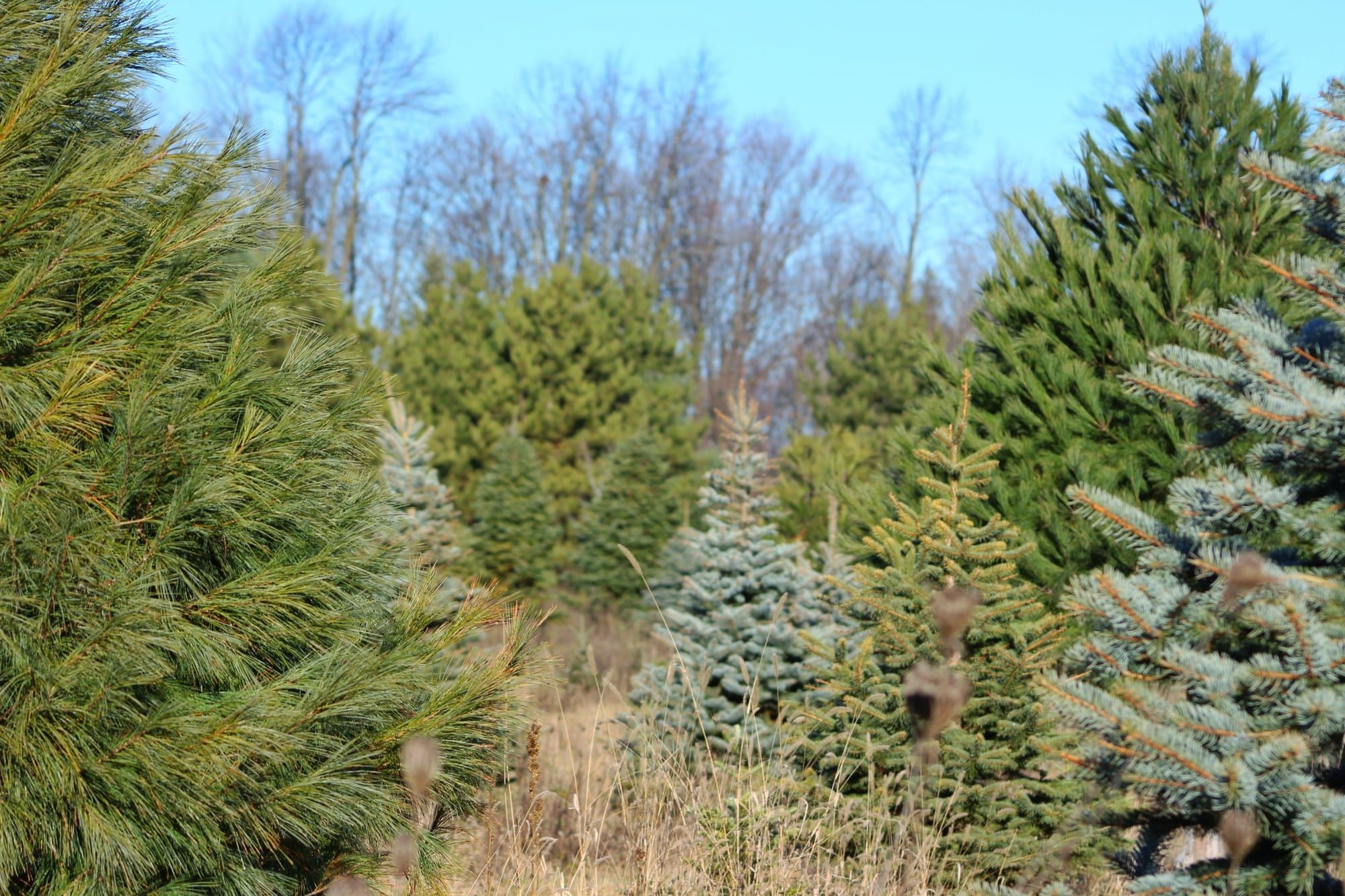
An artificial tree is a petrochemical product. The industry’s own life-cycle study describes its model tree as primarily steel, PVC and polypropylene: PVC film cut and combined with steel wire to make the branch tips, polypropylene yarn attached to the tips, and an injection-moulded PVC stand. Of the tree’s raw materials, PVC was the largest source of environmental impacts, followed by steel sheet.
PVC can contain lead, which has been used to stabilise it. A 2004 study tested artificial trees in the lab for lead in the branches, on hands after touching them, and in dust under the tree, and surveyed trees in homes. It concluded that the average tree didn’t pose a significant exposure risk, but in worst cases a substantial risk to young children was “quite possible”. That study is more than 20 years old and we found no newer published study, so we can’t say whether trees sold today are better or worse. An old artificial tree is not a reason to panic. It is a reason to wash your hands after putting it up and keep toddlers from chewing it.
The life-cycle studies, and who paid for them
You’ve probably seen the claim that an artificial tree is greener if you keep it for about five years. It comes from a 2018 study commissioned by the American Christmas Tree Association, which represents artificial tree makers. It found the break-even point was 4.7 years. One of its three outside reviewers was a senior director at the American Chemistry Council, the chemical and plastics industry’s trade body. The consultancy that did the study picked the panel, and two of the three reviewers had also worked on the association’s earlier 2010 study.
That doesn’t make the study wrong. The review panel concluded it conformed to ISO 14044, the international standard for life-cycle assessments. But read the whole conclusion: the same report says that, tree for tree, one real tree “generates fewer environmental impacts than one artificial Tree”. The artificial tree only catches up if you keep it for years.
A 2009 study by the Canadian consultancy Ellipsos came out differently. We couldn’t get hold of the report itself, so we rely on a 2018 review by Dovetail Partners, which doesn’t say who paid for it. Across 15 impact categories, the artificial tree did worse in seven and real trees did worse in seven. On climate, an artificial tree kept for six years had impacts more than 1.5 times those of six real trees. It would take about 20 years for the artificial tree to match. Assumptions matter, though. That study assumed real trees were burned for energy afterwards, as was common in Montreal, and that the tree lot was 3 miles from home. At 10 miles, the artificial tree came out ahead, as long as it was kept for six years or more.
Real trees aren’t impact-free
The industry study found that growing the tree (planting, fertilising, watering) was the biggest source of a real tree’s impacts, and what you do with it afterwards drives its greenhouse gas footprint. A cut tree also releases scent chemicals indoors. One lab-chamber measurement of a single freshly cut Douglas fir found its emissions were briefly comparable to air fresheners but fell sharply within days, with a small rise in formaldehyde when ozone was added.
The fair summary: if you already own an artificial tree, keep using it for as long as it lasts. Throwing it out to buy a real one wastes the plastic you’ve already paid for. If you’re buying new, a real tree from nearby, collected in a short drive and composted or chipped through a municipal scheme afterwards, is the lower-plastic choice. A living potted tree you replant is another option.
Lights, tinsel and decorations

Christmas light cords are commonly jacketed in PVC, and lead has been used as a stabiliser in that coating. A 2008 study tested new and old light sets and found lead on every sample. By the authors’ rough estimates, surface lead on the strings exceeded the EPA’s clearance level for window sills. The authors also wrote that whether this affects blood lead levels “is unknown”, and that at the time no standard existed for lead in Christmas lights.
What the Prop 65 label means
Some light sets carry a California Proposition 65 warning. Prop 65 requires businesses to warn people before exposing them to a chemical “known to the state to cause cancer or reproductive toxicity”. No warning is needed if the business can show exposure falls below set levels. For carcinogens, that means no more than one extra cancer case in 100,000 people exposed over 70 years.
What the label doesn’t mean: California’s Attorney General says a warning “is not the same as a regulatory decision that a product is ‘safe’ or ‘unsafe’”. It isn’t a test result either: a warning is required unless the business shows exposure falls below the threshold, so a label doesn’t tell you anyone measured how much lead you’d be exposed to. A set without the label isn’t proof of anything, especially if it was sold outside California or years ago.
Practical steps: wash your hands after handling lights and an older artificial tree, especially before eating or cooking. Keep cords away from babies and toddlers. When a set dies, don’t put it in the recycling bin. Washington County, Oregon, says string lights tangle in the sorting equipment and should go to a drop-off recycling centre instead.
LEDs also matter for energy. In the PE Americas study (paid for by the artificial tree association) as summarised by Dovetail, a 400-bulb incandescent string used each season produced 1.5 to 3.5 times the carbon of a real tree’s whole life cycle, and LEDs about a fifth of that.
Tinsel and plastic ornaments. Tinsel is plastic or aluminium, and old tinsel can even contain lead. Jena’s waste service tells residents to put plastic and aluminium tinsel in general waste and tinsel containing lead in hazardous waste, and suggests avoiding tinsel altogether. None of the council guides we read accept it for recycling. The lowest-plastic decorations are the ones you already own, plus anything made of glass, metal, wood, paper, wool, dried fruit or pine cones. Keep them, reuse them, and buy secondhand.
Balloons, gift cards and party plates
Balloons. In a study of 1,733 seabirds of 51 species, balloons were the highest-risk debris item: swallowing one was 32 times more likely to kill a bird than swallowing hard plastic. A 2025 analysis of more than 10,000 necropsies found that rubber was the riskiest type of plastic for seabirds. Skip balloon releases entirely. Paper garlands, bunting and candles do the job indoors.
Gift cards. A plastic gift card is a single-use plastic object that delivers a number. An e-card or a printed paper voucher delivers the same number.
Party tableware. Disposable plates, cups and cutlery are the obvious target. Borrow plates, or pick up mismatched secondhand dishes and keep them for parties. Be wary of “bamboo” plates; our melamine and bamboo dinnerware guide explains why. “Compostable” plates only compost where a facility takes them (see our guide to biodegradable claims).
Holiday food. The feast brings in its share of packaging. We’ve covered the swaps in detail: shopping with less plastic, storing leftovers without cling film and takeout containers. And on sorting the recycling afterwards, read what the recycling symbols actually mean before you wish-cycle the lot.
Gifts that replace plastic
The best plastic-cutting present replaces something plastic in someone’s daily life for years. We don’t recommend brands here. These are types of things, and our linked guides explain what to look for.
- A stainless steel or cast-iron pan to replace a worn nonstick one. See nonstick pans and PFAS.
- A French press or stainless pour-over in place of a pod machine. See coffee makers and plastic.
- Glass or stainless food storage, and cotton or linen cloths for covering bowls and wrapping bread. See food storage without cling film.
- A wooden cutting board or wooden utensils. See cutting boards and microplastics.
- Natural-fibre clothing: wool, cotton, linen. See synthetic clothes and microplastic shedding.
- Wooden, cloth or metal toys for small children, instead of soft PVC. See plastic toys and phthalates.
- Experiences and consumables: a meal, a class, tickets, homemade food in a jar.
More swaps are in our kitchen guide, and if money’s tight this year, start with less plastic on a budget. Most of it is free.
The short checklist
- Wrap in paper that passes the scrunch test, or in cloth. No foil, no glitter. String instead of tape where you can.
- Cut the glitter. “Biodegradable” glitter isn’t proven harmless; less is the real fix.
- Keep the tree you have. If you’re buying, a nearby real tree that gets composted or chipped is the lower-plastic choice.
- Wash your hands after decorating. Lights and older artificial trees can carry lead. A Prop 65 label is a warning, not a verdict.
- No balloon releases, no plastic gift cards, real plates at parties.
- Give something that replaces plastic for years.
Sources
- Cornwall Council (2026). Wrapping paper (recycling items). cornwall.gov.uk.
- Kommunalservice Jena (city of Jena waste service) (2025). Waste disposal during the holidays. ksj.jena.de.
- Washington County (Oregon) Solid Waste & Recycling (2026). Holiday Recycling Guide. washingtoncountyor.gov (undated PDF).
- 3M United Kingdom PLC (2006). Material Safety Data Sheet: Scotch #810 Magic Tape (document 08-7615-1). 3M UK, issued 25 Sep 2006 (copy hosted by officestationery.co.uk).
- Ministry of the Environment, Japan (2006). Ministry of the Environment presents 'Mottainai Furoshiki' to the Japan Team. env.go.jp (11 May 2006).
- Yurtsever M (2019). Tiny, shiny, and colorful microplastics: Are regular glitters a significant source of microplastics?. Marine Pollution Bulletin.
- Futia S, Pastorino P, Solé M, Caldaroni B, Gentile R, Dörr AJM, Prearo M, et al. (2026). Ecotoxicological Effects of Conventional and Eco-Friendly Glitter: A Literature Review. Biology (Basel).
- Green DS, Jefferson M, Boots B, Stone L (2021). All that glitters is litter? Ecological impacts of conventional versus biodegradable glitter in a freshwater habitat. Journal of Hazardous Materials.
- Boots B, Green DS, Olah-Kovacs B, De Falco F, Lupo E (2023). Physical and chemical effects of conventional microplastic glitter versus alternative glitter particles on a freshwater plant (Lemnaceae: Lemna minor). Ecotoxicology and Environmental Safety.
- Chen PH, Droguet BE, Lam I, Green DS, Vignolini S, Gu Z, De Silva S, et al. (2024). Assessing the ecotoxicological effects of novel cellulose nanocrystalline glitter compared to conventional polyethylene terephthalate glitter: Toxicity to springtails (Folsomia candida). Chemosphere.
- de Oliveira AC, Drummond LO, De Grande S, Nuvoloni FM (2026). Glitter ingestion by bromeliad-dwelling macroinvertebrates: implications for freshwater microplastic contamination. Environmental Toxicology and Chemistry.
- Meirelles JV, de Almeida RF, Morgado AJ, de Castro TB, Rocha RCC, et al. (2024). Metal and metalloid content, bioavailability and sorption processes in glitter and raw glitter materials and associations with human and ecological risk concerns. Journal of Trace Elements in Medicine and Biology.
- WAP Sustainability Consulting, for the American Christmas Tree Association (2018). Comparative LCA of the Environmental Impacts of Real Christmas and Artificial Christmas Trees (public version). American Christmas Tree Association (study completed October 2017, critical review March 2018).
- Bowyer JL, Groot H, Erickson G, Henderson C, Pepke E, Howe J, Fernholz K (2018). Environmental Assessment of Natural vs. Artificial Christmas Trees (Consuming Responsibly Report No. 3). Dovetail Partners (19 November 2018).
- Maas RP, Patch SC, Pandolfo TJ (2004). Artificial Christmas trees: how real are the lead exposure risks?. Journal of Environmental Health.
- Laquatra J, Coyne LM, Pierce MR (2008). Lead in Christmas lights. Journal of Environmental Health.
- California Department of Justice, Office of the Attorney General (2026). Proposition 65: frequently asked questions. oag.ca.gov.
- Poppendieck D, Robertson R, Link MF (2024). Jingle bells, what are those smells? Indoor VOC emissions from a live Christmas tree. Indoor Environments.
- Roman L, Hardesty BD, Hindell MA, Wilcox C (2019). A quantitative analysis linking seabird mortality and marine debris ingestion. Scientific Reports.
- Murphy EL, Baechler BR, Roman L, Leonard GH, Mallos NJ, Santos RG, et al. (2025). A quantitative risk assessment framework for mortality due to macroplastic ingestion in seabirds, marine mammals, and sea turtles. Proceedings of the National Academy of Sciences.
Spotted an error? Tell us and we'll correct it and note the change.