Melamine and "bamboo" dinnerware: plastic dressed up as natural
Most bamboo cups and kids' plates are melamine-formaldehyde plastic with plant powder mixed in. What leaks out with heat and acid, why the EU pulled them, and what to use instead.
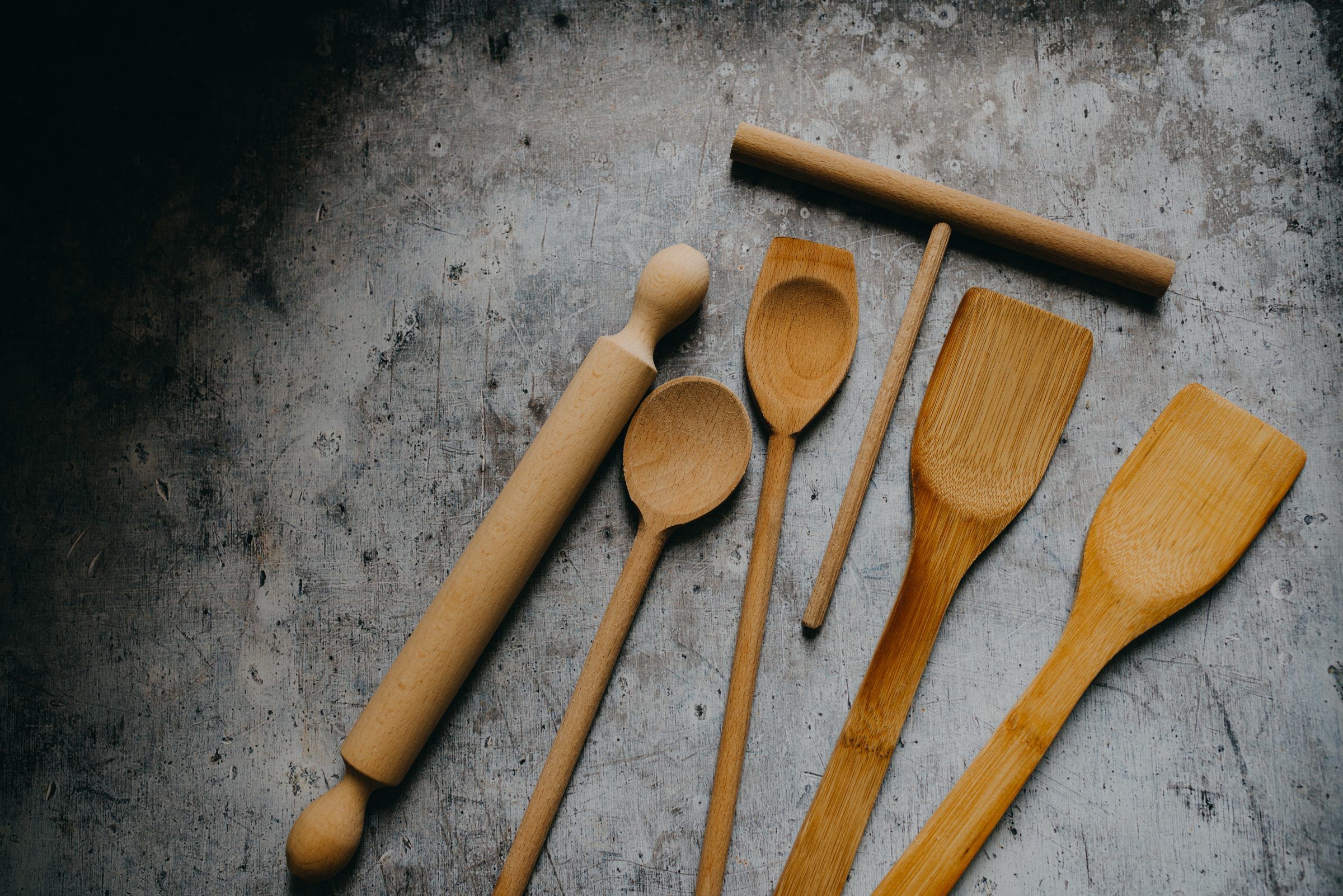
The pitch is lovely. A cup made from bamboo, one of the fastest-growing plants on Earth. A kids’ plate in pastel colours that won’t shatter on the kitchen floor and will, according to the box, “biodegrade” when you’re done with it.
The reality is less lovely. Most “bamboo” cups, bowls and kids’ plates are plastic. Specifically, they are melamine-formaldehyde resin, a hard plastic made from two chemicals you don’t want in your soup, with ground bamboo stirred in as filler. Germany’s Federal Institute for Risk Assessment (BfR) puts it plainly: products sold as “bamboo ware” generally consist of melamine-formaldehyde resin with bamboo fibres as filler, and “Nevertheless, these are plastic products.”
This guide covers what melamine dinnerware is, what leaks out of it and when, why Europe went after the bamboo versions, and what to put in front of your kids instead.
What melamine dinnerware actually is
Melamine-formaldehyde resin (often shortened to MF, MFR or “melaware”) is a thermoset plastic. The two building blocks, melamine and formaldehyde, are reacted together with heat and pressure into a rigid, glossy, shatterproof material. That’s why it dominates picnic sets, camping gear, cafeterias and children’s tableware. The BfR notes that the production of the plastic always includes the addition of fillers, traditionally cellulose. Swap the cellulose for bamboo powder and you have “bamboo ware”.
The same trick turns up with other plant fillers: wheat straw, rice husk, coffee grounds. A review of these “plant fibre/plastic composites” points out that they still depend on plastic resins and additives that may pose food safety risks, and that excessive migration of substances such as melamine has been reported in some. The plant part is real. It’s just not what holds the thing together.
“Biodegradable” it is not
Melamine-formaldehyde is a cross-linked thermoset. It doesn’t melt, can’t be conventionally recycled and doesn’t rot. The BfR says marketing descriptions of bamboo products as “particularly environmentally friendly, biodegradable or made exclusively from renewable raw materials” are incorrect, because MFR is a non-biodegradable plastic “even if alternative fillers are added to it”. When Stiftung Warentest, Germany’s consumer testing foundation, tested bamboo cups in 2019, it found melamine resin in every one of the 12 cups, and called out a “biologisch abbaubar” (biodegradable) claim as misleading.
So the eco pitch fails on its own terms before we even get to health. For more on how “plant-based” and “biodegradable” labels are used, see our guide to bioplastic greenwashing.
What leaks out, and what makes it worse
A well-made melamine plate at room temperature is fairly stable. The problems start with three things: heat, acid and age.
Heat and acid
Melamine resin isn’t perfectly locked together. Some leftover monomer is there from manufacture, and the polymer itself can break back down. Both release melamine and formaldehyde into food.
- In Danish tests, 7 of 10 melamine items released formaldehyde, melamine or both into a hot acidic food simulant. All stayed within the EU limits in force at the time (30 mg/kg for melamine, since cut to 2.5) under the standard test, but migration continued over the items’ lifetime. The ratio of formaldehyde to melamine changed over time, which the authors read as early release of leftover monomer giving way to breakdown of the plastic itself.
- BfR scientists testing melamine cooking spoons at 100 °C found that how much melamine came out depended directly on the resin’s quality, meaning the kind of chemical bridges formed when it was cured. You can’t see that on a shelf.
- The BfR says high temperatures degrade the material, and that this shows up as the surface losing its shine. Surface damage speeds things up, especially with acidic foods such as many fruits and vegetables.
The US Food and Drug Administration takes a softer line than the BfR but agrees on the mechanism: when highly acidic foods are heated to 160 °F (about 71 °C) or higher, melamine migration can increase.
Age
Old melamine is worse melamine. An Italian study of 90 items tested new, used and artificially aged tableware, and found that migration was tied to progressive degradation of the resin, with the melamine limit exceeded after ageing. A 2021 Norwegian market survey found only one of 30 items over the melamine limit on standard testing. But the testers estimated that up to about two-thirds might fail the EU’s newer requirement that migration must not rise across repeated tests.
That’s the pattern: new melamine often passes the official test. Used melamine, the stuff in your cupboard, is the open question.
Does it end up in people? Yes, measurably
Lab simulants are one thing. Two crossover studies have checked what happens when real people eat from melamine.
The Taiwan noodle soup study
In 2013, researchers in Kaohsiung, Taiwan, gave 12 healthy volunteers hot noodle soup in melamine bowls, then in ceramic bowls, switching groups after three weeks. According to the research letter, the volunteers excreted an average total of 8.35 µg of melamine in their urine over the next 12 hours after the melamine bowls, against 1.31 µg after ceramic. It was one brand of bowl and a small group, and nobody measured health effects.
For scale: the European Food Safety Authority’s tolerable daily intake for melamine is 0.2 mg per kilogram of body weight, which works out to 12 mg a day for a 60 kg adult. One bowl of soup sat far below that. The study’s point wasn’t that one breakfast poisons you. It was that hot food in melamine moves melamine into people, which the lab tests predicted.
A bigger, newer replication
In 2024, a Chinese team ran an 8-day randomised crossover with 27 volunteers who used melamine and stainless-steel tableware in turn. Using melamine raised urinary melamine by 42.1%, cyanuric acid by 66.9% and ammelide by 36.2%. Cyanuric acid and ammelide are melamine’s chemical relatives, and that matters because melamine and cyanuric acid together form crystals more readily than either alone. In the same study, students who ate in a canteen that used melamine tableware had 1.47 times higher median levels of these compounds than local residents.
Why “bamboo” versions are worse
You might assume the plant filler is harmless padding. The tests say it makes things worse.
- The BfR found that products sold as “bamboo ware” release on average significantly more melamine and formaldehyde than conventional melamine. By its calculations, formaldehyde from some bamboo-ware cups would exceed the tolerable daily intake 30-fold for adults and 120-fold for toddlers with regular use.
- Stiftung Warentest filled 12 bamboo cups seven times with a hot, slightly acidic test liquid (3% acetic acid at 70 °C for two hours) and found that 7 of the 12 released too much melamine or formaldehyde. Four cups released high melamine by the third fill and three more by the seventh. Some released even more after the seventh fill: the chemicals didn’t wash out with use.
- The Dutch food safety authority tested 46 bamboo/melamine cups in 2019. 88% complied with the formaldehyde limit, but some released over 200 mg/kg, more than 13 times the 15 mg/kg limit. The authors calculated that at 0.4 litres of drink a day, the health-based limit is exceeded at 19 mg/kg. They argued the legal limit doesn’t adequately protect babies and young children.
- A 2024 Chinese study of 46 bowls and cups ranked total migration as bamboo > plain melamine > wheat straw > glass or ceramic. Using a strict worst-case model, it estimated that 92.3% of bamboo items and 53.5% of melamine items could push an adult past a safe intake, rising to 100% and 86% for a one-year-old. That’s a screening estimate, not a measurement of harm, but the ranking is consistent with the European data.
There’s a fair counterpoint. A 2021 commentary argued that the Dutch assessment ignored how much formaldehyde the body makes on its own and so exaggerated the risk. Formaldehyde is indeed a normal product of metabolism. But that argument is about how big the formaldehyde risk is. It doesn’t explain the melamine results, the degradation or the false labels.
Europe’s crackdown
Here’s the legal problem, separate from the chemistry. In the EU, plastic that touches food may only contain substances on an approved list. Bamboo powder isn’t on it. The European Commission says plastic food-contact materials containing bamboo and other plant-based additives are not authorised and are not on the Union list under Regulation (EU) 10/2011.
After a rise in alerts through RASFF, the EU’s rapid alert system for food and feed, the Commission and member states met in May 2021, and a coordinated enforcement action followed. The Netherlands, Belgium, Luxembourg and other countries actively banned the products from their markets. The coordinated action, which the Commission calls “Bamboo-zling”, ran until April 2022 across 21 countries. It found 748 cases: 644 products on the EU market and 104 shipments rejected at the border. 580 of the 644 market cases were sold online, sometimes exclusively. The Commission said there is “no acute health risk”, but that continual exposure to elevated formaldehyde and melamine “has the potential to cause a health concern”. It also called the eco marketing misleading.
Two lessons. First, if regulators in 21 countries spent around a year pulling these off the market, the “natural” label is not a safety signal. Second, most of what they caught was sold online, which is exactly where a lot of kids’ tableware is bought. Outside the EU, rules vary, and bamboo-melamine is still easy to find.
The kidney question, and the 2008 scandal
Melamine’s reputation comes from a disaster that has nothing to do with dinnerware, so let’s be clear about the difference.
In 2008, melamine was deliberately added to diluted milk in China to fake its protein content. Kidney and urinary tract problems, including kidney stones, affected about 300,000 infants and young children, with six reported deaths. That was food fraud at enormous doses. The BfR notes that the amounts those infants consumed were “several orders of magnitude higher” than what migrates from tableware. Your melamine bowl is not tainted formula.
What the scandal did establish is how melamine harms: it forms crystals in the urine, especially alongside cyanuric acid, and those crystals damage the kidneys. EFSA set its tolerable intake on animal data, and noted that it isn’t protective when cyanuric acid is present too.
Whether everyday low-level exposure matters is less settled. The evidence is suggestive and observational:
- In a Taiwanese case-control study of 211 people with calcium kidney stones and 211 matched controls, those with the highest urinary melamine had a 7.64-fold higher adjusted risk of stones than those with none detectable. Melamine was also found in the stones of nine patients.
- Workers in melamine-tableware factories had higher urinary melamine, which was associated with a marker of kidney tubule injury. Their exposure was mainly airborne, far above anything at a dinner table.
- Among 293 people with early chronic kidney disease, those in the highest third of urinary melamine had a 2.30-fold higher risk of their creatinine doubling over about seven years.
- In 379 US children aged 4 to 8, higher melamine was linked to a 76% higher level of the kidney injury marker KIM-1 in boys, but not in girls.
None of these shows that melamine dishes cause kidney disease. They are associations, the first three come from one Taiwanese research group, and melamine comes from many sources besides tableware. But they’re the reason regulators keep cutting the limits. The EU dropped its melamine migration limit to 2.5 mg per kilogram of food in 2011, after EFSA’s opinion. EFSA itself had warned that children’s exposure from food contact materials could be below or in the region of the tolerable intake. Children are the group most likely to eat off melamine every day.
On formaldehyde, the BfR says it causes cancer in the nose and throat when inhaled, but that no cancer was observed when it was swallowed. Long-term animal studies did show stomach irritation and cell growth. The case against it in dishes rests on irritation and on exceeding intake limits, not on cancer.
The microwave rule
This is the one point every agency agrees on: never microwave melamine.
- The FDA says foods and drinks should not be heated on melamine-based dinnerware in microwave ovens.
- The BfR says melamine and bamboo ware are unsuitable for heating food in the microwave.
- A Thai study found that repeated one-minute microwave heating pushed melamine plates past the EU’s overall migration limit after just 25 cycles, cutting their usable life by more than ten times compared with ordinary heating. Short, repeated blasts were the worst, which is exactly how people reheat leftovers.
The BfR goes further than the FDA. It advises against using melamine for any hot food or drink: soup, coffee, cooking ladles, or bowls for preparing infant formula. It says there are no health concerns for cold or lukewarm food. We think the BfR line is the right one to follow. For the wider picture on heating plastic, see our guide to “microwave-safe” labels.
How to spot it
The BfR notes there’s no obligation to label melamine tableware as such, so you’re often guessing. Red flags:
- “Bamboo fibre”, “bamboo composite”, “eco bamboo”, “plant-based” or “wheat straw” on a cup, plate or bowl that is smooth, glossy, brightly coloured and moulded in one piece. Real bamboo is carved, turned or woven, and it looks like wood. The BfR says products labelled as bamboo ware can generally be assumed to be melamine resin.
- “Melamine”, “MF”, “MFR” or “melaware” on the base or packaging.
- “Not microwave safe” or “do not use above 70 °C” printed on a kids’ set. That’s the manufacturer telling you it’s a heat-sensitive plastic.
- “Biodegradable” on something hard and shiny. If it would survive the dishwasher for years, it’s not going to compost in your garden.
- Dull, scratched, stained or crazed surfaces on old melamine. That’s the degradation the BfR describes. Replace these first.
Solid bamboo (a bowl turned from a piece of bamboo, or bamboo utensils) is a different material, but it’s not automatically clean either. A review of wood and bamboo food-contact items flags paints, coatings and preservatives as possible sources of contaminants, including heavy metals from coatings. Look for unfinished or food-safe oiled items rather than lacquered or painted ones.
What to use instead, especially for kids
Our product standard treats melamine and bamboo-fibre composites as plastic, and doesn’t list them for anything that touches food. Here’s what we’d reach for, roughly in order of how well the evidence supports it:
- Stainless steel. Unbreakable, light, dishwasher-proof, and no resin to break down. It’s the comparison material in the 2024 crossover study, and the obvious swap for toddler plates, bowls and cups. Look for food-grade stainless (often stamped 18/8 or 304) with no plastic rim or coating on the eating surface. It can’t go in the microwave either, so warm food in glass or ceramic and serve it in steel.
- Tempered glass. Heavier and breakable, but inert and microwave-safe. Fine for older children and for reheating.
- Ceramic, porcelain and enamel. Ideal for adults and older kids. Glazes and enamel can contain lead or cadmium, so our standard only accepts glazed items with a published lead and cadmium compliance statement. Ask for one, and be wary of old or hand-decorated pieces.
- Plain or oiled wood and solid bamboo. Good for dry and cool foods and for spoons. Avoid painted or lacquered pieces, and don’t soak them.
- Silicone. It isn’t a conventional plastic, but it isn’t inert. It’s our least-preferred option for food surfaces, and we never list it as plastic-free.
If you already own melamine and don’t want to bin it all at once, the evidence supports a sensible middle path:
- Keep it for cold and room-temperature food. The BfR sees no concern there: fruit, sandwiches, crackers, cold cereal.
- Never microwave it, and never use it for hot drinks, soup or infant formula. This is where the migration happens.
- Go easy with acidic food. Tomato sauce, citrus and vinegar speed up breakdown, especially when hot.
- Retire it when it looks worn. Dull, scratched or stained melamine is degrading. Replace children’s items first, since they get the highest dose per kilogram.
- Don’t buy more “bamboo”. The bamboo versions are the worst performers, and they’re often illegally sold in the EU and mislabelled almost everywhere.
Where the evidence is weak
Tests consistently show melamine and formaldehyde leaking out with heat, acid and age, and bamboo-filled ware doing worse. Two crossover studies show it reaching people. What nobody has shown is that eating off melamine causes kidney stones or disease at everyday doses. The low-dose kidney studies are associations, mostly from one research group, and the single bowl of soup in the Taiwan study came nowhere near the tolerable daily intake. The precaution is cheap, and the alternatives are better plates anyway.
For more swaps, see our ranked kitchen guide, and for soft plastic toys and teethers, our guide to phthalates and PVC in kids’ products.
Sources
- German Federal Institute for Risk Assessment (BfR) (2019). Questions and answers on tableware and kitchen utensils made of melamine-formaldehyde resin. BfR FAQ, 25 November 2019.
- German Federal Institute for Risk Assessment (BfR) (2019). Do not use "bamboo ware" tableware for hot drinks and meals. BfR press release, 25 November 2019.
- Stiftung Warentest (2019). Bambusbecher im Test: Die meisten setzen hohe Mengen an Schadstoffen frei. test.de, 23 July 2019.
- European Commission, DG SANTE; EU Agri-Food Fraud Network (2022). Bamboo-zling: EU coordinated action on plastic food contact materials containing bamboo. food.ec.europa.eu.
- Bouma K, Kalsbeek-van Wijk DK, Sijm DTHM (2022). Migration of formaldehyde from 'biobased' bamboo/melamine cups: A Dutch retail survey. Chemosphere.
- Liu S, Wang Y, Liu Z, Yang Z, Chen L, Chen B (2024). Migration of melamine and its derivatives from melamine/bamboo/wheat straw-made tableware purchased from internet markets or retail shops in China. Toxics.
- Wu CF, Hsieh TJ, Chen BH, Liu CC, Wu MT (2013). A crossover study of noodle soup consumption in melamine bowls and total melamine excretion in urine. JAMA Internal Medicine 173(4):317-319.
- Liu Y, Zhang Q, Zhao L, Hua L, Xu K, Shi Y, Chen S, Zhao H, Zhu H, Wang S (2024). Unraveling the contribution of melamine tableware for human internal exposure to melamine and its derivatives: Insights from crossover and biomonitoring studies. Science of the Total Environment.
- Lund KH, Petersen JH (2006). Migration of formaldehyde and melamine monomers from kitchen- and tableware made of melamine plastic. Food Additives and Contaminants.
- Mannoni V, Padula G, Panico O, Maggio A, Arena C, Milana MR (2017). Migration of formaldehyde and melamine from melaware and other amino resin tableware in real life service. Food Additives & Contaminants: Part A.
- Poovarodom N, Junsrisuriyawong K, Sangmahamad R, Tangmongkollert P (2014). Effects of microwave heating on the migration of substances from melamine formaldehyde tableware. Food Additives & Contaminants: Part A.
- Ebner I, Haberer S, Sander S, Kappenstein O, Luch A, Bruhn T (2020). Release of melamine and formaldehyde from melamine-formaldehyde plastic kitchenware. Molecules.
- Cederberg TL, Jensen LK, Håland JT (2022). Melamine and formaldehyde in melamine plastic products: Selected samples from the Norwegian market in 2021. DTU National Food Institute for the Norwegian Food Safety Authority (report).
- US Food and Drug Administration (2017). Melamine in tableware questions and answers. fda.gov (content current as of 12 December 2017).
- EFSA Panel on Contaminants in the Food Chain (CONTAM) (2010). Scientific opinion on melamine in food and feed. EFSA Journal 8(4):1573.
- European Commission (2011). Commission Regulation (EU) No 1282/2011 amending Regulation (EU) No 10/2011. Official Journal of the European Union.
- Gossner CM, Schlundt J, Ben Embarek P, Hird S, Lo-Fo-Wong D, Beltran JJ, Teoh KN, Tritscher A (2009). The melamine incident: implications for international food and feed safety. Environmental Health Perspectives.
- Liu CC, Wu CF, Chen BH, Huang SP, Goggins W, et al., Wu MT (2011). Low exposure to melamine increases the risk of urolithiasis in adults. Kidney International.
- Wu CF, Peng CY, Liu CC, et al., Wu MT (2015). Ambient melamine exposure and urinary biomarkers of early renal injury. Journal of the American Society of Nephrology.
- Tsai YC, Wu CF, Liu CC, et al., Wu MT (2019). Urinary melamine levels and progression of CKD. Clinical Journal of the American Society of Nephrology.
- Day DB, Melough MM, Flynn JT, Zhu H, Kannan K, Ruzinski J, de Boer IH, Sathyanarayana S (2024). Environmental exposure to melamine and its derivatives and kidney outcomes in children. Environmental Research.
- Hanekamp JC (2021). A short critique on the stance of the Netherlands Food and Consumer Product Safety Authority on melamine polymer formaldehyde exposures. Dose-Response.
- Guan MY, Zhong HN, Wang ZW, Yu WW, Hu CY (2023). Chemical contaminants from food contact materials and articles made from or containing wood and bamboo – a review. Food Additives & Contaminants: Part A.
- Zhang H, Weng Y (2021). Safety risks of plant fiber/plastic composites (PPCs) intended for food contact: a review of potential hazards and risk management measures. Toxics.
Spotted an error? Tell us and we'll correct it and note the change.