Nonstick pans, Teflon and PFAS: what's actually risky in your frying pan
Your nonstick pan is coated in a fluorinated plastic. What the evidence says about fumes, scratches, 'PFOA-free' labels, 'ceramic' pans and the state bans, and which swaps make sense.
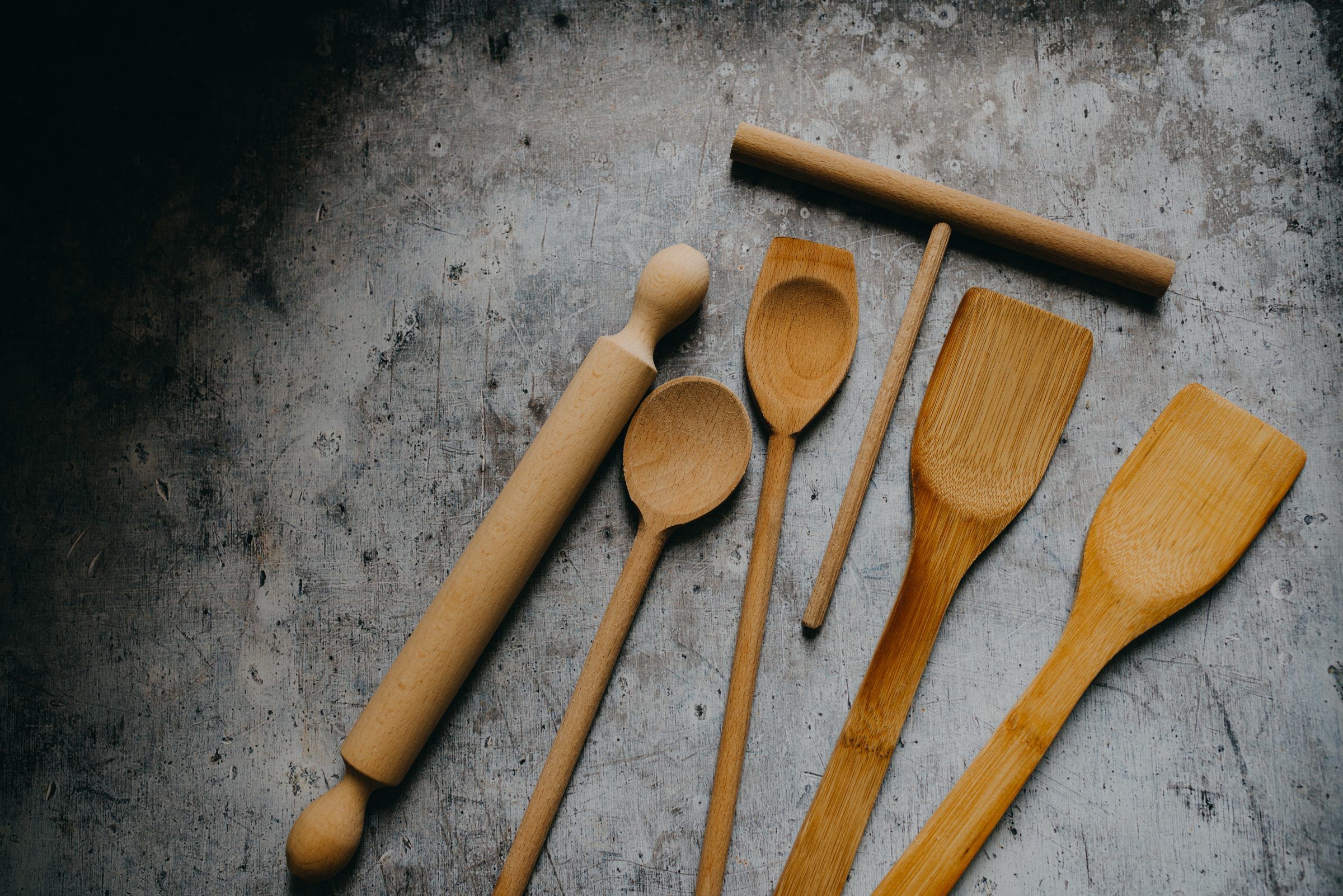
Your nonstick frying pan is a piece of plastic glued to a piece of aluminium. The slippery layer is polytetrafluoroethylene, PTFE, sold most famously as Teflon. It is also a member of the PFAS family, the “forever chemicals” that now turn up in drinking water, blood and rain.
That doesn’t mean your omelette pan is poisoning you. The evidence on intact PTFE is more reassuring than the internet suggests. The evidence on how the stuff gets made, what happens when you overheat it, and what the industry did for decades is not. Here’s how to tell those stories apart.
Your nonstick pan is coated in plastic
PTFE is a fluoropolymer: a long carbon chain armoured with fluorine atoms. That fluorine shell is why eggs slide off it and why it barely reacts with anything. US food-contact rules authorise resins made by polymerising tetrafluoroethylene, which is what PTFE is, for use in contact with food.
Whether PTFE belongs in the same regulatory bucket as other PFAS is a live fight. A 2018 review, largely written by fluoropolymer industry scientists, argued that fluoropolymers are too big to get into cells, aren’t bioavailable, and should be regulated separately from other PFAS. A 2020 response from independent academics and regulators argued the opposite: making some fluoropolymers has depended on toxic fluorinated processing aids, other PFAS are released across the polymer’s life cycle, and they found no scientific basis for calling fluoropolymers “low concern.”
Both can be partly right. The finished coating on your pan may be close to inert. The factory that made it, and the incinerator or landfill it ends up in, are a different story.
The PFOA story: what DuPont knew
For decades, PTFE was made with the help of PFOA (also called C8), a small, water-soluble PFAS used as a processing aid. FDA scientists reported in 2005 that PFOA was a processing aid in PTFE manufacture, and that PTFE cookware contained residual PFOA in the low micrograms-per-kilogram range.
PFOA escaped the factories too. Around DuPont’s plant near Parkersburg, West Virginia, it got into local drinking water. An independent C8 Science Panel of epidemiologists studied the highly exposed population of the mid-Ohio Valley and in 2012 reported a “probable link” between PFOA and high cholesterol, thyroid disease, kidney and testicular cancer, pregnancy-induced hypertension and ulcerative colitis. In a 2020 review, panel members were careful to say the cancer evidence remained “supportive but not definitive.”
The regulatory record is blunter. In 2005, DuPont agreed to pay a $10.25 million civil penalty, plus $6.25 million in environmental projects, to settle EPA allegations that it failed to report information about PFOA’s health risks as federal law requires. At the time it was the largest civil administrative penalty EPA had obtained. In 2017, DuPont and Chemours, its spun-off chemicals business, agreed to pay about $671 million to settle roughly 3,550 personal-injury claims over PFOA releases from the plant. They denied wrongdoing.
PFOA’s phase-out came under pressure, not out of virtue. In 2006, EPA invited eight manufacturers, including DuPont, 3M/Dyneon and Daikin, into a voluntary stewardship programme to cut PFOA emissions and product content 95% by 2010 and work toward elimination by 2015. EPA’s fact sheet notes that the companies “state that they met” the goals. That is the companies’ own claim. The EU later restricted PFOA under its persistent organic pollutants rules from 2020. In 2023, the WHO’s cancer agency classified PFOA as carcinogenic to humans (Group 1), based on sufficient evidence in animals and strong mechanistic evidence in exposed people.
What “PFOA-free” does and doesn’t mean
“PFOA-free” on a new pan is roughly as meaningful as “asbestos-free” on a new sandwich. Major makers committed to dropping PFOA years ago, and selling it is restricted in the EU. The label tells you nothing about whether the pan contains PFAS. It almost always does, because the coating itself is PTFE.
It also tells you nothing about what replaced PFOA in the factory. One replacement processing aid, known as GenX, was developed as a PFOA substitute. In 2021, EPA set a reference dose for GenX of 3 ng per kilogram of body weight per day, lower than the 20 ng it then used for PFOA. In other words, the replacement was judged more toxic per nanogram, not less.
Did old pans actually leak PFOA into kitchens? The studies disagree, and who funded them matters:
- A 2005 study by DuPont scientists found no detectable PFOA extracted from pans coated with a DuPont fluoropolymer at 100 to 125 °C.
- A 2007 academic study heated pans to normal cooking temperatures (179–233 °C at the surface) and measured 7 to 337 ng of PFOA released into the air per pan across four brands. The authors concluded that manufacturing didn’t fully remove residual PFOA.
- A 2022 study of 35 pans sold in Turkey still found PFOA migrating from 6 of them. Migration was highest at higher temperatures and fell with repeated use.
So PFOA residue in pans was real, small and mostly an older-pan problem. It’s minor next to the drinking-water contamination near the factories.
Overheating: the one harm nobody disputes
Here’s the risk that’s best established. Germany’s Federal Institute for Risk Assessment (BfR) says PTFE starts to decompose at around 360 °C and above, releasing substances hazardous to health. Normal cooking stays below that: the BfR notes cooking oil begins to evaporate between 110 and 270 °C. An empty pan is different, because nothing is soaking up the heat. The BfR singles out induction and gas hobs, which heat very fast.
Breathing those fumes causes polymer fume fever, sometimes called “Teflon flu.” A review of the medical literature found overheating PTFE-coated cookware is one of the more common ways people are exposed. It usually feels like flu (fever, chills, aches) and mostly clears up. It can be worse. In one Japanese case, a 29-year-old man who inhaled fumes from a PTFE pan arrived at hospital with fever, breathlessness and diffuse infiltrates in both lungs on his CT scan. His symptoms improved markedly within two days.
Overheating also wears out the coating itself. A 2024 lab study of six brands of coated aluminium pans found that heating beyond 250 °C, or for long periods, degraded the coatings of every brand. That’s one study, not a universal safe limit. But the advice is the same either way: medium heat, never preheat empty, and use the extractor fan.
Scratched pans: plastic in your food
Every nonstick pan eventually scratches, and the scratches shed plastic. Using Raman imaging and electron microscopy, Australian researchers estimated that thousands to millions of PTFE micro- and nanoparticles might be released from a scratched pan during simulated cooking. You may see a “2.3 million particles from one crack” figure quoted online. It isn’t in the paper’s abstract, so we don’t use it.
Other studies point the same way:
- In a UK–Norwegian kitchen experiment using jelly as stand-in food, non-plastic cookware added no microplastics, while new and old plastic cookware did. The authors estimated 2,409 to 4,964 microplastics a year from cooking one meal a day. Those particles included polyethylene and polypropylene, not just PTFE.
- A 2026 Chinese study built a new detection method for fluoroplastic particles and found high levels in food cooked in nonstick cookware. It also found that a standard lab digestion step had been missing about half the particles, so earlier counts were probably too low.
Is swallowing them harmful? The official answer is no. The BfR says swallowed PTFE particles are not expected to harm health and pass through unchanged, because PTFE is inert.
That assumption is starting to be tested. A 2025 study exposed human intestinal cells to PTFE particles and found they entered the cells and triggered oxidative stress, inflammation and DNA damage. A 2026 fruit-fly study from the same Barcelona group found swallowed PTFE particles broke into smaller fragments in the gut, crossed the gut wall and caused oxidative stress and DNA damage. Those are cells in a dish and flies, at doses picked to produce an effect. They are a reason to stop calling PTFE “biologically inert” with total confidence. They are not evidence that scratched pans make people ill. No human study has shown that.
For more on plastic particles in the body generally, see our explainer on microplastics inside you.
“Ceramic” pans: what’s actually in them
Most “ceramic” nonstick pans aren’t ceramic in the pottery sense. They’re coated with a sol-gel layer, a silica-based glassy film, often bound with silicone, and they’re marketed hard as “PTFE-free” and “PFAS-free.” They don’t use fluoropolymers, which is a genuine advantage at the factory and at the dump.
They do have their own question marks. Slovenian researchers who analysed one type of coating found titanium dioxide and quartz particles in a silicone matrix. After two hours at 100 °C in water and acidic test liquids, up to 861 µg/L of titanium-containing particles had migrated out. Scratch tests showed that titanium-containing nanoparticles could be released. The good news: they found no heat breakdown at normal cooking temperatures. A US study that abraded ceramic pans to mimic scrubbing and scratching found titanium and silicon in the food simulant rose, and nanoparticles appeared only under the harshest abrasion.
What nobody has shown is whether swallowing those particles in kitchen-sized amounts matters. Ceramic coatings are less studied than PTFE, not proven safer. Durability varies by brand: in the 2024 heating study, a ceramic-coated pan outperformed the PTFE pans, but every coated pan degraded when overheated. A worn-out ceramic pan is still a pan you’ll have to replace.
The bans, the lobby and the lawsuits
In the US, a few states have moved to take PFAS cookware off the shelves:
- Minnesota went first. Since 1 January 2025, state law has barred the sale of cookware containing intentionally added PFAS. That covers PTFE pans.
- Colorado banned cookware with intentionally added PFAS from 1 January 2026.
- Maine did the same from 1 January 2026. Used cookware is exempt.
- Rhode Island has a ban due to start in 2027. In 2026, a bill to exempt PFAS cookware the FDA authorises for food contact was held in committee. New Mexico passed a broad PFAS law in 2025 that includes cookware from 2027, but its fluoropolymer exemption may cover PTFE pans, and we couldn’t confirm its exact reach.
The industry fought back. In 2024, Groupe SEB, which owns Tefal (T-fal in the US), and Meyer Corporation launched the Cookware Sustainability Alliance. In January 2025, it sued to overturn Minnesota’s ban, arguing the law unconstitutionally burdened out-of-state companies. A federal court dismissed the case in August 2025, finding the alliance hadn’t alleged a substantial burden on interstate commerce.
The lobbying has worked better than the lawsuits. In October 2025, California Governor Gavin Newsom vetoed SB 682, which would have banned PFAS cookware from 2030, citing the cost of affordable cooking products. In France, the 2025 PFAS law bans the chemicals in cosmetics, ski wax and clothing. Cookware was cut. The bill’s rapporteur, Nicolas Thierry, expressed “immense regret” that pans were removed, which Politis reported happened under lobbying pressure from Groupe SEB.
The EU’s proposed universal PFAS restriction is still being negotiated. Its risk-assessment committee gave its opinion in March 2026, its socio-economic committee’s final opinion is expected by the end of 2026, and any restriction is unlikely to apply before 2029.
One honest caveat: these bans are driven mostly by what PTFE does across its life cycle (manufacture, processing aids, disposal), not by proof that frying an egg in an intact pan harms you. That’s a legitimate reason to regulate. It’s just a different argument from “your pan is toxic.”
The alternatives, with their trade-offs
No pan is chemically silent. Every material puts a little of itself into food, especially acidic food cooked for a long time. The question is what, and how much.
Stainless steel
Stainless steel has no coating and lasts for decades. It also leaches some nickel and chromium. In a lab study, tomato sauce cooked for six hours in stainless picked up up to 26 times more nickel and 7 times more chromium than sauce cooked without it. Leaching was highest in new pans and settled down after about six uses. A study of grade 316 (18/10) pots under normal one-hour cooking found the amounts were below known allergy-triggering levels, though they could matter for people who are very sensitive to nickel. The trade-off: food sticks unless you learn to preheat properly and use enough fat.
Cast iron
Cast iron is cheap, nearly indestructible and becomes fairly nonstick once seasoned. The seasoning is baked-on oil, not plastic. It adds iron to food: in one study, 90% of 20 foods had significantly more iron when cooked in iron utensils, with acidic, wet and long-cooked foods picking up most. Don’t count on it as an iron supplement, though. In a randomised trial in Benin, households given iron pots for six months ended up with haemoglobin no different from, and iron stores lower than, households given iron supplements, and the authors found no evidence the pots work against iron-deficiency anaemia. If you’ve been told to limit iron, ask your doctor. Cast iron is heavy, slow to heat, rusts if neglected, and doesn’t love long-simmered tomato sauce.
Carbon steel
Carbon steel is cast iron’s lighter cousin: same seasoning, quicker to heat, the standard restaurant sauté pan. We found no studies that measure leaching from carbon steel specifically. As iron-based metal, it should behave much like cast iron, but that’s our inference, not a measured result.
Enamelled cast iron and glass
Enamelled cast iron and glass are good for acidic dishes and avoid metal contact with food. Neither is truly nonstick.
What to do, ranked by evidence
- Don’t overheat a nonstick pan. This is the best-evidenced harm. Never preheat it empty or leave it on a high flame. Keep to medium heat, and use the extractor fan.
- Replace scratched or flaking nonstick pans. Scratched pans shed PTFE particles into food. The health effect is unproven, but the release is real, and nobody needs plastic grit in their eggs. Use wooden utensils, not metal, and don’t scrub with steel wool.
- For your next pan, consider stainless, cast iron or carbon steel. You avoid the coating, the fumes risk and PFAS manufacturing. Expect a learning curve and some sticking. With stainless, metal leaching is highest in the first few uses, so maybe don’t christen a new pot with a six-hour tomato sauce.
- Treat “PFOA-free” as meaningless. It doesn’t mean PFAS-free. Look for an explicit “PTFE-free” or “no PFAS” claim if you want to avoid fluoropolymers.
- If you go “ceramic,” treat it like nonstick. Medium heat, soft utensils, no abrasive scrubbing. It avoids fluoropolymers; it isn’t proven safer for what ends up in your food.
- Don’t panic about the pan you own. Intact PTFE used at normal temperatures has not been shown to harm people. The stronger case against it is environmental: how it’s made and where it ends up.
The bigger fix isn’t in your kitchen. It’s in state capitols and Brussels, where cookware makers are spending real money to keep fluoropolymers on the shelf. For more ways to cut plastic in your kitchen, see our kitchen swaps ranked by exposure, and see our standards for how we judge evidence.
Sources
- Luo Y, Gibson CT, Chuah C, Tang Y, Naidu R, Fang C (2022). Raman imaging for the identification of Teflon microplastics and nanoplastics released from non-stick cookware. Science of the Total Environment. Our summary
- Cole M, Gomiero A, Jaén-Gil A, Haave M, Lusher A (2024). Microplastic and PTFE contamination of food from cookware. Science of the Total Environment.
- Li S, Wang X, Wang J, Yang H, Li W, Peng C, Zhang J, Sun H, Wang L (2026). Establishment of a Spectral Detection Method for Microfluoroplastics: Revealing Widespread Pollution and Conventional Digestion-Induced Underestimation. Environmental Science & Technology.
- German Federal Institute for Risk Assessment (BfR) (2025). Selected questions and answers on cookware, ovenware and frying pans with a non-stick coating made of PTFE. BfR FAQ, updated 2 July 2025.
- Greenberg MI, Vearrier D (2015). Metal fume fever and polymer fume fever. Clinical Toxicology.
- Shimizu T, Hamada O, Sasaki A, Ikeda M (2012). Polymer fume fever. BMJ Case Reports.
- Alaboodi AS, Sivasankaran S, Ammar HR (2024). Influence of heating temperature and time on mechanical-degradation, microstructures and corrosion performances of Teflon/granite coated aluminum alloys used for non-stick cookware. Heliyon.
- Sinclair E, Kim SK, Akinleye HB, Kannan K (2007). Quantitation of gas-phase perfluoroalkyl surfactants and fluorotelomer alcohols released from nonstick cookware and microwave popcorn bags. Environmental Science & Technology. Our summary
- Begley TH, White K, Honigfort P, Twaroski ML, Neches R, Walker RA (2005). Perfluorochemicals: potential sources of and migration from food packaging. Food Additives and Contaminants.
- Powley CR, Michalczyk MJ, Kaiser MA, Buxton LW (2005). Determination of perfluorooctanoic acid (PFOA) extractable from the surface of commercial cookware under simulated cooking conditions by LC/MS/MS. The Analyst.
- Toptancı İ, Ketenoglu O, Kıralan M (2022). Assessment of the migration of perfluorinated compounds and primary aromatic amines from PTFE-coated non-stick cookware marketed in Turkey. Environmental Science and Pollution Research.
- Henry BJ, Carlin JP, Hammerschmidt JA, Buck RC, Buxton LW, Fiedler H, Seed J, Hernandez O (2018). A critical review of the application of polymer of low concern and regulatory criteria to fluoropolymers. Integrated Environmental Assessment and Management.
- Lohmann R, Cousins IT, DeWitt JC, Glüge J, Goldenman G, Herzke D, et al. (2020). Are fluoropolymers really of low concern for human and environmental health and separate from other PFAS?. Environmental Science & Technology.
- US Food and Drug Administration (2026). 21 CFR 177.1550 Perfluorocarbon resins. Code of Federal Regulations (via Cornell LII).
- US Environmental Protection Agency (2005). Reference News Release: EPA Settles PFOA Case Against DuPont for Largest Environmental Administrative Penalty in Agency History. EPA news release, 14 December 2005 (EPA 19 January 2021 archive snapshot).
- Steenland K, Fletcher T, Stein CR, Bartell SM, Darrow L, Lopez-Espinosa MJ, Ryan PB, Savitz DA (2020). Review: Evolution of evidence on PFOA and health following the assessments of the C8 Science Panel. Environment International.
- US Environmental Protection Agency (2025). Fact Sheet: 2010/2015 PFOA Stewardship Program. EPA (archived 19 January 2025 snapshot).
- Williams D (2017). DuPont and Chemours end PFOA suits for $671 million. CHEManager, 16 February 2017.
- Zahm S, Bonde JP, Chiu WA, Hoppin J, Kanno J, et al. (2024). Carcinogenicity of perfluorooctanoic acid and perfluorooctanesulfonic acid. The Lancet Oncology.
- European Commission (2020). Commission Delegated Regulation (EU) 2020/784 amending Annex I to Regulation (EU) 2019/1021 as regards the listing of PFOA, its salts and PFOA-related compounds. Official Journal of the EU (via legislation.gov.uk copy).
- Food Packaging Forum (2021). US EPA publishes final toxicity assessment for GenX chemicals. Food Packaging Forum, 28 October 2021.
- Golja V, Dražić G, Lorenzetti M, Vidmar J, Ščančar J, Zalaznik M, Kalin M, Novak S (2017). Characterisation of food contact non-stick coatings containing TiO2 nanoparticles and study of their possible release into food. Food Additives & Contaminants: Part A.
- Addo Ntim S, Norris S, Scott K, Thomas TA, Noonan GO (2018). Consumer use effects on nanoparticle release from commercially available ceramic cookware. Food Control 87:31–39.
- Minnesota Legislature (2026). Minn. Stat. § 116.943 Products containing PFAS. Minnesota Statutes (Office of the Revisor).
- Keller and Heckman (Packaging Law) (2025). Court dismisses Cookware Alliance's lawsuit challenging MN ban of cookware containing added PFAS. PackagingLaw.com, 21 August 2025.
- Housewares Live (2024). Meyer and Groupe SEB launch Cookware Sustainability Alliance. Housewares Live, 21 May 2024.
- Colorado General Assembly (2024). SB24-081 Perfluoroalkyl & Polyfluoroalkyl Chemicals. Colorado General Assembly bill page.
- Maine Legislature (2026). 38 MRSA §1614 Products containing perfluoroalkyl and polyfluoroalkyl substances. Maine Revised Statutes.
- Rhode Island General Assembly (2026). H 7621: Consumer PFAS Ban Act amendment. Rhode Island bill text, 2026 session.
- Farella Braun + Martel (2025). Governor Newsom vetoes SB 682 due to concerns with the impact on affordable cooking products. Farella Braun + Martel, October 2025.
- Politis (2025). Victoire contre les PFAS, ces « polluants éternels ». Politis, 26 February 2025.
- Covington & Burling (2026). ECHA launches a new public consultation on a proposed universal ban on PFAS in the EU. Covington, March 2026.
- Abass D, Alaraby M, Elkady EF, et al. (2025). Polytetrafluoroethylene (PTFE, Teflon) microplastics and nanoplastics induce oxidative stress, mitochondrial damage, and genotoxicity in human intestinal cells. Journal of Hazardous Materials.
- Alaraby M, Abass D, Elkady E, Egea R, Velázquez A, Hernández A, Marcos R (2026). Polytetrafluoroethylene utensils as a source of micro- and nanoplastics: Insights from a Drosophila model. Eco-Environment & Health.
- Kamerud KL, Hobbie KA, Anderson KA (2013). Stainless steel leaches nickel and chromium into foods during cooking. Journal of Agricultural and Food Chemistry.
- Guarneri F, Costa C, Cannavò SP, Catania S, Bua GD, Fenga C, Dugo G (2017). Release of nickel and chromium in common foods during cooking in 18/10 (grade 316) stainless steel pots. Contact Dermatitis.
- Brittin HC, Nossaman CE (1986). Iron content of food cooked in iron utensils. Journal of the American Dietetic Association.
- Sharieff W, Dofonsou J, Zlotkin S (2008). Is cooking food in iron pots an appropriate solution for the control of anaemia in developing countries? A randomised clinical trial in Benin. Public Health Nutrition.
Spotted an error? Tell us and we'll correct it and note the change.