PFAS, the 'forever chemicals', explained: what they are and what they have to do with plastic
Thousands of fluorinated chemicals, some of them plastics, most barely breaking down. What the evidence says about harm, where the rules stand in late 2026, and what lowers your exposure.
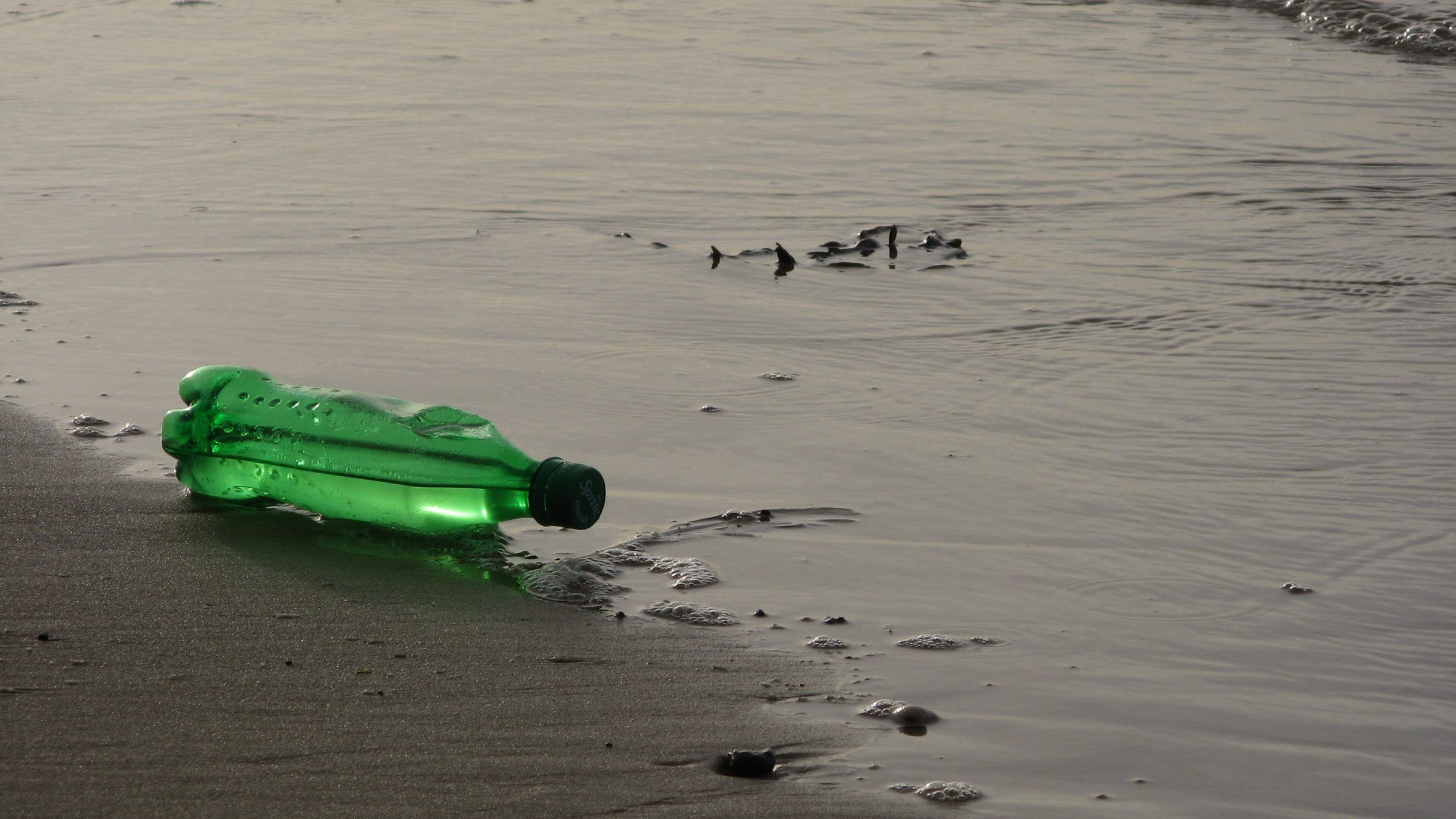
PFAS are the chemicals that made “forever” a scientific term. They’re in non-stick pans, rain jackets, grease-proof wrappers, firefighting foam, some dental floss and period underwear, and in the blood of almost everyone who has been tested. A few are plastics. Many more are made to make plastics, or get made by accident when plastic is treated.
This page covers what PFAS are, where they come from, how strong the evidence of harm is, where the rules stand as of October 2026, and what lowers your exposure. Product-specific questions link out to our other articles.
What PFAS are
PFAS stands for per- and polyfluoroalkyl substances. What they share is the carbon–fluorine bond, one of the strongest in chemistry. It’s what makes them repel water, oil and stains, survive heat, and refuse to break down in the environment or in you.
The definition fight
How many PFAS exist depends on who’s counting, because the definition decides the number. In 2021 the OECD, the rich-country policy club, proposed a broad structural definition: PFAS are fluorinated substances that contain at least one fully fluorinated methyl or methylene carbon atom, with no hydrogen, chlorine, bromine or iodine attached. In plain terms: with a few exceptions, anything with a –CF3 or –CF2– group is a PFAS.
That catches thousands of substances. A 2019 review counted more than 4,000 PFAS manufactured; the EU’s proposed restriction, which uses an OECD-style definition, would cover over ten thousand. US state laws mostly go broader still. Maine, for example, defines PFAS as any fluorinated organic chemical with at least one fully fluorinated carbon atom.
The breadth is the point. Regulating PFAS one molecule at a time has meant that every restricted chemical gets replaced by a close cousin. A class-wide definition is designed to end that game.
Fluoropolymers vs the small stuff
There are two very different kinds of PFAS, and this is where plastic comes in.
Small PFAS are individual molecules, such as PFOA (once used to make Teflon), PFOS (once common in firefighting foam), PFHxS, PFNA and GenX. These dissolve in water, travel, and build up in blood. They’re the ones measured in health studies and drinking water rules.
Fluoropolymers are plastics: long chains built from fluorinated building blocks. PTFE (Teflon) is the famous one. Some dental floss and waterproof membranes are made of them.
The fluoropolymer industry argues these plastics are inert, too big to enter cells, and should be regulated separately from other PFAS. Note who’s arguing: that review was written by authors from W.L. Gore (maker of Gore-Tex) and Chemours (the DuPont spin-off that makes Teflon), plus a university researcher and consultants. An independent group of 13 scientists looked at the same question and found no scientific rationale for treating fluoropolymers as low concern. Their reasoning: making some fluoropolymers has relied on small, toxic PFAS as processing aids; other PFAS are released across their life cycle; and consumer fluoropolymer products are hardly recyclable and persist after disposal.
Both can be true at once: a swallowed flake of PTFE may pass through you unchanged, while the factory that made it and the incinerator it ends up in are another story. Our non-stick pans article applies that distinction to cookware.
Where PFAS come from
For most people, the main routes are food and drinking water, with consumer products, dust and air adding to the total. A major review concluded that exposures from seafood and drinking water are stable or increasing in many regions, while exposures from food packaging and indoor environments are uncertain because the chemicals keep changing faster than labs can track them.
Firefighting foam and contaminated water
Aqueous film-forming foam (AFFF), used to put out fuel fires, is the classic pollution source. The same review describes communities still discovering contamination next to airports and military bases. In Ronneby, Sweden, foam from a nearby airfield contaminated the municipal water supply for decades before clean water was provided in December 2013. It became a natural experiment in how slowly PFAS leave the body (more below).
Food packaging
Grease-proof paper and paperboard were long treated with PFAS. A 2017 study of about 400 US fast-food packaging samples found detectable fluorine in 46% of food contact papers and 20% of paperboard. In February 2024 the FDA announced that PFAS grease-proofing agents were no longer being sold for US food contact use, and in January 2025 it formally declared the authorisations for 35 of these substances no longer effective, with a June 2025 cut-off for existing stock. That was a voluntary industry exit followed by paperwork, not a ban.
“Compostable” moulded-fibre bowls and plates have their own PFAS history; see our guide to takeout containers.
Cookware
PTFE coatings, and the PFOA once used to make them. Covered in depth in our non-stick pans article.
Textiles, carpets and “stain-resistant” anything
Water- and stain-repellent finishes are a major use. When researchers tested 72 children’s textile products marketed as stain-resistant in the US and Canada, they found PFAS in every product they analysed. School uniforms had higher levels than bibs, hats or swimsuits, and cotton uniforms more than synthetic blends. The authors estimated a median dermal dose for children of 1.03 ng/kg body weight a day from uniforms. That’s a modelled estimate, not a measurement in children’s blood.
Period underwear has its own PFAS story, including a class-action settlement: see our period products article. Dental floss made of PTFE is covered in our bathroom article.
Fluorinated plastic containers: the Inhance case
To stop solvents leaking through, some high-density polyethylene (HDPE) containers are treated with fluorine gas. The process can create PFAS as a by-product. Back in 2011, Canadian chemists measured perfluorinated acids in fluorinated HDPE bottles at 8.5 to 113 nanograms per one-litre bottle, mostly short-chain ones.
A decade later, after EPA scientists traced PFAS in a mosquito pesticide to its container, the EPA went after Inhance Technologies, a Texas company that had historically fluorinated up to 200 million containers a year. The timeline, from EPA’s own account:
- March 2022: EPA issued Inhance a notice of violation.
- December 2022: the Justice Department sued on EPA’s behalf.
- 1 December 2023: EPA ordered Inhance to stop producing PFOA, PFNA and PFDA during fluorination, calling them highly toxic, and to stop making six other PFAS pending more testing.
Then it fell apart. On 21 March 2024 the Fifth Circuit Court of Appeals vacated the orders. EPA had used a rule for “significant new uses” of PFAS, and the court held that a process running for decades wasn’t new, even if EPA hadn’t known about it. The judges pointed to a different section of the law, TSCA section 6, as the route for existing uses.
In July 2024 EPA granted a petition from environmental groups asking it to use that route, and in September 2024 it asked for public comment on regulating PFOA, PFNA and PFDA formed when HDPE and other plastic containers are fluorinated, including containers for household products, pesticides and fuel. As of mid-October 2026 we could find no proposed rule in the Federal Register. Two years on, there’s still no federal limit on PFAS made by fluorinating plastic containers.
You can’t easily tell if a container is fluorinated, which is a reason to push regulators rather than to panic.
How long PFAS stay in you
Small PFAS are in almost everyone. US national survey data from 1999 to 2008 found PFOS, PFOA, PFNA and PFHxS in more than 95% of participants. Levels of the phased-out PFOS fell over that decade. That’s the good news: when production stops, blood levels drop.
The bad news is how slowly. In Ronneby, researchers tracked 114 people after the water was cleaned up. The average half-life, meaning the time for half of the chemical to leave the body, was 2.5 years for PFOA, 2.7 years for linear PFOS and 4.5 years for PFHxS. Younger people, people with better kidney function, and women of reproductive age cleared them faster. (For women, menstruation and pregnancy are elimination routes, which partly means PFAS pass to the baby.)
What the evidence says about harm
The evidence comes overwhelmingly from PFOA and PFOS, measured in people for decades. For most other PFAS there’s very little data.
Human evidence: the C8 Science Panel
The strongest early human evidence came from the mid-Ohio Valley, where DuPont’s Parkersburg plant released PFOA (also called C8) into local water. Under a legal settlement, three epidemiologists were appointed to judge whether PFOA harmed residents. In 2012 the C8 Science Panel found a “probable link”, meaning more probable than not, between PFOA and:
- high cholesterol
- thyroid disease
- kidney cancer
- testicular cancer
- pregnancy-induced hypertension
- ulcerative colitis
Eight years later, former panel members reviewed what had been published since, and didn’t oversell it. The cancer evidence remained “supportive but not definitive”. Cholesterol associations were consistent, but there was no link with heart disease. Birth-weight findings might be explained by reverse causality or confounding. Their overall verdict: the epidemiology “remains limited”. That honesty matters. A “probable link” in a heavily exposed town is not proof that the much lower levels most of us carry cause the same problems.
The National Academies’ 2022 review
In 2022 the US National Academies of Sciences, Engineering, and Medicine reviewed the human evidence to produce guidance for doctors. It found sufficient evidence of an association, its strongest category, for:
- decreased antibody response to vaccines (adults and children)
- dyslipidemia, meaning abnormal cholesterol (adults and children)
- decreased infant and fetal growth
- increased risk of kidney cancer (adults)
It found limited or suggestive evidence for breast cancer, liver enzyme changes, pregnancy-induced hypertension, testicular cancer, thyroid disease and ulcerative colitis. For many other outcomes the evidence was inadequate, which means unknown, not safe.
These are mostly observational studies, which can’t fully rule out other explanations; consistency across populations is why the panel used its top category.
The Academies also gave doctors blood-level bands, based on the sum of seven PFAS (MeFOSAA, PFHxS, PFOA, PFDA, PFUnDA, PFOS and PFNA) in serum:
| Sum of 7 PFAS in blood | What the Academies say | Suggested follow-up |
|---|---|---|
| Below 2 ng/mL | Adverse effects not expected | Usual care |
| 2 to under 20 ng/mL | Potential for adverse effects, especially in sensitive groups | Reduce exposure if a source is found; prioritise cholesterol screening |
| 20 ng/mL or higher | Increased risk of adverse effects | As above, plus thyroid testing and checks for kidney cancer, testicular cancer and ulcerative colitis by age group |
The report recommends offering PFAS blood tests to people likely to have had elevated exposure, such as firefighters, people who work with PFAS, and people in communities with contaminated water. It doesn’t recommend routine testing for everyone.
Cancer: IARC 2023
In November 2023 the International Agency for Research on Cancer, part of the WHO, classified PFOA as “carcinogenic to humans” (Group 1). That rested on “sufficient” evidence in experimental animals and “strong” mechanistic evidence in exposed humans, including immune suppression and epigenetic changes. The evidence from human cancer studies themselves was rated only “limited”, for kidney and testicular cancer.
PFOS was classified as “possibly carcinogenic to humans” (Group 2B) on strong mechanistic evidence, with limited animal evidence and inadequate human evidence.
IARC rates how sure we are that something can cause cancer, not how much risk a given dose carries. It’s a serious signal, not a personal risk score.
Animal and lab evidence
For most newer PFAS, animal and cell studies are the only data, and they can’t tell you what happens at human doses on their own. The 2019 review warns that early evidence suggests health effects from the newer replacement PFAS too, and that the history of the legacy ones shows limited data shouldn’t be used as an excuse to delay action.
How PFAS are regulated
United States: drinking water
In April 2024 the EPA set the first enforceable national limits on PFAS in drinking water. The rule set 4.0 parts per trillion each for PFOA and PFOS, with a health goal of zero; 10 parts per trillion each for PFHxS, PFNA and GenX; and a combined “hazard index” limit for mixtures of PFHxS, PFNA, GenX and PFBS. Utilities had until April 2029 to comply.
In May 2026, under a new administration, the EPA proposed two rollbacks:
- Letting water systems that ask delay PFOA and PFOS compliance from April 2029 to April 2031. The 4.0 ppt limits themselves would stay.
- Scrapping the limits for PFHxS, PFNA, GenX and the mixture rule altogether.
As of mid-October 2026, both are still proposals. Meanwhile the 2024 rule is being challenged in court by water utility groups. In January 2026 the D.C. Circuit refused EPA’s request to vacate the four limits it wants to drop, so for now all six limits remain on the books. Whether they survive is up to the final rules and the court.
GenX, notice, was developed to replace PFOA as a processing aid for making fluoropolymers. The limit on the replacement is one of those on the chopping block.
United States: products and reporting
There’s no federal ban on PFAS in consumer products. The FDA’s food-packaging action above is the closest thing. The EPA’s 2023 rule requiring PFAS manufacturers to report a decade of use and health data is being narrowed by a November 2025 proposal that adds exemptions. The fluorinated-container rulemaking hasn’t produced a proposal.
United States: states
States are doing the work. The advocacy coalition Safer States counts 197 PFAS policies adopted in 31 states, including food-packaging phase-outs in 12 states and bans on PFAS firefighting foam in 15. The two most sweeping:
- Minnesota (“Amara’s Law”) banned intentionally added PFAS in 11 product categories from 1 January 2025, including cookware, cosmetics, dental floss, juvenile products, menstruation products, cleaning products, carpets and upholstered furniture. From 1 January 2032 it bans intentionally added PFAS in all products unless the state rules the use “currently unavoidable”.
- Maine banned PFAS in carpets and fabric treatments from 2023, then cleaning products, cookware, cosmetics, dental floss, juvenile products, menstruation products, most textiles, ski wax and upholstered furniture from 1 January 2026. It also bans them in all remaining products from 2032, with exemptions for currently unavoidable uses.
Industry has pushed back in court and in statehouses; our non-stick pans article has the cookware fights.
European Union
The EU is the only big jurisdiction trying to restrict PFAS as a whole class:
- The universal restriction proposal. Five countries submitted a proposal in January 2023 to restrict over ten thousand PFAS under the EU’s REACH chemicals law. ECHA’s Risk Assessment Committee adopted its opinion in March 2026, generally preferring a full ban. The Socio-Economic Analysis Committee’s draft argued instead for a ban with use-specific exemptions. Its final opinion is due by the end of 2026. Then the European Commission writes a proposal and member states vote. Lawyers tracking it expect no Commission adoption before the third quarter of 2027 and no restrictions applying before 2029.
- Food packaging, now in force. Under the Packaging and Packaging Waste Regulation, from 12 August 2026 food-contact packaging can’t be sold in the EU if it contains PFAS at or above 25 parts per billion for any single PFAS, 250 ppb for the sum of measured PFAS, or 50 parts per million for total PFAS including polymers. That last limit catches fluoropolymer coatings, not just small molecules.
- Firefighting foam. A 2025 regulation restricts all PFAS in firefighting foams above 1 mg/L, phased in from October 2026 for portable extinguishers to a general ban in October 2030.
- Drinking water. Since 12 January 2026, EU drinking water must meet either 0.1 µg/L for the sum of 20 PFAS or 0.5 µg/L for total PFAS. That’s 100 parts per trillion for 20 PFAS combined, far looser than the US limit of 4 ppt for PFOA alone.
France passed its own PFAS law in 2025, banning PFAS in cosmetics, ski wax and clothing but leaving out cookware after industry lobbying (details here).
Global
Under the Stockholm Convention on persistent organic pollutants, governments have listed PFAS one family at a time: PFOS in 2009, PFOA in 2019, PFHxS in 2022 and long-chain PFCAs in 2025. Each listing took years while industry moved on to the next molecule: the whack-a-mole the EU’s class-wide approach is meant to stop.
How to reduce your exposure, ranked by evidence
You can’t get to zero, and levels fall slowly however careful you are. These steps are ranked by how good the evidence is that each one cuts what you take in.
1. Know your water, and filter it if PFAS is there
This has the strongest evidence. When Ronneby switched to clean water, residents’ blood levels fell steadily.
Start with your utility’s water quality report or your state’s PFAS testing data. If you’re on a private well near an airport, military base, fire training site or fluorochemical plant, test it. If PFAS is present, filters vary a lot. In 73 North Carolina homes, under-sink reverse osmosis and two-stage filters removed nearly all PFAS. Pitchers and fridge filters were variable, and some whole-house carbon systems made things worse. Our water filters article covers which filters and certifications to look for. With the federal deadline possibly slipping to 2031, a home filter matters more in affected areas.
2. If you were highly exposed: talk to a doctor, and ask about testing
For firefighters, chemical workers and people in contaminated communities, the National Academies recommend blood testing and follow-up care based on the results. The best-tested way to lower levels is removing blood. Among 285 Australian firefighters, donating plasma every six weeks for a year lowered PFOS by 2.9 ng/mL on average, and blood donation every 12 weeks by 1.1 ng/mL, while levels didn’t change in the comparison group. That’s a modest drop, the trial didn’t measure health outcomes, and it’s not a general recommendation. It does show levels can be moved.
3. Eat less food that’s been in grease-proof packaging
The evidence here is associational. In US national survey data, people who ate more food at home, mostly bought from grocery stores, had lower blood levels of all five PFAS measured, and eating popcorn was linked to higher levels of several; the authors suspect microwave popcorn bags. (The paper’s 2023 correction changed some effect sizes but not the direction of the findings.) Packaging has changed since, so this step probably matters less than it did, but cooking at home is cheap and does other good things.
4. Skip “stain-resistant”, “water-repellent” and “durable water repellent” treatments when you don’t need them
Product testing clearly shows these finishes contain PFAS, as with every stain-resistant children’s textile tested in the uniforms study. What’s missing is evidence that avoiding them lowers blood levels. Choose untreated school uniforms, carpets, sofas and outdoor gear when you can, and look for “PFAS-free” claims backed by a named standard or state law compliance.
5. Replace the specific products we’ve covered when it’s time
Swap non-stick pans for stainless, cast iron or carbon steel when they wear out (evidence), check floss (evidence), and choose period products tested for PFAS (evidence). The evidence that these personal products move your blood levels is thin, but they’re easy swaps.
6. Follow local fish advisories
Exposure from seafood is stable or increasing in many places. If your state issues PFAS fish advisories for local lakes and rivers, follow them. Fish has real benefits; choose where it comes from rather than avoiding it.
7. Push upstream
No filter or shopping list fixes a chemical that’s already in rain. The changes that cut everyone’s exposure were production stops: US blood PFOS levels fell after industrial production stopped. Comment on EPA drinking water proposals, back state product bans, and ask your utility what it’s doing about PFAS.
What we still don’t know
- Most PFAS have barely been studied. The human evidence is for a handful of legacy chemicals. For thousands of others, including many replacements, there’s little or no toxicity data.
- Total exposure is undercounted. Standard tests look for a few dozen named PFAS. In a 2026 pilot study of drinking water at 19 sites in Massachusetts, 37 targeted PFAS accounted for only 6–68% of the measurable organic fluorine. Trifluoroacetic acid (TFA), an ultra-short PFAS, exceeded everything else and wasn’t removed by carbon or ion-exchange treatment.
- Mixtures. People carry many PFAS at once. Whether effects add up is one reason for the EPA’s hazard index, which is now the part on the chopping block.
- Fluoropolymer life cycles. How much PFAS is released when fluoropolymer products are made, worn down, burned or landfilled is the core of the regulatory fight, and the data is patchy.
- Low-dose effects. Most strong human evidence comes from heavily exposed communities and workers. How much the levels most people carry matter is still being worked out.
The precautionary case doesn’t rest on all of that being settled. These chemicals don’t break down, they build up, the ones studied best turned out to be harmful, and the companies that made them knew more, sooner, than they said. That’s enough reason to stop adding more.
Sources
- OECD (2021). Reconciling terminology of the universe of per- and polyfluoroalkyl substances: recommendations and practical guidance. OECD Series on Risk Management (summarised by Food Packaging Forum, 14 July 2021).
- Lohmann R, Cousins IT, DeWitt JC, Glüge J, Goldenman G, Herzke D, et al. (2020). Are fluoropolymers really of low concern for human and environmental health and separate from other PFAS?. Environmental Science & Technology.
- Henry BJ, Carlin JP, Hammerschmidt JA, Buck RC, Buxton LW, Fiedler H, Seed J, Hernandez O (2018). A critical review of the application of polymer of low concern and regulatory criteria to fluoropolymers. Integrated Environmental Assessment and Management.
- Sunderland EM, Hu XC, Dassuncao C, Tokranov AK, Wagner CC, Allen JG (2019). A review of the pathways of human exposure to poly- and perfluoroalkyl substances (PFASs) and present understanding of health effects. Journal of Exposure Science & Environmental Epidemiology.
- Kato K, Wong LY, Jia LT, Kuklenyik Z, Calafat AM (2011). Trends in exposure to polyfluoroalkyl chemicals in the U.S. population: 1999–2008. Environmental Science & Technology.
- Li Y, Andersson A, Xu Y, Pineda D, Nilsson CA, Lindh CH, Jakobsson K, Fletcher T (2022). Determinants of serum half-lives for linear and branched perfluoroalkyl substances after long-term high exposure: a study in Ronneby, Sweden. Environment International.
- Schaider LA, Balan SA, Blum A, Andrews DQ, Strynar MJ, Dickinson ME, Lunderberg DM, Lang JR, Peaslee GF (2017). Fluorinated compounds in U.S. fast food packaging. Environmental Science & Technology Letters.
- Susmann HP, Schaider LA, Rodgers KM, Rudel RA (2019). Dietary habits related to food packaging and population exposure to PFASs. Environmental Health Perspectives (erratum 2023, EHP 131:069001).
- US Food and Drug Administration (2025). FDA determines authorization for 35 food contact notifications related to PFAS are no longer effective. FDA constituent update, 3 January 2025.
- Xia C, Diamond ML, Peaslee GF, Peng H, Blum A, Wang Z, et al. (2022). Per- and polyfluoroalkyl substances in North American school uniforms. Environmental Science & Technology.
- Rand AA, Mabury SA (2011). Perfluorinated carboxylic acids in directly fluorinated high-density polyethylene material. Environmental Science & Technology.
- US Environmental Protection Agency (2023). EPA takes action to protect people from PFAS that leach from plastic containers into pesticides and other products. EPA news release, 1 December 2023 (19 January 2025 snapshot).
- Fox Rothschild LLP (2024). Fifth Circuit vacates EPA's orders regulating PFAS under significant new use rule. PFAS Update blog, March 2024.
- US Environmental Protection Agency (2024). Certain per- and polyfluoroalkyl substances (PFAS) risk management under the Toxic Substances Control Act (TSCA); request for comment. Federal Register, 30 September 2024.
- Food Packaging Forum (2021). US EPA publishes final toxicity assessment for GenX chemicals. Food Packaging Forum news.
- Steenland K, Fletcher T, Stein CR, Bartell SM, Darrow L, Lopez-Espinosa MJ, Ryan PB, Savitz DA (2020). Review: Evolution of evidence on PFOA and health following the assessments of the C8 Science Panel. Environment International.
- National Academies of Sciences, Engineering, and Medicine (2022). Guidance on PFAS exposure, testing, and clinical follow-up. The National Academies Press.
- Zahm S, Bonde JP, Chiu WA, Hoppin J, Kanno J, et al. (2024). Carcinogenicity of perfluorooctanoic acid and perfluorooctanesulfonic acid. The Lancet Oncology.
- US Environmental Protection Agency (2024). PFAS National Primary Drinking Water Regulation. Federal Register, 26 April 2024.
- US Environmental Protection Agency (2026). Extending the compliance deadline for the PFOA and PFOS maximum contaminant levels (proposed rule). Federal Register, 20 May 2026.
- US Environmental Protection Agency (2026). Rescission of regulatory determinations and removal of related provisions for four PFAS substances (proposed rule). Federal Register, 20 May 2026.
- Liskow & Lewis (2026). D.C. Circuit rejects EPA's bid to partially vacate PFAS drinking water rule. Liskow insights, 23 January 2026.
- US Environmental Protection Agency (2025). PFAS data reporting and recordkeeping under TSCA; revision to regulation (proposed rule). Federal Register, 13 November 2025.
- Covington & Burling LLP (2026). ECHA launches a new public consultation on a proposed universal ban on PFAS in the EU. Covington insights, March 2026.
- Bergeson & Campbell, P.C. (2026). RAC and draft SEAC opinions support REACH PFAS restriction with targeted derogations. Bergeson & Campbell, March 2026.
- European Parliament and Council (2025). Regulation (EU) 2025/40 on packaging and packaging waste. Official Journal of the European Union, L series, 22 January 2025.
- UL Solutions (2025). New EU restriction on PFAS in firefighting foams. UL Solutions news.
- Health Service Executive (Ireland) (2025). Interim joint position paper: PFAS in drinking water. HSE Environmental Health.
- Secretariat of the Stockholm Convention (2025). PFAS listed under the Stockholm Convention: overview. Stockholm Convention website.
- Maine Legislature (2026). 38 MRSA §1614: Products containing perfluoroalkyl and polyfluoroalkyl substances. Maine Revised Statutes.
- Minnesota Legislature (2026). Minnesota Statutes 116.943: Products containing PFAS. Minnesota Statutes.
- Safer States (2026). PFAS: state policy tracker. Safer States (advocacy coalition).
- Herkert NJ, Merrill J, Peters C, Bollinger D, Zhang S, Hoffman K, Ferguson PL, Knappe DRU, Stapleton HM (2020). Assessing the effectiveness of point-of-use residential drinking water filters for perfluoroalkyl substances (PFASs). Environmental Science & Technology Letters 7:178–184. Our summary
- Gasiorowski R, Forbes MK, Silver G, Krastev Y, Hamdorf B, Lewis B, et al. (2022). Effect of plasma and blood donations on levels of perfluoroalkyl and polyfluoroalkyl substances in firefighters in Australia: a randomized clinical trial. JAMA Network Open.
- Liddie JM, Kim E, Haque F, Roche A, Sontarp EJ, Sunderland EM (2026). Trifluoroacetic acid (TFA) exceeds all other extractable organofluorine in drinking water from eastern Massachusetts, United States. Environmental Science & Technology Letters.
Spotted an error? Tell us and we'll correct it and note the change.