Plastic in your bathroom: floss, toothbrushes, microbeads and what the bans missed
Teflon floss, nylon bristles, scrub beads that dodged the ban and plastic you can't see in your shampoo. What the evidence shows, what the laws cover, and the swaps worth making.
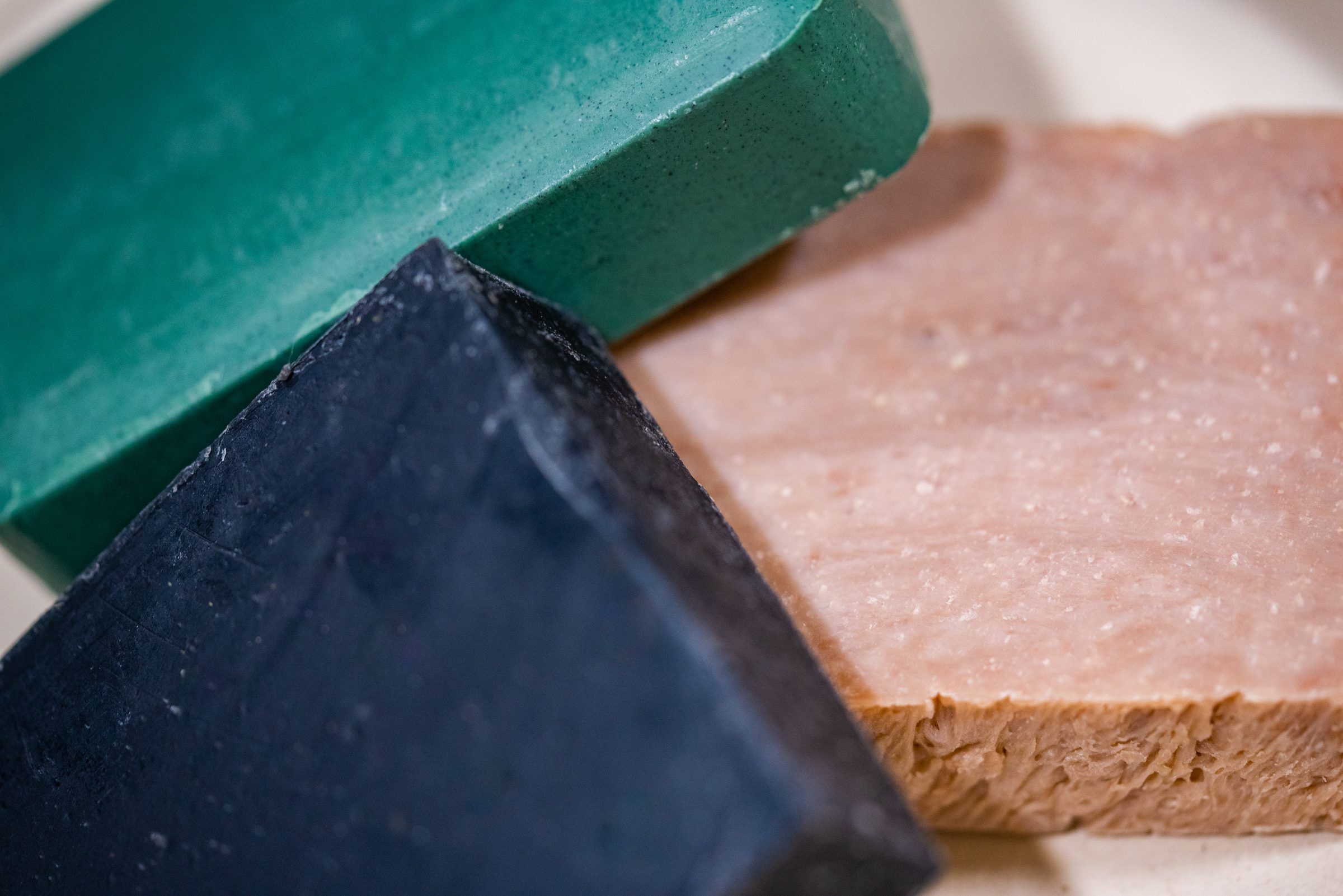
The bathroom is where the plastic-free movement goes to feel good about itself. Swap the toothbrush for bamboo, buy a shampoo bar, done. The reality is messier and more interesting. Some of the plastic in your bathroom is obvious and mostly a waste problem. Some is invisible and was supposed to be banned years ago. And one item, the floss in your cabinet, might be made of the same “forever chemical” family as a non-stick pan.
Here’s what the research actually says, item by item, and which swaps have evidence behind them. One rule first: whatever you change, keep brushing and keep cleaning between your teeth. No plastic you’ll save is worth a gum infection.
Dental floss: the Teflon in your mouth
Some smooth, “shred-resistant” flosses are made of PTFE, the polymer sold as Teflon. PTFE is a fluoropolymer, a member of the PFAS family, the “forever chemicals” that don’t break down in the environment. It’s what makes those flosses glide.
The 2019 study that started it
In 2019, researchers at Silent Spring Institute and partner universities asked 178 middle-aged women about habits that might expose them to PFAS, then compared the answers with PFAS levels in their blood. Women who flossed with Oral-B Glide (a Procter & Gamble brand) had 24.9% higher levels of PFHxS, one type of PFAS, than those who didn’t.
The team also screened 18 floss products for fluorine, a marker of PTFE. Six of 18 contained fluorine, including all three Glide products and two of three store brands labelled “compare to Oral-B Glide.” Since then, Oral-B has said its updated Glide uses a different fibre and that none of its flosses are made with PFAS, as Silent Spring Institute reported in March 2026. That’s the company’s statement; we haven’t seen independent tests of the new version, older boxes may still be on shelves, and other brands, including Glide look-alikes, may still use PTFE.
Before anyone panics, the caveats are big:
- The effect is uncertain. The confidence interval runs from 0.2% to 55.7%. That lower bound is almost zero.
- The timing is off. Blood was drawn in 2010–2013, but women were asked about flossing in 2015–2016. The authors flag this themselves.
- It’s one small study. The authors call it the first evidence that PTFE floss could add to body burden and say it needs follow-up, for example showing that PFAS actually move from floss into saliva.
The follow-up was mixed
The biggest follow-up so far used US national health survey data on 6,750 adults from 2009 to 2020. People who flossed had higher levels of PFOA than non-flossers, but lower levels of other PFAS and a lower overall PFAS burden. The survey doesn’t record floss brand, so PTFE users and nylon users are lumped together, which blurs any brand effect. The authors call it a “double-edged sword,” which is a polite way of saying the data don’t settle it.
The honest summary: PTFE floss is a plausible, minor PFAS source with weak human evidence. It’s also an entirely avoidable one. Swedish researchers testing consumer products identified PTFE in dental products alongside cookware and electronics, so it’s not just one brand.
Lawmakers got there first
Minnesota didn’t wait for perfect evidence. Since 1 January 2025, state law has banned the sale of dental floss with intentionally added PFAS, along with cosmetics, cookware, ski wax and seven other product types. That’s a sensible approach for a chemical class built not to break down: you don’t need proof of harm from each product to stop adding more.
Toothbrushes: billions of small plastic sticks
A standard toothbrush is a polypropylene handle with nylon bristles. Researchers describe these materials as non-biodegradable and non-recyclable, and the brushes are designed to be thrown away every few months.
How many? A 2024 Italian life cycle study quotes estimates that 3.5 billion toothbrushes are used worldwide each year, and US market data suggesting about 1 billion end up in landfill or incinerators annually. Treat those as rough market estimates rather than measured counts; the study cites them from other sources. Either way, it’s a lot of plastic for something you hold for a few minutes a day.
Is bamboo better?
Mostly, yes, for the handle. A UK life cycle assessment over five years of brushing found bamboo and replaceable-head plastic brushes had the lowest environmental impact of the four types tested, and an electric brush the highest. The electric brush’s climate impact was 11 times that of bamboo.
But bamboo toothbrushes still have nylon bristles. The bamboo is the handle; the part that touches your teeth is plastic. So your “compostable” toothbrush is compostable only after you pull the bristles out with pliers and bin them.
Does bamboo clean as well? A 2026 meta-analysis of five trials found no clear difference in plaque removal between biodegradable or natural brushes and plastic ones. That sounds reassuring, but the authors rated the certainty of that evidence as very low. Fine to switch; nobody has shown it’s worse.
The same Italian study found that brushes with silicone bristles had lower impact than nylon in all 18 categories it measured, by an average of 14%, and that replacing only the head rather than the whole brush cut emissions too. Silicone brushes are still niche and under-studied for cleaning performance.
Brushing itself sheds plastic
Bristles wear down, and the bits go somewhere. Researchers using Raman imaging estimated that brushing releases thousands of microplastic particles daily. A Chinese lab simulation estimated at least 2.3 million particles a year per person from toothbrushes, and up to 1.2 million from toothpaste, which in the products tested contained polyethylene and polyethylene-vinyl acetate. The authors of that study concluded the products didn’t directly pose a health risk. These are lab estimates with different methods, so don’t compare them directly. For what’s known about plastic inside the body, see our explainer on microplastics inside you.
Floss picks are the worst option
If you use those little plastic forks with floss strung across them, here’s bad news. A UK study comparing eight ways to clean between teeth over five years found floss picks had the largest environmental footprint in 13 of 16 categories. Interdental brushes (especially bamboo ones), regular floss and sponge floss came out best. Note that “regular floss” in that study was nylon in a plastic dispenser; it’s still plastic, just a lot less of it.
Microbeads: banned, sort of
Microbeads are the tiny plastic spheres that used to fill face scrubs and some toothpastes. They’re the one bathroom plastic that governments actually moved against, and the story shows exactly how industry-friendly drafting works.
How much was going down the drain
In a 2015 analysis of facial scrubs, researchers found polyethylene microbeads averaging around 164 to 327 micrometres across, and estimated 4,594 to 94,500 microbeads could be released in a single use. The FDA’s own explanation of the ban is that microbeads may not be filtered out by treatment systems and end up in lakes and oceans.
What the US law covers, and what it doesn’t
Congress passed the Microbead-Free Waters Act in December 2015. It bans rinse-off cosmetics containing plastic microbeads, including toothpaste. Manufacturing had to stop by 1 July 2017 and sales across state lines by 1 July 2018, with an extra year for products that are also over-the-counter drugs, like fluoride toothpaste.
Read the definition carefully, though. A “plastic microbead” is a solid plastic particle of 5 mm or less, intended to exfoliate or cleanse. That leaves out:
- Leave-on products like lotion, sunscreen and make-up.
- Plastic particles that do something else, such as film-formers, opacifiers or glitter.
- Liquid, soluble or “semi-solid” polymers, including synthetic waxes.
And the law blocks states from enforcing their own rules on these products unless the rules match the federal ones. The FDA also notes the law was about water pollution: it doesn’t address consumer safety, and the agency says it has no evidence microbeads in cosmetics pose a human health risk.
The beads came back as “wax”
In 2025, researchers in Hong Kong tested 28 facial scrubs bought in seven places. In regions with full microbead bans (Canada, the US and the UK), six of eight scrubs still contained microbeads, some at more than 6,000 beads per gram. Several products bought before and after the bans had the same beads.
How? The beads that tested as polyethylene were listed on the label as “synthetic wax,” “microcrystalline wax,” “cera microcristallina” or “paraffin.” Synthetic wax is a petroleum-based polymer chemically very similar to polyethylene, and the authors say the two are hard to tell apart even with standard lab tests. The industry treats wax as not-plastic, so it isn’t covered by the bans. Whether those particular beads are technically legal wax or illegal polyethylene, they’re tiny petroleum-based spheres going down the drain, which is the thing the law was meant to stop.
The EU went further, slowly
The European Union’s restriction on intentionally added microplastics, adopted in September 2023, is much broader than the US law. The EU chemicals agency estimated that more than 42,000 tonnes of intentionally added microplastics are released into the environment every year, and the restriction is expected to prevent about 500,000 tonnes over 20 years.
It covers solid synthetic polymer particles of 5 mm or less, whatever their job, not just scrubbing beads. Microbeads used to exfoliate or clean were banned when the rule took effect on 17 October 2023, because industry was expected to have phased them out voluntarily by 2020. So was loose plastic glitter, the headline that got everyone’s attention: plastic glitter sold on its own got no grace period.
Everything else got a long runway. From the regulation’s own timetable:
| Product | Ban applies from |
|---|---|
| Microbeads for scrubbing; loose plastic glitter | 17 October 2023 |
| Rinse-off cosmetics (shampoo, shower gel) | 17 October 2027 |
| Detergents | 17 October 2028 |
| Leave-on cosmetics (lotions, creams); encapsulated fragrance | 17 October 2029 |
| Make-up, lip and nail products | 17 October 2035 |
Make-up, lipstick and nail polish get 12 years because the regulation says reformulating them is costly and their contribution to total emissions is relatively low. From 17 October 2031, products in those categories still containing microplastics must carry a statement saying so. So the glitter in your eyeshadow is legal in the EU for another nine years.
“Liquid plastics” are still allowed
The EU rule has gaps of its own. It excludes polymers that occur in nature without chemical modification, polymers that are proven degradable, and polymers that dissolve in water at more than 2 grams per litre. Liquid polymers aren’t “particles” at all, so they’re out of scope too. That means many of the synthetic polymers used in shampoos, conditioners and lotions as thickeners, film-formers and silky-feel agents are untouched by any microplastic law, in Europe or the US. Whether those dissolved and liquid polymers cause harm in the environment is genuinely unsettled; the point is that no microplastic law requires anyone to find out.
PFAS in cosmetics: a bigger bathroom source than floss
If PTFE floss worries you, the rest of the bathroom cabinet deserves a look too. California regulators estimated that cosmetics sold in the state in one year contained between 650 and 56,000 kg of PFAS. That’s a huge range, because most fluorinated cosmetic ingredients can’t be measured directly and had to be estimated from ingredient lists. More than 90% of that mass came from shaving creams and gels, hair care, facial cleansers, sun care and lotions; all make-up together accounted for less than 3%. Most of it washes down the drain.
California’s AB 2771 banned intentionally added PFAS in cosmetics from 1 January 2025, and Minnesota’s law covers cosmetics as well as floss. Elsewhere in the US, read labels for ingredients containing “fluoro” or “PTFE.”
Shampoo bottles vs bars
Plastic shampoo and shower gel bottles are the most visible plastic in the bathroom, and bars are the obvious swap. Fewer bottles is clearly fewer bottles. Beyond that, the evidence is thinner than the marketing.
We couldn’t find a peer-reviewed life cycle study directly comparing shampoo bars with bottled shampoo. Brand claims exist but aren’t independently checked, so we’re not repeating them. A broader analysis of home-care and hygiene products found that substantial environmental impacts happen during use, and recommended concentrated products, correct dosing and lower water temperatures. In other words, heating the shower water may matter more than the bottle. Bars are concentrated, which is a point in their favour.
One unexpected bonus: a 2026 survey of 172 shampoo bars in four European countries found that only 31.4% contained preservatives, while all 259 liquid salon shampoos checked did. That’s relevant if you react to preservatives.
If you stick with bottles, bigger refillable containers beat lots of small ones. And don’t rely on the recycling symbol to save you; see what plastic labels really mean.
What actually helps, ranked by evidence
Here’s where we’d put your effort, starting with the swaps that have the clearest evidence.
- Ditch floss picks. Clearest evidence of the lot: floss picks had the biggest footprint in 13 of 16 categories. Use regular floss, or interdental brushes if your dentist recommends them. Don’t stop cleaning between your teeth.
- Switch to a bamboo or replaceable-head toothbrush. Both had the lowest impact in a life cycle comparison. Pull out the nylon bristles before composting a bamboo handle. Replace brushes when they’re worn, not on a schedule set by a toothbrush company.
- Skip PTFE floss. Avoid flosses that say “PTFE,” “shred-resistant” or “compare to Glide,” and older Glide stock. The health evidence is weak, but the swap costs nothing and avoids a PFAS product entirely. Plain nylon or silk floss works fine.
- Read scrub labels for hidden beads. Avoid polyethylene, polypropylene, and the wax names that hid beads in banned markets: “synthetic wax,” “microcrystalline wax,” “cera microcristallina.” A washcloth exfoliates without any of it.
- Check cosmetics for “fluoro” and “PTFE” in the ingredients, especially shaving gel, hair products, sunscreen and lotion, which made up most of the PFAS mass in California’s estimate.
- Try a shampoo bar if you like it. Less packaging and fewer preservatives are real. A large overall environmental win isn’t proven. Shorter, cooler showers have better backing.
- Push for broader laws. Personal swaps don’t fix a US microbead law that only covers solid beads in rinse-off products. The bans that work, like Minnesota’s and the EU’s, name whole classes of chemicals and particles rather than one product at a time. Ask your representatives why “synthetic wax” isn’t covered.
Where the evidence is weakest: we don’t know how much PFAS, if any, PTFE floss actually adds to your body, and we don’t know whether swallowing toothbrush particles does anything. We do know these products put persistent plastic into the environment for no good reason, and that’s enough to swap them.
For how we judge products and claims, see our standards. More on personal care in our personal-care section.
Sources
- Boronow KE, Brody JG, Schaider LA, Peaslee GF, Havas L, Cohn BA (2019). Serum concentrations of PFASs and exposure-related behaviors in African American and non-Hispanic white women. Journal of Exposure Science & Environmental Epidemiology. Our summary
- Jiao Y, Fu Z, Ni X (2025). Association between serum levels of perfluoroalkyl and polyfluoroalkyl substances and dental floss use: the double-edged sword of dental floss use. A cross-sectional study. Journal of Clinical Periodontology.
- Skedung L, Savvidou E, Schellenberger S, Reimann A, Cousins IT, Benskin JP (2024). Identification and quantification of fluorinated polymers in consumer products by combustion ion chromatography and pyrolysis-gas chromatography-mass spectrometry. Environmental Science: Processes & Impacts.
- Minnesota Legislature, Office of the Revisor of Statutes (2023). Minnesota Statutes 116.943, Products containing PFAS, subd. 5 (Prohibitions). Minnesota Statutes.
- Bălan SA, Bruton TA, Harris K, Hayes L, Leonetti CP, Mathrani VC, Noble AE, Phelps DSC (2024). The total mass of per- and polyfluoroalkyl substances (PFASs) in California cosmetics. Environmental Science & Technology.
- Mazur M, Ruggeri M, Ottolenghi L, Scrascia A, Gobbi L, Vinci G (2024). Life cycle assessment of manual toothbrush materials. Discover Environment.
- Silent Spring Institute (2026). Oral-B stops using Teflon in its popular Glide dental floss. Silent Spring Institute news, 31 March 2026.
- Lyne A, Ashley P, Saget S, Porto Costa M, Underwood B, Duane B (2020). Combining evidence-based healthcare with environmental sustainability: using the toothbrush as a model. British Dental Journal.
- Mayta-Tovalino F, Espinoza-Carhuancho F, Mauricio-Vilchez C, Calderon-Cortez I, Cabanillas-Lazo M, Hernandez AV (2026). Biodegradable vs. conventional toothbrushes for biofilm control: a systematic review and meta-analysis of randomized trials. Frontiers in Oral Health.
- Abed R, Ashley P, Duane B, Crotty J, Lyne A (2023). An environmental impact study of inter-dental cleaning aids. Journal of Clinical Periodontology.
- Wang S, Zheng N, Peng L, An Q, Chen C, Wei Y (2025). Patterns and risks of microplastic release during primary oral care in Chinese residents. Ecotoxicology and Environmental Safety.
- Fang C, Gopalan S, Zhang X, Xu L, Niu J, Naidu R (2023). Raman imaging to identify microplastics released from toothbrushes: algorithms and particle analysis. Environmental Pollution.
- US Food and Drug Administration (2015). The Microbead-Free Waters Act: FAQs. FDA.gov.
- European Commission (2023). Commission Regulation (EU) 2023/2055 of 25 September 2023 amending Annex XVII to REACH as regards synthetic polymer microparticles. Official Journal of the European Union, L 238/67, 27 September 2023.
- Napper IE, Bakir A, Rowland SJ, Thompson RC (2015). Characterisation, quantity and sorptive properties of microplastics extracted from cosmetics. Marine Pollution Bulletin. Our summary
- Not C, Chan K, So MWK, Lau W, Tang LT, Cheung CKH (2025). State of microbeads in facial scrubs: persistence and the need for broader regulation. Environmental Science and Pollution Research.
- Uter W, Funch AB, Jensen MB, Larsen CK, Teo YX, Johansen JD, Lidén C, White IR (2026). Solid shampoo is mostly not preserved, in contrast to liquid shampoos used in hairdressing: a market survey in four European countries. Contact Dermatitis.
- Koehler A, Wildbolz C (2009). Comparing the environmental footprints of home-care and personal-hygiene products: the relevance of different life-cycle phases. Environmental Science & Technology.
Spotted an error? Tell us and we'll correct it and note the change.