Is chewing gum plastic? What's in "gum base", and what comes off it
Most gum is chewed on a base that US rules let makers build from polyvinyl acetate, butyl rubber and polyethylene. What's known about microplastics in your saliva, gum on the pavement, and the chicle comeback.
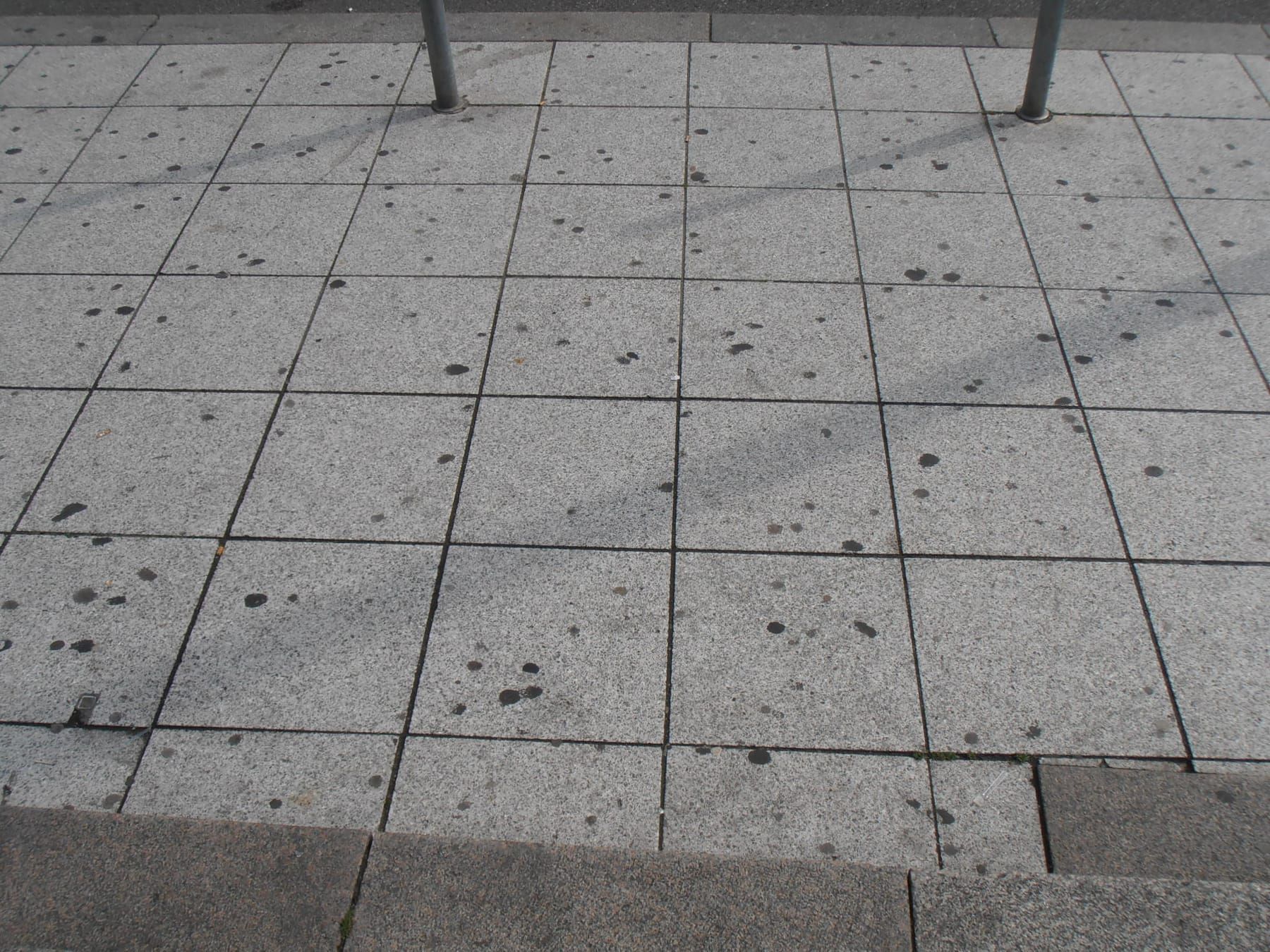
Conventional chewing gum may be the only plastic most people chew on purpose for twenty minutes and then stick under a table. It doesn’t say plastic on the pack. It says “gum base.”
That’s not a conspiracy, exactly. It’s just a label that tells you almost nothing. Here’s what gum base can legally be, what the much-shared study on microplastics in saliva actually found (and didn’t), what gum costs the pavement, and what the chicle brands say about themselves.
What “gum base” is allowed to be
In the US, gum base is a regulated food additive with a published menu. The FDA’s rule lists two kinds of chewy ingredient. The natural ones are tree latexes: chicle from the sapodilla tree, jelutong, sorva and natural rubber, among others. The synthetic ones read like a plastics catalogue: butadiene-styrene rubber, butyl rubber (isobutylene-isoprene copolymer), polyethylene, polyisobutylene, polyvinyl acetate, and paraffin and petroleum waxes. Add softeners (rosin esters, lanolin, stearic acid), antioxidants such as BHT, and the rule also allows “substances generally recognized as safe in food” on top.
Polyvinyl acetate is a close cousin of the PVA film on laundry pods: pod film is made by converting polyvinyl acetate into polyvinyl alcohol. Polyethylene is one of the commonest plastics there is (see our guide to plastic types). In gum they’re food-grade, and they’re there to give it a chew, not to feed you. A 2023 review describes gum base as “inert, non-nutritious, indigestible, and insoluble”, which is why it’s still in your mouth when the flavour has gone.
Which of these is in your gum? You can’t tell. The industry’s trade body, the International Chewing Gum Association (ICGA), says each maker uses its own proprietary gum base, “which is not publicly disclosed”, and that “gum base” is the term used “in accordance with food labelling laws”. The same review notes there’s a “lack of information about chewing gum base and its compositions in the literature”. Even scientists don’t get the recipe.
The ICGA defends synthetics on taste and texture, saying they offer “consistency, long-lasting flavor support and texture”, and argues that natural ingredients “should not be presumed to provide advantages in terms of safety, sustainability, or degradability”. Note the claim; it comes from the people who sell the synthetic stuff. (As we’ll see, the one study comparing the two gives them an unexpected point.)
The UCLA study: what it found, and what it is
In spring 2025, UCLA researchers presented a pilot study at the American Chemical Society’s spring meeting in San Diego, and headlines about microplastics in your saliva followed. UCLA’s own release calls it a pilot study.
It has since passed peer review, but it’s still small. The team published it as a short paper in the Journal of Hazardous Materials Letters in 2025. The paper is open access, and its figures match the fuller 2025 UCLA master’s thesis by the graduate student who ran the work. Read it as a careful first look, not a settled number.
What it did: one person chewed ten popular US gums, five synthetic and five natural, seven pieces each. Each piece was chewed for four minutes, with saliva collected every 30 seconds. The mouth was rinsed first, and particles in that rinse were subtracted as background. That’s careful, but it’s also one mouth and 70 samples.
What it found, according to the paper:
- About 100 particles per gram of gum on average, with a standard deviation of 161, so results swung wildly from gum to gum. The highest was 637 per gram.
- Natural gums shed about as much as synthetic ones: 95.8 particles per gram for natural, 104.0 for synthetic, a difference that wasn’t statistically significant. The authors had expected natural gums to shed less, and call the result surprising.
- The particles were mostly polyolefins (the polyethylene and polypropylene family), plus PET, polyacrylamides and polystyrenes. In the natural gums, polyolefins were about half of what was identified. The authors suggest the plastic in natural gums came from manufacturing or packaging, since it can’t come from the tree, but they don’t know.
- The paper says particles were all under 100 micrometres, with a median of 45.4 µm. The infrared method can’t identify particles smaller than 20 µm, and the dye-counting setup has a 10 µm detection limit, so smaller particles would have been missed.
- Assuming 160 to 180 pieces a year, the authors estimate 28,500 to 32,000 particles a year from gum.
Two catches the headlines skipped.
Most of the counting was done with a dye. The study used infrared spectroscopy to identify which polymers were present, in pooled samples. The headline counts came from a quicker method: staining with Nile Red and counting glowing particles in smartphone photos. As we explain in how microplastics are measured, Nile Red also sticks to fats and other organic material, and gum contains waxes and fats. The samples were chemically digested first to strip out gum residue, which helps, but the counted particles weren’t each confirmed as plastic. That doesn’t make the counts wrong, but they could include some that aren’t plastic.
Most of it comes out early. In a separate run where gum was chewed for 20 minutes, the paper found most particles came out in the first eight minutes (94% in its abstract, 92% in its results section), after which release levelled off. So chewing one piece for longer didn’t add much. (The earlier thesis gave 52% in one place; the published paper doesn’t.)
The other studies
Two other groups have looked, and neither settles much:
- A team publishing in the Journal of Hazardous Materials in 2025 developed a cheap way to detect nanoplastics using household metal foil, and tested it on saliva from chewing gum base. The abstract reports detecting more than 250,000 microplastic particles with automated Raman spectroscopy, then nanoplastics, in saliva from a one-hour chewing session. The abstract doesn’t say how much gum or how many chewers that covers, so it can’t be turned into a per-piece figure, and its main aim was testing the method.
- A 2026 preprint, not yet peer-reviewed, dissolved five brands bought in Iran and found 20 to 50 microplastics per gram in the gum itself, mostly polyethylene and polypropylene fibres and fragments. The authors say the source could be the gum, its ingredients, the factory or the plastic packaging.
The industry’s response: the ICGA says microplastics are “not intentionally added” to gum, and that it isn’t aware of “any validated studies or methods” for measuring them in gum. The first part is surely true. The second is technically true, because the science is new, and also a convenient place to stop looking.
Is it bad for you?
Nobody knows, and anyone who tells you otherwise is guessing.
No study has looked at whether microplastics from gum affect human health. The UCLA study’s principal investigator, Sanjay Mohanty, said so plainly: “Scientists don’t know if microplastics are unsafe to us or not”, and “There are no human trials.” The wider evidence on microplastics and health is early: mostly lab and animal studies, plus a few human studies that show association, not cause. We grade it in our health evidence review, and explain what finding plastic in the body does and doesn’t mean in microplastics inside you.
One lab result on a gum polymer to know about, with heavy caveats: a 2026 preprint fed fruit flies lab-made particles of polyisobutylene, one of the permitted gum polymers, and reported shorter survival, worse climbing and a leakier gut. That’s flies, not people, fed 1 to 3 mg of the plastic alongside 50 mg of yeast, and the study isn’t peer-reviewed. Nobody has compared those doses with what a gum chewer might swallow. It shows how little anyone has studied the plastics in gum, not that gum is poisoning you.
Put the numbers in proportion, too. If the pilot’s estimate holds, gum is one more small source among many: drinking water, food, dust and air, which we cover in their own articles. Cutting gum won’t make you plastic-free. It’s just an easy one to drop.
Gum on the pavement
Here the evidence is solid, because you can see it. Those grey-black splodges on every high street are flattened gum.
In England, Keep Britain Tidy found that around 87% of streets are stained with gum, according to the government, and the annual clean-up cost for UK councils was estimated at about £7 million. Those are 2021 and 2022 figures; a July 2026 council notice quotes Keep Britain Tidy at around 77% of England’s streets instead, without a date for the survey. We found no newer estimate of the clean-up cost.
Gum doesn’t go away by itself. The ICGA concedes that “traditional gum bases are not designed to biodegrade quickly”, and Keep Britain Tidy’s chief executive says gum “takes years to decompose naturally”. We found no measured breakdown time for gum in the street, so we’re not giving one. (On where the famous plastic breakdown figures come from, see how long plastic takes to break down.)
In 2021 the UK government set up a Chewing Gum Task Force, run by Keep Britain Tidy and funded by gum makers including Mars Wrigley and Perfetti Van Melle, who pledged up to £10 million over five years. It hands councils grants to scrub pavements and put up “bin it” signs. Its first three rounds gave £4.88 million to 122 councils, and one council’s announcement puts the four-year total at £6.46 million. As of November 2026 the scheme is in its fifth year. Earlier pilots with signage cut gum littering by up to 64%.
Credit where due: makers paying towards the mess is better than nothing. But set it against the £7 million a year councils were estimated to spend, and the industry is paying a fraction of the bill. Its trade body also describes discarded gum as “primarily a visual litter issue”. The fix it promotes is chewers binning gum properly. That’s sensible. It’s also the same playbook we describe in how the packaging industry convinced you plastic pollution is your fault: design a product that never breaks down, then campaign about the people who drop it.
What the natural gum makers say
A handful of brands make gum on chicle or other tree saps and market it as plastic-free. We haven’t vetted any of them against our standard, and nothing here is a recommendation or a buying link. Here’s what each says on its own website, and what it doesn’t say:
| Maker | What it says about the base | What it doesn’t say |
|---|---|---|
| Chicza (Mexico) | Made from the latex of the chicozapote (sapodilla) tree; “completamente biodegradable” (completely biodegradable) and a certified organic product | No timeframe or test for “biodegradable”; certifier not named on that page; retail packaging not described |
| Simply Gum (US) | Uses “a tree sap (chicle) as the base”; packaging is uncoated paper | No full list of what else is in the base; says its sap “can vary from harvest to harvest” and that it’s “actively sourcing more reliable plant-based gum bases”, so the base may change |
| True Gum (Denmark) | “Sap from gum trees instead of plastic”, boxed in cardboard | Doesn’t name the tree or other base ingredients; inner wrapping not described; says it’s still researching how its gum breaks down |
Two cautions apply to all of them. First, “made without plastic” isn’t the same as “sheds no plastic.” In the UCLA pilot, natural gums released about as many particles as synthetic ones, possibly picked up along the way. The thesis lists the ten gums: Simply Gum was one of the five natural ones (Chicza and True Gum weren’t), but results aren’t reported brand by brand. Second, a chicle base still sits in a product with flavourings, waxes and coatings, and makers don’t always list what those are made of. If a natural gum claims to be biodegradable, ask how it was tested and for how long.
Where the plastic is
- The base, in most conventional gum. Possibly polyvinyl acetate, polyethylene, polyisobutylene, butyl rubber or styrene-butadiene rubber. The label won’t tell you which, or whether any is there.
- Particles in your saliva, from synthetic and natural gums alike, in one small pilot study. How much, and from where, is unconfirmed.
- The packaging. Blister packs, bottles and tubs are plastic; paper wrappers and cardboard boxes are a step down. Check the pack.
- The pavement. Dropped gum stays there until a council pays to remove it.
Questions people ask
If I chew one piece for longer, do I get more microplastics?
Not much, according to the pilot. Release was highest early on and levelled off; the paper found 92 to 94% came out in the first eight minutes, so later chewing added relatively little. On that logic, one long chew sheds less than several short ones.
Is natural gum plastic-free?
Its base may be. Whether it releases plastic particles is another question: in the only study comparing the two, natural gums shed about as many as synthetic ones. That was one person chewing ten gums, and needs repeating.
Why doesn’t the label just say what the polymer is?
The industry says “gum base” is the accepted name under food labelling law, and that formulations are proprietary. The FDA rule requires the additive to be labelled “chewing gum base”; we found nothing in it that makes makers name the polymers on the pack.
What to do, ranked by how strong the evidence is
- Bin your gum, wrapped (strong evidence). Gum on pavements costs councils millions, and the conventional stuff isn’t designed to biodegrade. This is the one harm nobody disputes.
- Chew less, or skip it (strong evidence it cuts gum plastic to zero; unknown health benefit). If you chew for fresh breath, mints, or nothing at all, involve no gum base to shed. If you like the chew itself, there’s no non-gum substitute that works the same, and that’s fine.
- If you chew, fewer pieces beats more (weak evidence). In the pilot, most particles came out early in each piece, so one piece chewed a while sheds less than several swapped out.
- If you want a gum without a synthetic base, read the maker’s own words (moderate evidence on the base; weak on shedding). Chicle-based gums avoid the synthetic polymers, but the only study found they shed about as many particles. Look for a named base, not just “plant-based,” and plastic-free packaging.
- Don’t panic about health (honest evidence: unknown). Nobody has shown harm from gum microplastics, and nobody has ruled it out. If it bothers you, it’s an easy source to drop; it’s not a reason to fear the gum you’ve already chewed.
Where the evidence is weak: the headline gum study is a small pilot, with one chewer and counts made mostly with a dye that can over-count. Nobody has tested gum shedding at the nanoscale in a way that can be compared across brands, or looked at health effects at all. What’s solid is that conventional gum is chewed on a base that can legally be made of plastics, without the label saying which, and that what’s dropped on the street stays there. For how we judge claims like these, see our standards.
General information, not medical advice. Talk to a doctor about your own health, or your child's.More.
Sources
- US Food and Drug Administration (2026). 21 CFR 172.615 Chewing gum base. Electronic Code of Federal Regulations.
- International Chewing Gum Association (2025). FAQs. gumassociation.org.
- International Chewing Gum Association (2025). Does chewing gum contain microplastics?. gumassociation.org.
- Kaveh M, Yeganehzad S, Rabie Ashkezary M, Hesarinejad MA, Todaro A, Nishinari K (2023). Chewing gum base: A comprehensive review of composition, production, and assessment methods: Advances and approaches in biodegradability. Journal of Texture Studies.
- Lowe L (thesis; committee chair Mohanty S) (2025). Ingestion Risk of Microplastics from Chewing Gum. MS thesis, University of California, Los Angeles (eScholarship).
- Lowe L, Leonard J, Mohanty S (2025). Ingestion of microplastics during chewing gum consumption. Journal of Hazardous Materials Letters 6:100164.
- UCLA Newsroom (2025). Bursting your bubble: chewing gum releases microplastics into your saliva, UCLA research shows. UCLA Newsroom (press release, 22 April 2025).
- Pant U, Tate J, Liu X, Birse N, Elliott C, Cao C (2025). From automated Raman to cost-effective nanoparticle-on-film (NPoF) SERS spectroscopy: A combined approach for assessing micro- and nanoplastics released into the oral cavity from chewing gum. Journal of Hazardous Materials.
- Jahedi F, Fard NJH, Turner A, Rad HD (2026). Chewing Gum as a Source of Oral Microplastic Intake: An Investigational Study. Research Square (preprint, not peer-reviewed).
- Basavaraju DM, Anifowoshe AT, Sarkar R, Nongthomba U (2026). Polyisobutylene Micro/Nanoplastics Induce Multi-System Toxicity, Intestinal Barrier Dysfunction, and Neurodegeneration in Drosophila melanogaster. bioRxiv (preprint, not peer-reviewed).
- Department for Environment, Food & Rural Affairs (2021). Chewing Gum Task Force to clean up our high streets. GOV.UK press release (30 August 2021).
- Department for Environment, Food & Rural Affairs (2022). New funding to remove chewing gum stains from our high streets. GOV.UK news story (6 August 2022).
- Department for Environment, Food & Rural Affairs; Keep Britain Tidy (2025). Over £1 million for towns and cities to clean up chewing gum stains. GOV.UK press release (17 June 2025).
- Stratford-on-Avon District Council (2026). Council awarded Chewing Gum Task Force funding (news release, 1 July 2026). stratford.gov.uk.
- Chicza (2026). Nosotros. chicza.com (maker's website, Spanish).
- Simply Gum (2026). FAQ. simplygum.com (maker's website).
- True Gum (True Company) (2026). About True Gum; FAQ. truecompany.com (maker's website).
Spotted an error? Tell us and we'll correct it and note the change.