Plastic in your tea bag and coffee cup: what hot drinks really shed
Silky tea bags, 'plant-based' PLA bags and plastic-lined paper cups all shed particles into hot water. What the studies counted, why the numbers disagree, and what to swap.
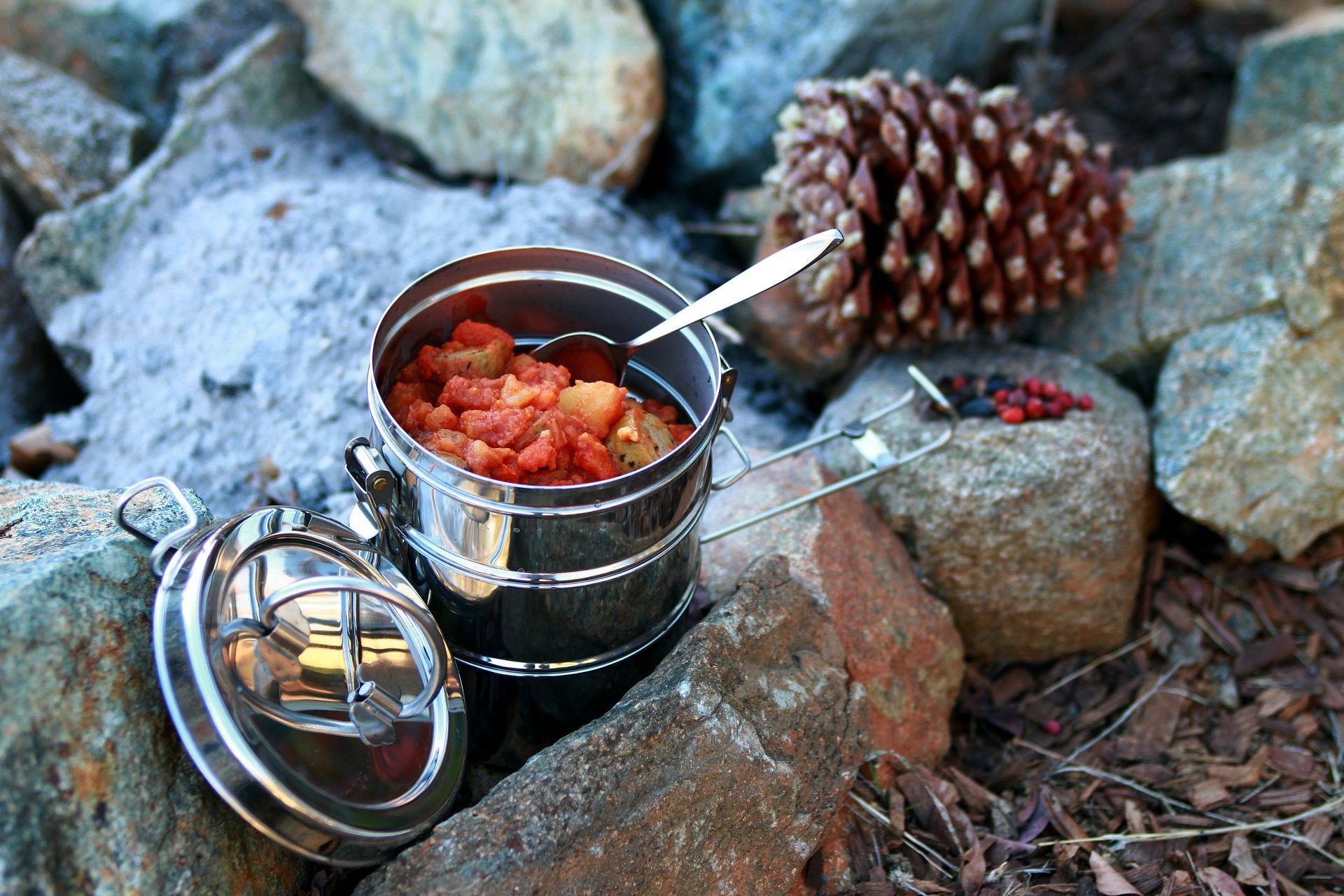
Tea is supposed to be the gentle drink. Leaves, hot water, a quiet minute. Then somebody decided the leaves would look classier in a see-through pyramid of nylon, and somebody else decided the takeaway cup should be paper on the outside and plastic on the inside. Now a lot of us pour water at nearly 100°C onto plastic twice a day without thinking about it.
Here’s what scientists have found when they do think about it, why their numbers are all over the place, and what’s worth changing.
The headline that started it: billions of particles per cup
In 2019 a research team steeped “silky” plastic tea bags at 95°C and reported that a single bag released about 11.6 billion microplastics and 3.1 billion nanoplastics into one cup. They matched the particles to the bags’ materials, nylon and PET (the polymer in drinks bottles), and found the levels were “several orders of magnitude” higher than plastic loads reported in other foods. Invertebrates exposed to the particles showed dose-dependent changes in behaviour and development.
That number travelled. It’s still quoted everywhere, including in our own kitchen swaps guide. It deserves a closer look.
Why other labs pushed back
In 2020 a group of seven other researchers published a formal comment challenging the paper, and the original team replied. Both are paywalled and we couldn’t read them, so we’re relying on how other scientists have summarised the dispute.
A team at the European Commission’s Joint Research Centre, which went on to test nylon tea bags themselves, says the comment’s authors concluded that what comes off the bag is not mainly true particles but “partially soluble oligomers”: short chains of nylon that dissolve in hot water. A 2026 review puts it more bluntly: the billions figure may be an overestimate because not all observed particles were chemically confirmed as plastic, and it rates the evidence “low to moderate”.
The JRC team’s own experiment is the most useful thing here. They steeped empty nylon tea bags at 95°C for 10 minutes and measured about 1.13 milligrams of nylon 6 released per bag. That’s a real amount of plastic. But what form it takes depends on temperature. Filtered while still hot, nearly all of it passed through a filter with 20-nanometre holes, which suggests it was dissolved or extremely fine. Filtered after cooling, about 35% of it was caught. In other words, the material seems to clump into particles as the tea cools. The authors’ own question: is this “micro- or nanoplastics or something else altogether?”
That matters less for your health than for the counting. If dissolved nylon comes out of solution as particles in the cup, then you are swallowing nylon either way. But a count of “particles” can swing enormously depending on when and how you look.
How much do the counts disagree?
By more than a hundred million times. A 2024 review of inconsistent food microplastic studies noted that one tea bag study reported about 15 billion particles per cup, while another found about 106 per tea bag. The reviewers blame differences in filters, whether particles were chemically confirmed as plastic, and how small samples were scaled up.
Other recent tea bag studies sit everywhere in between:
- A 2026 study using flow cytometry counted about 430,000 microplastics per bag on the first brew, and markedly fewer on a second steep. Most came from the bag, not the tea leaves.
- A 2023 study of 45 tea bag samples from Persian and German brands found an average of 412 and 147 microplastic items per bag, mostly fibres 100 to 250 micrometres long, so much larger than the McGill particles and counted a different way.
- A 2026 systematic review of 19 studies concluded that plastic-containing bags often release billions of particles per bag at 95°C or above, but that the lack of standard methods makes the studies hard to compare and exposure estimates “preliminary”.
And one study has left the record entirely. A 2022 paper on microplastics in tea bags sold in Bangladesh was retracted in 2024. We couldn’t access the notice, so we don’t know why, but if you see it quoted, it shouldn’t be.
Why nanoplastic numbers are so slippery
Most of the giant numbers in this field come from instruments that count tiny things in water without knowing what they are. Nanoparticle tracking analysis, for example, watches particles scatter laser light and jiggle around. It’s good at counting and sizing. It’s bad at chemistry: a speck of tea, a mineral grain or a blob of dissolved polymer that clumped on cooling can all look the same.
You can see the problem in the data. A team that ran this kind of count on three commercial tea bags got 1.2 billion particles per millilitre from a polypropylene bag, 135 million from a cellulose bag and 8.2 million from a nylon bag. A Russian team testing eight bag types found its highest counts from cellulose bags: up to 170 billion particles per litre, against 14 billion for synthetic ones. Cellulose is plant fibre, not plastic. Those are real particles, but they aren’t plastic, and some studies don’t separate the two.
The more careful studies confirm what particles are made of, one by one, using spectroscopy that reads their chemical fingerprint. That usually only works down to a few micrometres, which is why chemically confirmed counts tend to be far lower than nanoparticle counts. A team that did this kind of chemical imaging on six tea brands found that a considerable proportion of the particle residues were contaminants from the tea itself, not plastic from the bag.
So when you read “billions” or “trillions”, ask two questions: were the particles shown to be plastic, and how small were they? “Microplastic” is anything under 5 millimetres. “Nanoplastic” is under 1 micrometre (some scientists say under 100 nanometres). The two are measured with completely different tools, and the numbers aren’t comparable.
Which tea bags contain plastic?
More than you’d guess, and not just the shiny ones.
- Silky mesh pyramids are usually nylon or PET. These are the bags behind the 2019 headline.
- Ordinary-looking paper bags can contain polypropylene. Of six popular brands tested in one study, one group of bags was a composite of polypropylene and cellulose in varying ratios. Only some were plastic-free.
- “Plant-based”, “biodegradable” or “compostable” bags are often made with PLA (polylactic acid), a plastic made from corn or sugar instead of oil.
Brands rarely print what the bag is made of. If the box doesn’t say “plastic-free”, you can’t assume it is.
PLA is still plastic
PLA is marketed as the green option. It’s still a polymer, and it still sheds. The same group behind the polypropylene count found that a commercial PLA tea bag released about one million PLA nanoparticles per bag under simulated brewing. In lab-grown human intestinal cells, the particles were taken up readily, especially by mucus-producing cells. They didn’t kill cells at the dose tested, but caused slight disruption to the gut barrier model at short exposure times. That’s a cell study, not evidence of harm in people.
And “biodegradable” depends on where it ends up. Researchers buried tea bags in a field margin for seven months. Bags made of cellulose blended with PLA lost 66% and 78% of their mass, mostly the cellulose part, while a bag made of PLA alone didn’t measurably change. Pieces of the PLA bag in soil also reduced earthworm reproduction. The authors’ conclusion: PLA doesn’t offer a more environmentally friendly alternative.
Paper coffee cups: plastic with a cardboard jacket
A paper cup that held liquid with no lining would collapse. So nearly all takeaway cups have a thin plastic film inside, usually polyethylene, sometimes PLA. Hot coffee sits against it for as long as it takes you to drink it.
What the cup studies found
- Ranjan 2021. The study that started the cup scare filled paper cups with water at 85 to 90°C for 15 minutes. Under a fluorescence microscope, the team counted about 25,000 micron-sized microplastic particles per 100 mL cup, and, by electron microscope, about 102 million sub-micron particles per millilitre. They also found ions such as fluoride and traces of heavy metals in the cup films.
- Chen 2023. A larger study tested 90 batches of commercial cups at 95°C for 20 minutes and identified particles by Raman spectroscopy. Plastic-lined paper cups released 675 to 5,984 particles per litre, all-polypropylene cups 781 to 4,951, and polystyrene cups 838 to 5,215, with no significant difference between them. Most particles were under 20 micrometres. Reusing a cup still released particles, only slightly fewer. Acidic fizzy drinks increased release from the lined paper cups.
- NIST 2022 (US). Scientists at the US National Institute of Standards and Technology looked for much smaller particles in polyethylene-lined hot drink cups and food-grade nylon bags. They found more than a trillion particles per litre, averaging 30 to 80 nanometres across. Nylon released seven times as many as the cups. To count them, the team sprayed the water into a mist, dried it, and grew the particles with butanol vapour until a counter could see them, then checked composition with electron microscopy and infrared spectroscopy. The lead researcher told NIST that nobody knows yet whether the particles harm people or animals.
- PLA-lined cups aren’t the escape hatch. Another team found that crumpling a PLA-lined paper cup cracks the coating and releases about 180 microplastics per wrinkle. Their advice, which costs nothing: don’t scrunch the cup while you’re still drinking from it.
Look at the spread: thousands per litre, hundreds of thousands per litre, trillions per litre. These aren’t contradictions so much as different studies looking at different size ranges with different tools. The chemically confirmed counts (Chen) are the most trustworthy for what they measure. The nanoparticle counts (NIST) capture far more, but with less certainty about every particle. And the Ranjan team later converted their own counts into a mass estimate using a “simple method” of their own, while stating plainly that health risks can’t yet be quantified.
Chen’s result has an uncomfortable implication: switching from a plastic cup to a “paper” one doesn’t obviously help. Both put plastic against your hot drink.
And the lid?
Many takeaway lids are polystyrene (a UK study of lid litter used virgin polystyrene coffee cup lids); we found no study that measured what lids release while you sip hot coffee through them. The nearest evidence is Chen’s finding that polystyrene and polypropylene cups shed in the same range as lined paper cups at 95°C. A lid touches less liquid than a cup, so it’s likely a smaller source, but that’s our inference, not a measurement. The easy precaution is to drink from the open rim or skip the lid when you’re not walking.
What ends up in the drink
A 2025 study tested 155 hot and cold drinks sold in the UK and identified the polymers in the particles. Hot tea averaged 60 microplastics per litre and hot coffee 43, against 31 and 37 for iced versions. Hot drinks contained significantly more than cold, which the authors link to heat releasing particles from packaging. Those are counts of particles from 10 to 157 micrometres, so they say nothing about nanoplastics.
Is any of this hurting us?
Honest answer: we don’t know, and nobody has measured it in people.
What exists is lab work. Particles from tea bags were absorbed by human intestinal cells grown in a dish, and a 2026 study found tea bag particles triggered inflammatory responses in cell lines. But a Russian team found no toxic effect on intestinal cells even at the highest particle concentrations they observed.
The most alarming study is in mice. Researchers gave pregnant mice particles and chemicals extracted from paper cups and found the particles in all 13 tissues they examined, including the placenta and fetus, with effects at doses the authors equated to 3.3 cups a day. That’s a warning sign worth taking seriously. It is not evidence about pregnant women: mice aren’t people, the extracted material isn’t the same as what you’d swallow from one drink, and “cups a day” in a mouse is the authors’ conversion.
For what we do and don’t know about plastic in the human body more broadly, see our explainer on microplastics inside you.
Here’s the bottom line, though. Whatever the right particle count, every serious study agrees on direction: hotter water and plastic in contact with it mean more stuff in your drink. And unlike most microplastic exposure, this one is almost entirely avoidable.
What to do, ranked by evidence
These are ranked by how directly the evidence supports them. None has been tested for its effect on anyone’s health; they remove a known source.
- Stop putting plastic tea bags in boiling water. Every study that has tested nylon, PET or polypropylene bags in hot water found release, even if they disagree on how much. Loose-leaf tea in a stainless steel or glass infuser, or a teapot with a steel strainer, takes the bag out of the equation. This is the strongest swap on the list.
- Don’t fall for “plant-based” bags. PLA bags release particles too, and a pure PLA bag didn’t break down in soil. If you use bags, look for ones the manufacturer explicitly says are plastic-free (no polypropylene seal, no PLA). If a brand won’t tell you, ask.
- Bring your own cup, and make it ceramic, glass or steel. Plastic-lined paper cups and all-plastic cups shed at similar rates, so the only real fix is a cup with no plastic touching the drink. Plenty of steel travel mugs have plastic lids, so the same lid caveat applies. Better still: sit down and ask for a mug.
- If you do get a takeaway cup, don’t linger and don’t scrunch. Release rises with temperature and time. Drink it, don’t keep refilling it, and don’t crush it while it still has coffee in it (about 180 particles per wrinkle in one test).
- Skip the lid when you can. A precaution based on what lids are made of, not on a direct measurement.
- Don’t microwave tea in the bag. Heating nylon tea bags in the microwave amplified particle release in one study.
Two honest caveats. Loose tea isn’t automatically pristine: one study found that most microplastics in brewed tea came from the bag rather than the tea leaves, which implies the leaves carried some too. And the plastic kettle you boiled the water in may matter too; we cover that in our kitchen swaps guide.
The bigger fix isn’t yours. Tea companies could print what their bags are made of tomorrow. Coffee chains could make a ceramic mug the default for anyone who isn’t leaving. Regulators could require brands to disclose plastic in food-contact paper. Until then, the cheapest move is also the oldest one: a teapot, some leaves and a cup that isn’t disposable.
For how we judge studies and claims, see our standards. More on drinking and eating on the move in our on-the-go section.
Sources
- Hernandez LM, Xu EG, Larsson HCE, Tahara R, Maisuria VB, Tufenkji N (2019). Plastic teabags release billions of microparticles and nanoparticles into tea. Environmental Science & Technology. Our summary
- Busse K, Ebner I, Humpf HU, Ivleva N, Kaeppler A, Oßmann BE, Schymanski D (2020). Comment on "Plastic teabags release billions of microparticles and nanoparticles into tea". Environmental Science & Technology 54:14134–14135.
- Hernandez LM, Xu EG, Larsson HCE, Tahara R, Maisuria VB, Tufenkji N (2020). Response to comment on "Plastic teabags release billions of microparticles and nanoparticles into tea". Environmental Science & Technology 54:14136–14137.
- Cella C, La Spina R, Mehn D, Fumagalli F, Ceccone G, Valsesia A, Gilliland D (2022). Detecting micro- and nanoplastics released from food packaging: challenges and analytical strategies. Polymers.
- Rehman ZU, Song J, Pastorino P, Wang C, Kazmi SSUH, et al. (2026). From kitchen to cell: a critical review of microplastic release from consumer products and its health implications. Toxics.
- Canga EM, Gowen A, Xu JL (2024). Assessing the inconsistency of microplastic measurements in foods and beverages. Comprehensive Reviews in Food Science and Food Safety.
- Xu JL, Lin X, Hugelier S, Herrero-Langreo A, Gowen AA (2021). Spectral imaging for characterization and detection of plastic substances in branded teabags. Journal of Hazardous Materials.
- Banaei G, García-Rodríguez A, Tavakolpournegari A, Martín-Pérez J, Villacorta A, Marcos R, Hernández A (2023). The release of polylactic acid nanoplastics (PLA-NPLs) from commercial teabags. Obtention, characterization, and hazard effects of true-to-life PLA-NPLs. Journal of Hazardous Materials.
- Banaei G, Abass D, Tavakolpournegari A, Martín-Pérez J, Gutiérrez J, Peng G, Reemtsma T, Marcos R, Hernández A, García-Rodríguez A (2024). Teabag-derived micro/nanoplastics (true-to-life MNPLs) as a surrogate for real-life exposure scenarios. Chemosphere 368:143736.
- Yaroslavov AA, Efimova AA, Grokhovskaya TE, Badikova AG, Spiridonov VV, Pozdyshev DV, Lyulin SV, Kenny JM (2025). Evolution of microplastics released from tea bags into water. Polymers.
- Courtene-Jones W, Burgevin F, Munns L, Shillam MBT, De Falco F, Buchard A, Handy RD, Thompson RC, Hanley ME (2024). Deterioration of bio-based polylactic acid plastic teabags under environmental conditions and their associated effects on earthworms. Science of the Total Environment.
- Song R, Xie M, Xu H, Liu J, Su A, Yang W (2026). Counterstaining-assisted flow cytometry for small-sized microplastics detection and toxicity assessment released from teabags. Food Research International.
- Sanei ME, Abedini A, Khezerlou A, Jahed-Khaniki G, Shariatifar N, Molaee-Aghaee E, Alizadeh Sani M (2026). Tea bags as hidden source of micro- and nanoplastics: a systematic review for food safety. Current Research in Food Science.
- Afrin S, Rahman MM, Akbor MA, Siddique MAB, Uddin MK, Malafaia G (2024). Retraction notice to "Is there tea complemented with the appealing flavor of microplastics? A pioneering study on plastic pollution in commercially available tea bags in Bangladesh". Science of the Total Environment.
- Ranjan VP, Joseph A, Goel S (2021). Microplastics and other harmful substances released from disposable paper cups into hot water. Journal of Hazardous Materials.
- Joseph A, Parveen N, Ranjan VP, Goel S (2023). Drinking hot beverages from paper cups: lifetime intake of microplastics. Chemosphere.
- Chen H, Xu L, Yu K, Wei F, Zhang M (2023). Release of microplastics from disposable cups in daily use. Science of the Total Environment.
- Zangmeister CD, Radney JG, Benkstein KD, Kalanyan B (2022). Common single-use consumer plastic products release trillions of sub-100 nm nanoparticles per liter into water during normal use. Environmental Science & Technology. Our summary
- National Institute of Standards and Technology (2022). NIST study shows everyday plastic products release trillions of microscopic particles into water. NIST news release.
- Fang C, Zhang Z, Zhang X, Naidu R (2024). Microplastics or micro-bioplastics released by wrinkling paper cup. Science of the Total Environment.
- Chen Q, Peng C, Xie R, Xu H, Su Z, et al. (2024). Placental and fetal enrichment of microplastics from disposable paper cups: implications for metabolic and reproductive health during pregnancy. Journal of Hazardous Materials.
- Al-Mansoori M, Harrad S, Abdallah MA (2025). Synthetic microplastics in hot and cold beverages from the UK market: comprehensive assessment of human exposure via total beverage intake. Science of the Total Environment.
- Trusler MM, Kent MS, Lomax BH, Vane CH, Cook S (2025). The use of ATR-FTIR to track the degradation of single-use polystyrene cup lids during 24 months of temperate outdoor exposure. PLOS ONE.
- Kashfi FS, Mohammadi A, Rostami F, Savari A, De-la-Torre GE, et al. (2023). Microplastics and phthalate esters release from teabags into tea drink: occurrence, human exposure, and health risks. Environmental Science and Pollution Research.
Spotted an error? Tell us and we'll correct it and note the change.