Rugs and carpets: plastic fibres, stain-proofing and where old carpet goes
Wall-to-wall carpet is mostly plastic, front and back. What the fibres and backings are, what 'stain-resistant' has meant, which states ban PFAS in carpet, and how little of it gets recycled.
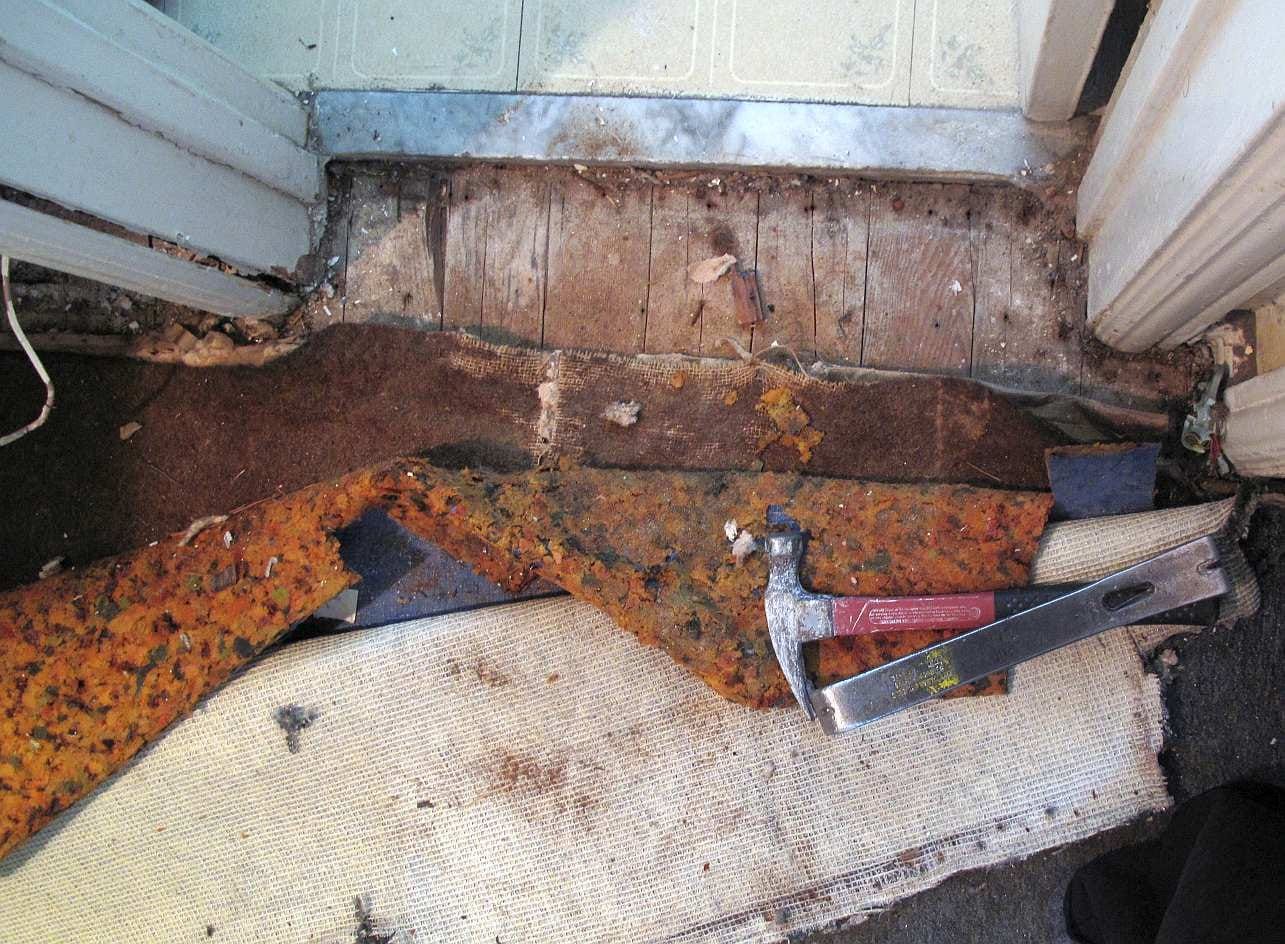
Look down. If you’re standing on wall-to-wall carpet, you’re probably standing on plastic: plastic fibres, glued to a plastic backing, possibly treated with a chemical that never breaks down. It also happens to be one of the best dust traps ever invented.
This piece covers what carpets and rugs are made of, the chemistry problems, the law as of November 2026, and the less-than-glorious story of what happens to old carpet. For what’s floating around in your indoor air and dust generally, see our dust explainer.
What carpet is made of
A broadloom carpet has two parts. The face is the fibre you walk on, usually nylon, polyester (PET) or polypropylene. The back, or “carcass”, is generally upwards of 70% of the carpet’s weight and is mostly a polypropylene backing, calcium carbonate filler and binding adhesives.
The fibre mix has shifted. In California, polyester went from about 22% of collected old carpet to around 45% by 2021, as PET took a bigger share of home carpet and nylon’s share of collections fell. Wool, the obvious natural alternative, was 1% or less of carpet sales. Those figures come from the carpet industry’s own recycling organisation, and there isn’t a better public source we could find.
So “carpet” mostly means plastic, on the front and the back.
Backings and the new-carpet smell
That smell in a freshly carpeted room has a name. In a classic chamber study, carpets backed with styrene-butadiene rubber (SBR) latex adhesive mainly gave off 4-phenylcyclohexene, “the source of ‘new carpet’ odor”, and styrene. A carpet with a PVC backing gave off formaldehyde, vinyl acetate and other compounds instead. Cars have their own version, in a smaller space that gets much hotter: see new-car smell.
How much? A European Commission lab measured total VOCs from wool and synthetic carpets in four sizes of test chamber, with concentrations up to 2,300 µg/m³ for a carpet with a synthetic backing. Emissions peaked within hours. Both studies are old and in chambers, not homes, and the 1993 authors noted that apart from formaldehyde, little is known about health effects at these levels. The pattern is the same one you see with mattresses: strongest at first, fading over time.
Stain-proofing and PFAS
Stain- and water-resistant finishes are one of the big uses of PFAS, the “forever chemicals” covered in our PFAS explainer, and researchers say carpets can be a significant source of PFAS indoors. Carpets matter because people, especially small children, spend so much time on them.
- Carpets and dust move together. In 18 California childcare centres, the median total PFAS was 471 ng/g in carpets and 523 ng/g in dust. Levels in each carpet tracked levels in its dust, and the authors concluded carpets can be both a source and a sink.
- The chemistry has shifted, not stopped. A 2025 Dutch study of carpet, curtain and sofa fabrics found 28 PFAS, including newer four-carbon precursors making up about 10% of the PFAS in carpets. That’s consistent with the industry’s move to shorter-chain PFAS, though the sample was small.
- There’s a body-burden signal. In US national survey data from 2005 to 2006, people in homes with low-pile carpet had significantly higher blood levels of two PFAS than people with smooth floors. The authors estimated 24% and 19% of those levels could be attributed to carpeting. That’s an association from one point in time, not proof, and it predates recent bans.
- Changing materials helps. In offices and classrooms with “healthier” furniture and carpet, dust PFAS was 78% lower than in rooms with no intervention.
Where PFAS in carpet is banned (as of November 2026)
States have moved faster than federal regulators on carpet:
- Maine banned intentionally added PFAS in new carpets and rugs from 1 January 2023.
- Maryland banned making or knowingly selling rugs or carpets with intentionally added PFAS from 1 January 2024.
- Colorado banned the sale of carpets or rugs with intentionally added PFAS from 1 January 2024.
- Minnesota followed from 1 January 2025.
- Vermont banned intentionally added PFAS in residential rugs and carpets from 1 January 2026.
- New York: from 31 December 2026, no carpet sold in the state may contain or be treated with PFAS.
- California listed carpets and rugs containing PFAS as a priority product from 1 July 2021. Under the state’s Safer Consumer Products rules, makers must analyse safer alternatives unless they notify the state that they’re removing the PFAS or the product. It isn’t a ban.
Law-firm trackers list more states with later start dates; we haven’t checked those against the statutes, so they aren’t listed here. The PFAS explainer tracks the broader state picture. Bans only cover new sales; the carpet already on your floor stays as it is.
Your carpet is a dust reservoir
Whatever ends up in a room, carpet tends to hold onto. Homes with carpet as the main floor covering in Sydney had more polyethylene, polyester, nylon, acrylic and polystyrene fibres in the dust settling in them. PFAS in childcare carpets tracked PFAS in dust. And carpet dust in Northern California childcare centres held the insecticide permethrin in 98% of samples. Centres with better pest-management practices had less, which points to pest control as a big source.
For small children, who crawl on floors and put their hands in their mouths, dust is a direct route in. Our dust explainer goes through what’s known about that, and the parents guide covers floor-level precautions.
Wool, jute and cotton: the tradeoffs
Natural fibres solve the plastic-fibre problem on top. They don’t automatically solve the rest.
- Wool doesn’t shed plastic, but moths eat it, so wool can be treated with insect-resist finishes. Permethrin, an insecticide toxic to fish, has been used as a moth-proofing agent. We found no study measuring mothproofing chemicals coming off wool rugs in homes, so this is a question to ask, not a known hazard.
- Jute, sisal, cotton are plant fibres, but a rug can still have a latex or synthetic backing, a non-slip coating or a stain treatment. Ask what the backing is made of and whether anything has been applied.
- Wool is rare in carpet. At 1% or less of sales, wool carpet is also hard to recycle in the existing system, which is built around nylon, PET and polypropylene.
A natural rug on a hard floor is the lowest-plastic option. It’s also not the answer if you rent, can’t afford it, or already have a carpet that’s in good condition.
Where old carpet goes
Mostly to landfill. California has had a carpet stewardship programme, under its carpet law (AB 2398), for more than 14 years, funded by a fee on every square yard of carpet sold. It’s run by Carpet America Recovery Effort (CARE), a nonprofit created by carpet manufacturers, and overseen by the state recycling department.
The 2025 numbers, from CARE’s own annual report:
- The recycling rate was 37%, meeting that year’s goal, up from 28% in 2021.
- Californians discarded an estimated 184 million pounds of carpet. About 117 million pounds of that wasn’t recycled.
- Of the 67.9 million pounds counted as “recycled output”, 18.9 million pounds was recovered calcium carbonate, the mineral filler from the backing. That’s about 28% of the total, by our arithmetic.
- Markets got worse during 2025: CARE’s report describes demand for nylons collapsing.
The state has been unimpressed for years. Reviewing the 2024 report, CalRecycle’s director found it noncompliant in March 2026 after CARE missed goals on collection and disposal, and noted that CARE has never been found fully compliant for any year it has run an approved plan. The 2027 recycling-rate goal is 45%.
New York’s carpet producer responsibility law took effect in December 2024, with the first annual reports due in 2028. It’s too early to say whether it’ll do better.
What you can do
Ranked roughly by how good the evidence is:
- If you’re buying, skip stain-resistant treatments (good evidence they’re a PFAS source). Carpets with PFAS feed PFAS into dust. In some states they’re now banned; elsewhere, ask the seller in writing.
- Vacuum with a sealed HEPA vacuum, often (precaution). Carpet holds dust, and dust carries PFAS, pesticides and microplastics. No study has shown a vacuuming routine lowers what’s in people, so treat this as cheap sense, not proven protection.
- Air a new carpet out (precaution). New-carpet emissions peak within hours. Ventilate during and after fitting, and if you can, be elsewhere for the first few days.
- Ask about the backing. An SBR latex backing is behind the new-carpet smell; PVC backings have their own emissions. Natural-fibre rugs can have synthetic backings too.
- Don’t rip out sound carpet to feel better. About 117 million pounds a year in California alone that isn’t recycled. If you replace it, find out whether a collector near you takes old carpet.
The bigger fixes sit with manufacturers and lawmakers: no PFAS in carpet anywhere, backings designed to be separated and recycled, and stewardship programmes that actually hit their targets. For what LPP would want disclosed before calling any flooring product a better choice, see our standards.
Sources
- Carpet America Recovery Effort (CARE) (2021). CARE California Carpet Stewardship Program capacity survey report. Submitted to CalRecycle, 30 June 2021.
- Carpet America Recovery Effort (CARE) (2026). California Carpet Stewardship Program 2025 annual report. Submitted to CalRecycle, 1 September 2026.
- CalRecycle (2026). Carpet program status. calrecycle.ca.gov.
- CalRecycle (2026). Request for Action: review of CARE's 2024 annual report. California Department of Resources Recycling and Recovery, signed 24 March 2026.
- CalRecycle (2026). Carpet materials management; carpet stewardship program goals. calrecycle.ca.gov.
- Hodgson AT, Wooley JD, Daisey JM (1993). Emissions of volatile organic compounds from new carpets measured in a large-scale environmental chamber. Air & Waste.
- Katsoyiannis A, Leva P, Kotzias D (2008). VOC and carbonyl emissions from carpets: a comparative study using four types of environmental chambers. Journal of Hazardous Materials.
- Wu Y, Romanak K, Bruton T, Blum A, Venier M (2020). Per- and polyfluoroalkyl substances in paired dust and carpets from childcare centers. Chemosphere.
- Liwara DJ, Araújo ARL, Pavlov A, Johansen JE, Liu H, Koekkoek J, Heinzelmann M, de Boer J, Leonards PEG, Brandsma S (2025). Analysis of legacy PFAS and potential precursors in curtain, sofa, and carpet fabric samples. Science of the Total Environment.
- Zhu Y, Ro A, Bartell SM (2021). Household low pile carpet usage was associated with increased serum PFAS concentrations in 2005-2006. Environmental Research.
- Young AS, Hauser R, James-Todd TM, Coull BA, Zhu H, Kannan K, Specht AJ, Bliss MS, Allen JG (2021). Impact of 'healthier' materials interventions on dust concentrations of per- and polyfluoroalkyl substances, polybrominated diphenyl ethers, and organophosphate esters. Environment International.
- California Department of Toxic Substances Control (2021). Cal. Code Regs. tit. 22, § 69511: Candidate chemicals and priority products. California Code of Regulations (via Cornell LII).
- California Department of Toxic Substances Control (2026). Cal. Code Regs. tit. 22, § 69505.1: Alternatives analysis requirements. California Code of Regulations (via Cornell LII).
- Maine Legislature (2026). 38 MRSA §1614: Products containing perfluoroalkyl and polyfluoroalkyl substances. Maine Revised Statutes.
- Colorado General Assembly (2022). House Bill 22-1345 (signed), enacting C.R.S. 25-15-604: Perfluoroalkyl and polyfluoroalkyl chemicals. Colorado General Assembly.
- Maryland General Assembly (2022). HB 275 (2022), George 'Walter' Taylor Act, enrolled bill: Environment Article §6-1604.1. Maryland General Assembly.
- Vermont Attorney General's Office (2025). Guidance on PFAS product bans (2025). ago.vermont.gov.
- Minnesota Legislature (2026). Minnesota Statutes 116.943: Products containing PFAS. Minnesota Statutes.
- New York State Department of Environmental Conservation (2026). Carpet recycling (Extended Producer Responsibility for Carpet Law). dec.ny.gov.
- Soltani NS, Taylor MP, Wilson SP (2021). Quantification and exposure assessment of microplastics in Australian indoor house dust. Environmental Pollution.
- Turner T, Cartmell E, Lester JN, Casse F, Comber SD, Scrimshaw MD (2011). The pharmaceutical use of permethrin: sources and behavior during municipal sewage treatment. Archives of Environmental Contamination and Toxicology.
- Hazard K, Alkon A, Gunier RB, Castorina R, Camann D, Quarderer S, Bradman A (2024). Predictors of pesticide levels in carpet dust collected from child care centers in Northern California, USA. Journal of Exposure Science & Environmental Epidemiology.
Spotted an error? Tell us and we'll correct it and note the change.