Receipts, BPA and BPS: what's on that strip of thermal paper
Black Friday comes with a lot of shiny paper. Most till receipts in recent studies carry a bisphenol that rubs off on your hands. What the studies show, what replaced BPA, and the easy ways to touch less of it.
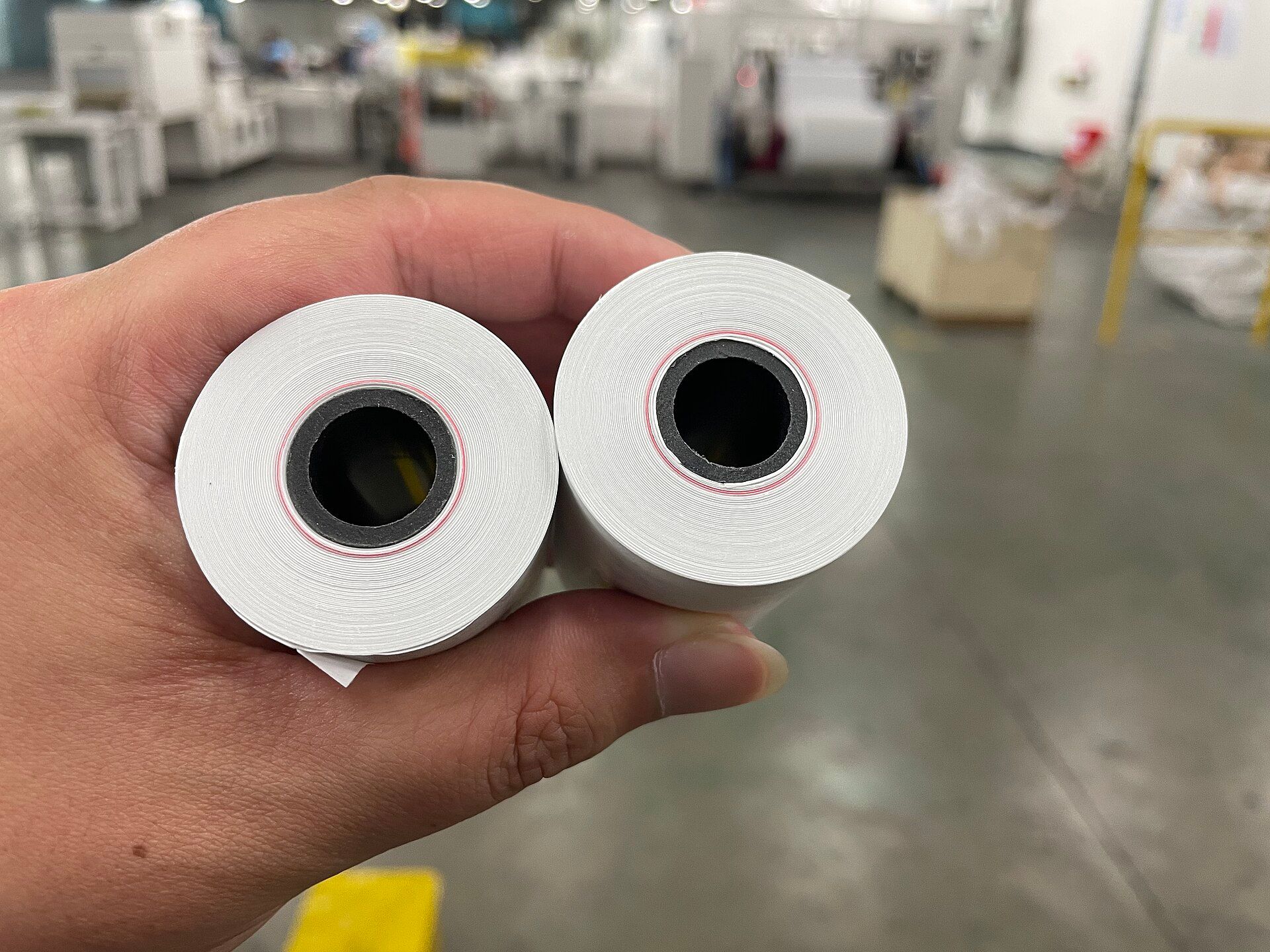
Somewhere between the doorbuster and the car park, you’ll be handed a long strip of shiny paper that you didn’t ask for and won’t read. It is probably the most chemically interesting thing you buy all weekend.
Our BPA explainer covers the bisphenol family as a whole: what BPA is, how regulators disagree about it, and why “BPA-free” doesn’t mean “safe”. This piece zooms in on receipts, because they’re the source you can do the most about, and the one most people have never thought about.
How thermal paper works
There’s no ink in a till receipt. The paper is coated with a dye that stays colourless until it meets a second chemical, called a developer. Heat from the printer head lets them react: the developer reacts with a leuco dye and changes it to a coloured form. Hold a lighter under a receipt and the paper darkens.
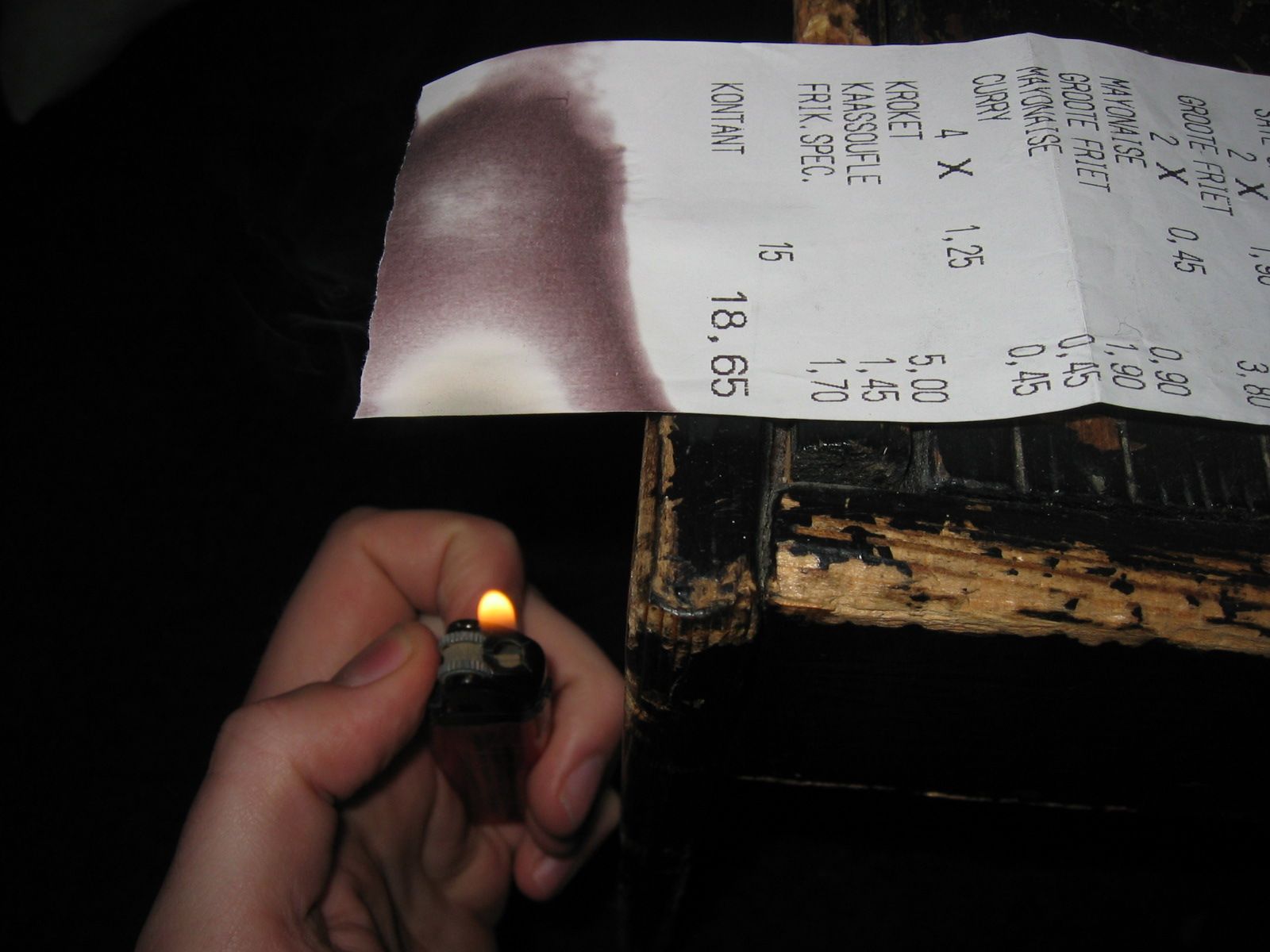

For years the developer of choice was BPA. It isn’t locked inside a plastic, as it is in a polycarbonate bottle. It sits unreacted in the coating, free to migrate, which is why it comes off on your fingers.
How much is on a receipt
A lot, by the standards of chemical exposure. Swiss researchers found 8 to 17 grams of BPA per kilogram in 11 of 13 thermal papers they analysed. A US study of cashiers found that each receipt they collected contained 1 to 2% of its weight as BPA, BPS or another developer called BPSIP. That’s a percentage of the paper, not parts per million.
In a 2011 survey of US paper products, BPA was in 94% of 103 thermal receipts, at up to 13.9 milligrams per gram. Receipts made up more than 98% of the BPA exposure the authors estimated from handling paper.
From receipt to skin to mouth
The transfer is fast. In the Swiss experiments, holding a receipt for five seconds moved roughly 1 microgram of BPA onto two fingers when skin was dry, and about ten times more when fingers were wet or greasy. Some of it went deep enough into the skin that it could no longer be washed off.
Then it gets into the body. Two small experiments show how:
- Two hours at the till. In a 2014 pilot study, 24 volunteers printed and handled receipts continuously for two hours. Their urinary BPA rose from a geometric mean of 1.8 to 5.8 µg/L. When 12 of them did it again wearing nitrile gloves, there was no significant rise. For scale, the authors note that the 5.8 µg/L peak was lower than one seen in an earlier study after people ate canned soup.
- Sanitiser, receipt, fries. In another 2014 study, ten people used a hand sanitiser containing skin-penetration enhancers, held a receipt, then picked up and ate French fries. Active (unconjugated) BPA in their blood rose by an average maximum of about 7 ng/mL within 90 minutes. The combination of skin and mouth matters: BPA absorbed this way skips some of the liver processing that deactivates swallowed BPA.
Both studies are small, and one deliberately set up a worst case. How much receipts add to the average shopper’s total exposure is genuinely uncertain. A 2011 estimate put paper-handling exposure as minor compared with diet for the general public, and a 2017 review says it’s “still debated” whether thermal paper contributes significantly. What isn’t debated is that the chemical moves, and that greasy, wet or sanitised hands move more of it.
Cashiers carry the load
If you hold a receipt for ten seconds on Black Friday, the person who printed it handles hundreds.
- A French study of 90 cashiers and 44 other workers found median urinary BPA of 8.92 µg/L in cashiers and 3.54 µg/L in controls. The difference was in total BPA; free (unconjugated) BPA wasn’t significantly higher.
- The same French team later found median urinary BPS of 2.53 µg/L in 17 cashiers and 0.67 µg/L in 15 controls.
- In the US study of 77 cashiers and 25 non-cashiers, urinary BPS was significantly higher after a shift than before in cashiers handling BPS receipts. Cashiers handling BPA receipts had higher post-shift BPA than non-cashiers.
These studies measure exposure, not disease. Nobody has shown that receipts make cashiers ill. But the EU took the risk seriously enough to act. France’s proposal for the 2016 ban named the population at risk as the unborn children of pregnant workers and consumers, and the Commission concluded there was an unacceptable risk to workers who handle BPA thermal paper, primarily cashiers. (EU scientists judged the risk to consumers adequately controlled.)
The swap: BPA out, BPS in
Manufacturers did drop BPA. Mostly, they replaced it with its close chemical cousin, bisphenol S.

In 571 US receipts collected in 2022, BPS was the developer in 85%, Pergafast 201 in 12% and BPA in 1%. D-8 and a couple of others turned up in fewer than 1% each. National chains were more likely than regional or local shops to have moved to a non-bisphenol developer. In a global sample from 2018 and 2019, every receipt from the US and Japan contained only BPS.
Is BPS better? Partly, maybe, and not by enough to relax:
- Less goes through skin, in the lab. On donated human skin, 25% of applied BPA was absorbed over 24 hours, against 0.4% of BPS. That’s a lab test on skin samples, not people, and the cashier studies above show BPS still turns up in urine.
- Similar hormone activity, in cells. A Swiss study found BPS and BPF exhibit “almost a similar endocrine activity as BPA” in a cell test.
- Classified as a reproductive toxicant. The EU’s 2024 food-contact rules note BPS’s harmonised classification as “toxic to reproduction category 1B”.
The non-bisphenol developers are less studied. In the same Swiss cell test, Pergafast 201 and D-8 showed no significant effect on hormone production, and the authors said they “could be alternatives” but needed further analysis. D-8 was absorbed through skin in the lab at 17%, far more than BPS, while Pergafast 201 was below what the lab could measure. “Less studied” isn’t the same as “safe”, which is the whole lesson of BPS.
What the law says (as of 10 November 2026)
European Union. BPA has been banned in thermal paper at 0.02% or more since 2 January 2020. BPS was left out. The regulation itself says the BPS risk in thermal paper “has not yet been evaluated”, and said the EU chemicals agency should monitor BPS use so the Commission could consider restricting it. We found no EU restriction on BPS in thermal paper in force as of 10 November 2026.
United States. We found no federal limit on bisphenols in receipt paper. Two states have passed laws that cover BPS as well as BPA:
- Washington bans the manufacture, sale and distribution of thermal paper with intentionally added bisphenols, from 1 January 2026. That covers BPS, not just BPA. Paper made before that date is exempt, and the state presumes any bisphenol above 200 ppm was added on purpose.
- California enacted AB 1604, signed on 30 September 2026. From 1 January 2028, no one may make, distribute or sell paper receipts with intentionally added BPA; from 1 January 2029, that extends to all intentionally added bisphenols. Manufacturers must switch to the least toxic alternative, and can’t swap in a chemical listed as causing cancer or reproductive harm.
Receipts and recycling
Receipt chemicals don’t stay on receipts. In that 2011 US survey, napkins and toilet paper made from recycled paper contained BPA, and the authors concluded that contamination during the paper recycling process is a source of BPA in paper products. In Denmark, BPA was found in all household waste paper samples analysed, and BPS in 73%.
What you’re told to do with receipts depends on where you live. One Australian council says thermal receipts go in the general waste bin. Calgary takes them in the blue recycling cart. Cornwall, in the UK, says they “are not considered paper for recycling” but collects them with mixed recycling rather than paper. Follow your local guide. If yours says nothing, our view is that the bin is the better default: one receipt in the trash beats a bisphenol in next year’s paper towel. For more on what recycling can and can’t handle, see what the recycling labels really mean.
What to do
You can’t eliminate bisphenols from your life, but receipts are one of the easiest sources to cut.
- Say no to the paper receipt, or ask for it by email or in the app. Fewer receipts printed is also less for the cashier to handle.
- Don’t hold receipts with damp, greasy, lotioned or freshly sanitised hands. Wet and greasy fingers picked up about ten times more BPA, and sanitiser plus fries was the worst case in the lab.
- Don’t let children play with receipts or chew on them. We found no study of kids and receipts; this is a precaution based on the hand-to-mouth route above.
- Wash your hands before eating after a shopping trip. The evidence that washing removes receipt chemicals is mixed (some goes too deep to wash off), but it’s free and it stops you eating what’s still on the surface.
- Don’t keep receipts loose in a wallet with banknotes: BPA on notes rose dramatically after 24 hours in a wallet with receipts. And don’t crumple them in your palm. File the ones you need; photograph them if your returns policy allows.
- If you work a till, gloves stopped the rise in urinary BPA among volunteers in the 2014 study. Ask your employer about gloves and non-bisphenol paper.
Receipts are just one stop on a big shopping day. For the rest of the trip, see our guide to grocery shopping with less plastic.
The short checklist
- No receipt, or a digital one, whenever you can.
- Dry, clean hands if you do take one. Not straight after sanitiser or hand cream.
- Keep receipts away from kids and out of mouths.
- Wash your hands before you eat.
- Check your local rules before recycling receipts; if in doubt, bin them.
- Remember the cashier. Every receipt you decline is one fewer they handle.
Sources
- Frankowski R, Zgoła-Grześkowiak A, Grześkowiak T, Sójka K (2020). The presence of bisphenol A in the thermal paper in the face of changing European regulations: a comparative global research. Environmental Pollution.
- Biedermann S, Tschudin P, Grob K (2010). Transfer of bisphenol A from thermal printer paper to the skin. Analytical and Bioanalytical Chemistry.
- Liao C, Kannan K (2011). Widespread occurrence of bisphenol A in paper and paper products: implications for human exposure. Environmental Science & Technology.
- Liao C, Kannan K (2011). High levels of bisphenol A in paper currencies from several countries, and implications for dermal exposure. Environmental Science & Technology.
- Ehrlich S, Calafat AM, Humblet O, Smith T, Hauser R (2014). Handling of thermal receipts as a source of exposure to bisphenol A. JAMA.
- Hormann AM, vom Saal FS, Nagel SC, Stahlhut RW, Moyer CL, Ellersieck MR, Welshons WV, Toutain PL, Taylor JA (2014). Holding thermal receipt paper and eating food after using hand sanitizer results in high serum bioactive and urine total levels of bisphenol A (BPA). PLOS ONE.
- Thayer KA, Taylor KW, Garantziotis S, Schurman SH, Kissling GE, Hunt D, et al., Bucher JR (2016). Bisphenol A, bisphenol S, and 4-hydroxyphenyl 4-isoprooxyphenylsulfone (BPSIP) in urine and blood of cashiers. Environmental Health Perspectives.
- Ndaw S, Remy A, Jargot D, Robert A (2016). Occupational exposure of cashiers to bisphenol A via thermal paper: urinary biomonitoring study. International Archives of Occupational and Environmental Health.
- Ndaw S, Remy A, Denis F, Marsan P, Jargot D, Robert A (2018). Occupational exposure of cashiers to bisphenol S via thermal paper. Toxicology Letters.
- Reale E, Vernez D, Hopf NB (2021). Skin absorption of bisphenol A and its alternatives in thermal paper. Annals of Work Exposures and Health.
- Miller GZ, Pitzzu DT, Sargent MC, Gearhart J (2023). Bisphenols and alternative developers in thermal paper receipts from the U.S. market assessed by Fourier transform infrared spectroscopy. Environmental Pollution.
- Goldinger DM, Demierre AL, Zoller O, Rupp H, Reinhard H, Magnin R, Becker TW, Bourqui-Pittet M (2015). Endocrine activity of alternatives to BPA found in thermal paper in Switzerland. Regulatory Toxicology and Pharmacology.
- Björnsdotter MK, de Boer J, Ballesteros-Gómez A (2017). Bisphenol A and replacements in thermal paper: a review. Chemosphere.
- Pivnenko K, Pedersen GA, Eriksson E, Astrup TF (2015). Bisphenol A and its structural analogues in household waste paper. Waste Management.
- European Commission (2016). Commission Regulation (EU) 2016/2235 amending Annex XVII to REACH as regards bisphenol A. Official Journal of the European Union, L 337.
- European Commission (2024). Commission Regulation (EU) 2024/3190 on the use of bisphenol A (BPA) and other bisphenols and bisphenol derivatives with harmonised classification for specific hazardous properties in certain materials and articles intended to come into contact with food. Official Journal of the European Union.
- Washington State Department of Ecology (2026). WAC 173-337-114: Restrictions (Safer products restrictions and reporting). Washington Administrative Code (app.leg.wa.gov).
- California State Legislature (record via CalMatters Digital Democracy) (2026). AB 1604 (2025-2026 session): bisphenols in paper proofs of purchase. calmatters.digitaldemocracy.org.
- Glen Eira City Council (Victoria, Australia) (2026). Receipts (thermal paper): rubbish or recyclable A-Z guide. gleneira.vic.gov.au.
- City of Calgary (2026). Thermal receipt paper: what goes where. calgary.ca.
- Cornwall Council (2026). Thermal paper till receipts (recycling items). cornwall.gov.uk.
Spotted an error? Tell us and we'll correct it and note the change.