The global plastics treaty: what's on the table and why talks keep stalling
UN members agreed in 2022 to write a treaty to end plastic pollution. Four years on there's still no deal. What's being negotiated, where it stands as of November 2026, and what it would change.
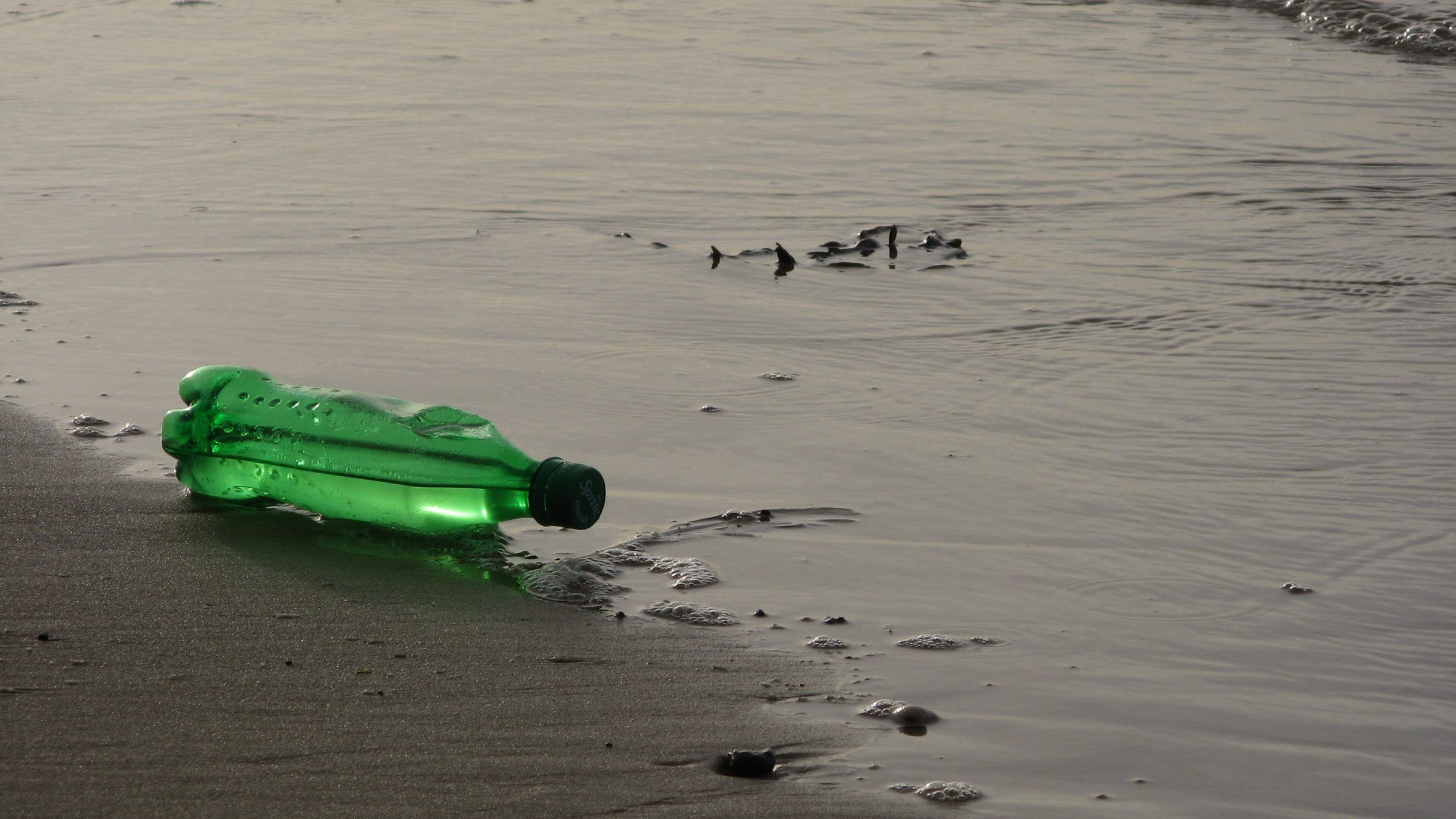
In March 2022, the world’s environment ministers did something rare: they agreed. A UN resolution launched talks on a legally binding treaty to end plastic pollution, and set a deadline of the end of 2024.
It’s now November 2026. There’s no treaty, no formal negotiations under way, and the next round is pencilled in for March 2027 at a venue nobody has announced. Here’s what the fight is about, and why it matters even if you never read a line of UN text.
What the treaty is supposed to do
UN Environment Assembly resolution 5/14, adopted on 2 March 2022, asked governments to negotiate a binding instrument on plastic pollution “including in the marine environment”. The key phrase is that it should be based on a comprehensive approach that addresses the full life cycle of plastic, including its production, design, and disposal. The negotiating committee (the INC) was meant to finish its work by the end of 2024.
That single phrase, “full life cycle”, is the heart of the dispute. To most countries it obviously includes how much plastic is made. To a handful, it doesn’t, and they’ve spent four years saying so.
How we got here
The committee met five times on schedule: Punta del Este in November 2022, Paris in May and June 2023, Nairobi in November 2023, Ottawa in April 2024, and Busan, South Korea, in late 2024.
- Busan, December 2024. What was meant to be the final session, with over 3,300 delegates from more than 170 nations, ended without a treaty. Countries agreed only to carry a “Chair’s Text” forward as the starting point for another round.
- Geneva, August 2025. The resumed session drew more than 2,600 participants, including delegates from 183 countries. After ten days, talks adjourned in the early hours of 15 August without consensus. By the end, delegates had four versions of the text and no agreement on which one to use.
- Geneva, February 2026. After the previous chair resigned, a one-day session on 7 February elected Ambassador Julio Cordano of Chile as the new chair. It was purely organisational: no negotiations took place.
What’s on the table
Much of the draft is housekeeping. Four issues decide whether it’s worth having. The independent Earth Negotiations Bulletin, which reports every session, called production and finance the most intractable issues in Geneva, with products and chemicals another key difference that many saw as necessary for a treaty to be worthwhile at all. How decisions get made is the fourth fault line.
Limits on how much plastic is made
The draft’s Article 6, still bracketed as “[supply][sustainable production]”, is the big one. In Geneva, some countries called for a global target for sustainable production and consumption, backed by national measures and reporting. Others wanted the article deleted, arguing the treaty “should combat plastic pollution, not curtail plastic production”.
The stakes are big. On current policies, the OECD projects world plastics use rising from about 460 million tonnes in 2019 to about 1,231 million tonnes in 2060. No amount of better bins keeps up with that.
Phasing out harmful products and chemicals
Article 3 covers plastic products and the chemicals in them. The split is whether to have a global list of products and chemicals of concern to be limited or phased out, or only voluntary national measures. In Geneva, a group of 85 countries led by Mexico and Switzerland proposed phasing out certain products. When the chair’s compromise text made products voluntary and deleted the references to chemicals of concern, it caused outcries in the closing days.
For readers of this site, this is the article that touches daily life most directly: it’s where phthalates, bisphenols and other additives would or wouldn’t be dealt with globally.
Who pays
Developing countries want a new, dedicated fund with regular contributions from rich countries, citing their historical responsibility. Developed countries prefer existing funds such as the Global Environment Facility, voluntary contributions and public-private partnerships. A newer twist is whether some richer developing countries with big plastics industries should also be asked to pay.
How decisions get made
UN environmental talks usually work by consensus, which in practice can mean that any determined country can say no. The same question hangs over the treaty itself. In Geneva, 120 countries proposed that the future treaty’s conference of parties be allowed to vote, by two-thirds majority on substance, once all efforts at consensus are exhausted. Others opposed it, and the informal group discussing it ended without agreement. If a treaty can only be strengthened by consensus, it may never be strengthened at all.
Who wants what
Majorities are clear; outcomes aren’t. At the UN Ocean Conference in Nice in June 2025, 97 countries endorsed a “wake-up call” for a global target to reduce production and consumption of primary plastic polymers, legally binding phase-outs of the most problematic products and chemicals of concern, better design, a proper financial mechanism, and a treaty that can evolve over time.
Against them stands a smaller group of countries that say the treaty cannot address production. In frank informal talks, according to ENB, some admitted their reading of the plastic life cycle was a legal and political definition, not a scientific one, citing each country’s sovereign right to exploit its natural resources. Colombia’s delegation put the frustration bluntly at the close of Geneva: talks had been consistently blocked by a small number of states who simply do not want an agreement. Industry has a seat in the corridors too: the NGO CIEL counted at least 234 fossil fuel and chemical industry lobbyists registered for Geneva.
Where talks stand as of November 2026
Since Cordano took over, everything has been informal. He has written four letters to delegations and held closed heads-of-delegation meetings in Nairobi from 30 June to 3 July and Bangkok from 27 to 30 September 2026.
On 8 August 2026 he issued an “Aid to Negotiations”, an informal reference document rather than a negotiated text, followed on 25 August by possible elements for the resolutions a final diplomatic conference would adopt. Environmental groups were not impressed. The Environmental Investigation Agency said production provisions had been weakened, bracketed or removed, and that monitoring language had been taken out; Cordano said ideas from the Nairobi meeting had not yet been inserted into “this first iteration”. CIEL called it “riddled with optional provisions rather than legally binding ones”. These are campaigners’ readings; we haven’t been able to read the document itself.
What’s next, as of 12 November 2026:
- A third informal meeting is due within 25 January to 2 February 2027, dates to be confirmed.
- The next formal session, INC-5.4, is due to take place within the period of 13 to 24 March 2027, according to a UNEP save-the-date notice. The venue has not been announced.
What a treaty would mean, and what it wouldn’t
A strong treaty would be the first global rule on how much plastic is made and what goes into it. A production target, binding phase-outs of the worst products and chemicals, and design rules would change what’s on supermarket shelves everywhere, not only in countries that already regulate. It would also put a price on clean-up for the countries least able to afford it.
A weak treaty, built on voluntary national plans and consensus-only amendments, could do the opposite: lock in “waste management” as the answer for a generation, while production keeps climbing. After Geneva, the Earth Negotiations Bulletin reported that many delegates were tempering expectations and hoping a treaty, once adopted, could evolve and strengthen over time like other environmental agreements. Whether a weak start is better than none is a judgement, not a finding. What’s not in doubt is the projected growth in plastic use if nothing changes.
Whatever happens in 2027, national and regional law isn’t waiting. The EU’s single-use plastics directive and packaging rules, US state laws and national bans are on our policy tracker.
What you can do
- Find out your government’s position. Did it endorse the Nice call? Does it support a production target and voting? Ask your environment ministry, and your representatives, in writing.
- Support a treaty that covers production and chemicals. The evidence on where plastic’s harms come from points upstream. Recycling alone can’t keep up with a doubling of use.
- Push for transparency. The 2026 meetings have been informal sessions for government delegations, held in a heads-of-delegation format. Ask who sits on your country’s delegation and who advises it.
- Back the laws that already exist. Domestic bans, deposit schemes and producer-responsibility laws work without waiting for the UN, and they strengthen your government’s hand in negotiations.
Sources
- UN Environment Assembly (2022). End plastic pollution: towards an international legally binding instrument (resolution 5/14). UNEP/EA.5/Res.14.
- UN Environment Programme (2024). Plastic pollution negotiations adjourn with new text and a follow-up session planned. UNEP press release, 2 December 2024.
- UN Environment Programme (2025). Talks on global plastic pollution treaty adjourn without consensus. UNEP press release, 15 August 2025.
- IISD Earth Negotiations Bulletin (2025). Summary report, 5-15 August 2025: INC-5.2. Earth Negotiations Bulletin.
- UN Environment Programme (2026). New Chair elected to lead negotiations on global plastic pollution treaty. UNEP press release, 7 February 2026.
- UN Environment Programme, INC Secretariat (2026). INC: Activities leading up to INC-5.4. UNEP.
- UN Environment Programme, INC Secretariat (2026). INC: Notifications. UNEP.
- Geneva Environment Network (2026). International cooperation on plastic pollution (timeline). Geneva Environment Network.
- French Ministry of Ecological Transition (2025). Global Plastics Treaty: 97 States endorsed the Nice wake up call. ecologie.gouv.fr.
- Nikolova M (2026). New UN Global Plastics Treaty document omits accountability mechanisms, NGO warns. Packaging Insights, 11 August 2026.
- Renewable Matter (2026). Plastics treaty: Cordano presents Aid to Negotiations but disappoints science. Renewable Matter, September 2026.
- Center for International Environmental Law (2025). INC-5.2 lobbyist analysis. CIEL press release, 7 August 2025.
- OECD (2022). Global Plastics Outlook database: plastics use 1990-2019 and projections to 2060. OECD SDMX API.
Spotted an error? Tell us and we'll correct it and note the change.