Air fryers: PFAS coatings, plastic parts and what 'non-toxic' really covers
Shopping for a non-toxic or PFAS-free air fryer? What touches the food and hot air in 19 popular models, what 'ceramic' and 'PFAS-free' cover, and what the evidence shows.
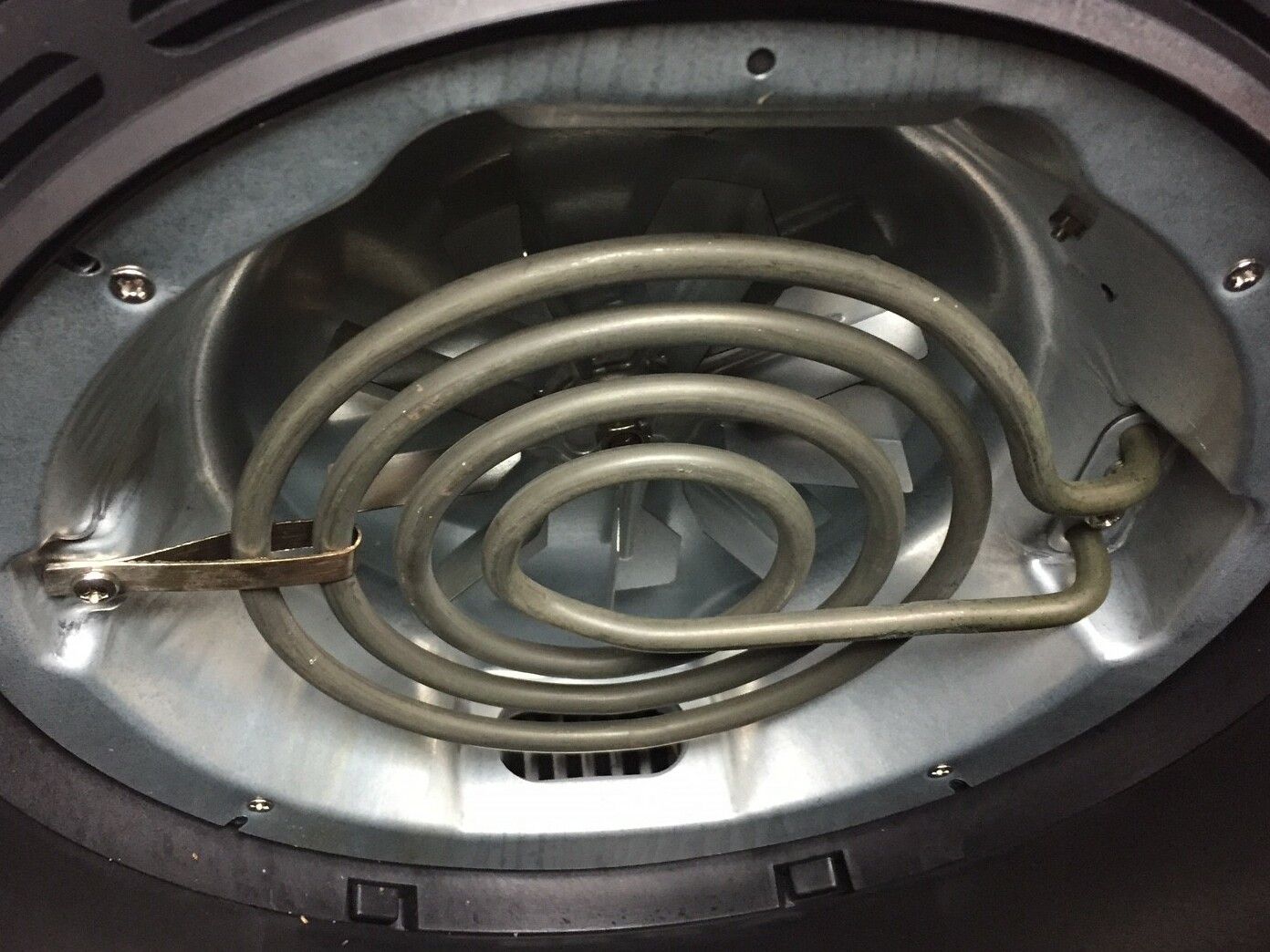
An air fryer is a small convection oven: a heating element and a fan on top, a coated drawer underneath. Most people shopping for a “non-toxic” or “PFAS-free” air fryer are really asking about that drawer, the basket and the plate inside it, which are usually aluminium or steel with a nonstick coating. But the hot air also blows across the window, the inside of the drawer, the element guard and the fan. So we read the makers’ own manuals, help pages and legal disclosures for 19 widely sold air fryers, including the ones sold as glass, stainless or “non-toxic”, and asked one question of each: what touches the food and the hot air?
Nearly always, the answer is a coating. Some are PTFE (Teflon), some are “ceramic”, and some the maker won’t name. Whether any of it harms you at air fryer temperatures is far less certain than the marketing on either side suggests, and below we show where the evidence runs out.
What touches the food and the hot air
- The basket and crisper plate. Nearly always aluminium or steel with a nonstick coating. Cosori’s TurboBlaze manual says its basket and plate “are made of aluminum metal with nonstick coating”. Its $249 Iconic is sold as “The Stainless Steel” air fryer, and its basket is indeed 304 stainless steel, but the manual adds: “with nonstick, ceramic coating”.
- The inside of the drawer. Philips’s US help page is unusually blunt: “The housing and inner drawer of the airfryer are made of plastic, the pan and basket are PTFE coated.”
- The inside of the cooking chamber. Typhur’s manuals say “the inside of the appliance” has a nonstick coating too, without naming it. Oven-style air fryers often coat the walls: Breville says of its Smart Oven Air Fryer Pro that “The walls on the inside of the oven feature a non-stick coating”.
- The window. Instant’s ClearCook puts a window in the basket itself; Philips, Chefman and GreenPan sell window models too. None of them says what the window is made of.
- The element guard, fan and seals. They sit over the food. No maker we read describes them.
- Small parts. Cosori’s crisper plates sit on four “silicone stoppers made of food-safe material”. Fritaire’s glass bowl has a plastic shaft socket inside it (more below).
- What you add. Paper liners (Cosori sells parchment it says is “coated with food-grade silicone”) and silicone moulds.
The outer shell and handle are usually plastic too, but they don’t touch the food or the air inside the cooking chamber, so we don’t count them against an air fryer.
Where the plastic and coatings are, model by model
Everything here comes from the maker’s own pages, manuals or legal disclosures, read on 23 November 2026. “Not stated” means we couldn’t find it. Our standard treats every part that touches the food or the hot air inside the chamber as touching hot food: plastic there fails, nonstick or unnamed coatings fail, and an undescribed part in the chamber means we can’t clear it.
| Air fryer | What the food sits on | Also in the hot air | Our read |
|---|---|---|---|
| Cosori TurboBlaze (CAF-DC601) | Aluminium, “PFAS-free ceramic” nonstick; silicone stoppers | Chamber not stated | Fails: coated |
| Cosori Iconic (CAF-SE601S) | 304 stainless steel with “nonstick, ceramic coating” | Chamber not stated | Fails: coated |
| Cosori Pro LE (CAF-L501) | Aluminium, “nonstick coating” (type not named) | Not stated | Fails: unnamed coating |
| Philips 3000 Series with Window (NA330) | PTFE-coated pan and basket | Plastic inner drawer; window not stated | Fails: PTFE, plastic |
| Philips 5000 Series (NA555) | PTFE-coated pan and basket | Plastic inner drawer; window not stated | Fails: PTFE, plastic |
| Instant Vortex Plus ClearCook (140-3088-01) | “non-stick coating” (type not named) | Window in the basket, not stated | Fails: unnamed coating |
| Chefman TurboFry Touch 6 Qt (RJ38-6T) | “Aluminized with PTFE coating” (legal disclosure) | Not stated | Fails: PTFE |
| Chefman TurboFry 9 Qt Dual with Window | “Ceramic-coated nonstick” | Basket windows, not stated | Fails: coated |
| Chefman TurboFry 3.5 Qt | “silicone-coated nonstick basket” | Not stated | Fails: silicone coating |
| Chefman Crisp n’ Go glass (RJ38-G4) | Tempered glass bowl, “Nonstick cooking rack” | Element, fan and grate in the lid, not stated | Fails: coated rack |
| Typhur Dome 2 (AF05) | Aluminium, “PFAS-free nonstick ceramic” | Interior “non-stick coating”, not named | Fails: coated |
| Typhur Sync (AF14) | “Ceramic-coated nonstick basket” | Interior “non-stick coating”, not named | Fails: coated |
| GreenPan Bistro 7-Qt Clear View | “PFAS-free ceramic nonstick” drawer and tray | Window and lid, not stated | Fails: coated |
| GreenPan Elite air fryer oven | “PFAS-free nonstick” basket and pans | Walls coated in “PFAS-free nonstick” | Fails: coated |
| Breville Smart Oven Air Fryer Pro (BOV900) | Basket and pans not stated | Walls have “a non-stick coating” | Fails: unnamed coating |
| Midea Flexify Pro, enamel (MET26C4AST) | Basket not stated; “nonstick baking sheet” | “PFAS-free enamel” interior | Fails: unnamed coating |
| Fritaire glass air fryer | Glass bowl, 304 stainless accessories | Plastic (PPS) socket in the bowl; heater lid not stated | Fails: plastic in the bowl |
| Our Place Wonder Oven | “Chromed steel” basket and rack; ceramic-coated bake pan | Stainless interior; door seal, fan not stated | Can’t clear yet |
| Our Place Wonder Oven Pro | “Steel” basket and rack; ceramic-coated bake pan | Stainless interior; seals, fan not stated | Can’t clear yet |
None of the 19 meets our standard. The two that come closest are Our Place’s Wonder Ovens: a stainless steel interior, a basket that isn’t nonstick-coated, and a statement that “there is no plastic on any surfaces touching food” (product page, read 23 November 2026). But Our Place doesn’t say what the door seal, fan or chrome plating are, and each oven comes with a ceramic-coated bake pan. We’ve written down the questions an editor would need answered. Fritaire, the glass-bowl model, would be next if it named its heater lid, but it says a “food-safe PPS (Polyphenylene Sulfide)” shaft socket sits inside the bowl, and PPS is a plastic.
We couldn’t assess Ninja, the biggest name in air fryers, including its glass Crispi. Every Ninja and SharkNinja website we tried refused our requests, and we don’t fill gaps with retailer listings. Cuisinart’s and Nuwave’s sites refused us too.
What “PFAS-free” covers, and what it doesn’t
“PFAS-free” on an air fryer almost always means a ceramic coating, not no coating, and it usually covers the basket and nothing else. Typhur’s Dome 2 instructions say “This product is completely PFOA and PFAs-free. The basket’s surface features a ceramic non-stick coating” (safety sheet, read 23 November 2026), while its manual says the inside of the appliance is nonstick-coated too, without naming that coating. Typhur deserves credit for linking a lab report, which no other maker we read does. But the report, from TÜV Rheinland’s Shenzhen lab, is for model “AF03” (the page sells the AF05), checks a list of individual PFAS compounds rather than total fluorine or PTFE, and ends with “No Comment” in its conclusion row. Every compound on that list came back below the lab’s reporting limit. Typhur’s own explainer says the report is “not a blanket certification that every component of every Typhur air fryer contains absolutely zero PFAS” (read 23 November 2026).
GreenPan qualifies its claim in plain sight: “PFAS-free nonstick is made without intentionally added PFAS” (product pages, read 23 November 2026). That’s a narrower promise than “PFAS-free”.
The most useful documents turned out to be the dull ones. California’s cookware law, AB 1200, makes manufacturers list certain chemicals they add to food-contact surfaces, and they file air fryers under it. Chefman’s product page for its TurboFry Touch 6 Qt says the basket is “nonstick”; its disclosure says the parts are “Aluminized with PTFE coating”. Philips lists its NA330 and NA555 among its products with intentionally added PFAS. Cosori’s August 2026 list shows no PTFE for the TurboBlaze SKU it sells now, but lists PTFE under other SKUs of the same model and of several others. If a maker sells in California and doesn’t say what its coating is, its disclosure page is worth a look.
“PFOA-free” is a different and much weaker claim. Philips says its coatings are “PFOA (perfluorooctanoic acid) free” on the same page that says its baskets are “mostly coated with non-stick PTFE”. PFOA is the chemical once used to make PTFE; PTFE is the coating. Our nonstick pans guide explains the history.
PTFE in an air fryer: heat, fumes and birds
PTFE is a fluorinated plastic, and so a PFAS. Its one undisputed hazard is overheating. Germany’s Federal Institute for Risk Assessment (BfR) says PTFE decomposes at around 360 °C and above, releasing substances hazardous to health “without visible smoke formation”. In people that can cause polymer fume fever, a flu-like illness covered in our nonstick guide. BfR adds that cases of illness have so far been reported only from industrial PTFE manufacture, not from households.
An air fryer’s thermostat keeps the air well below that. The highest settings in the basket models’ manuals were 450 °F (232 °C) for Cosori, Chefman and Typhur, 400 °F (205 °C) for Instant and 200 °C for Philips; Breville’s oven goes to 480 °F (250 °C). That’s the reassuring part. The catch is that a setting is the temperature of the air at the sensor, not of the coating under the element, and we found no study that has measured basket surface temperatures in an air fryer, empty or full. “An air fryer can’t get hot enough to break down PTFE” is a fair reading of the settings, not a measured fact.
One instruction pulls the other way. BfR says PTFE cookware “should therefore never be heated when unfilled” (its warning centres on fast-heating hobs; it says ordinary ovens, at around 250 °C, stay far below the danger). Six of the makers we read, Cosori, Instant, Philips, Our Place, GreenPan and Breville, tell you to run the appliance empty: five before first use, Philips to clear a plastic smell. Cosori’s TurboBlaze manual has a test run with the basket empty at 385 °F for 10 minutes; Instant’s runs empty at 400 °F for 18 minutes; Philips, to get rid of a plastic smell, says to run it “Without putting any food inside” at 200 °C for the maximum time. The thermostat should keep that well under 360 °C. Nobody has checked.
Pet birds are the exception to “probably fine”. Birds’ lungs are far more efficient than ours, which makes them far more sensitive to fumes. In a 1982 study, budgerigars exposed to fumes from overheated PTFE cookware suffered “acute respiratory distress and rapid death”; birds exposed to fumes from plain aluminium pans served as the comparison. In a university lab, 60 of 65 four-day-old chicks died in brooders where about half the heat lamp bulbs were PTFE-coated; the vets who reported the case blamed PTFE fumes. We found no reported case involving an air fryer, and none of the air fryer manuals we read mentions birds. If you keep birds, keep them out of the kitchen when any PTFE-coated appliance is running, and especially during a new appliance’s first runs. That’s our precaution, not a finding.
What the air fryer studies actually measured
We found four peer-reviewed studies that measured what comes out of air fryers. All four are about cooking fumes, not coatings or plastic.
- A University of Toronto team found that air frying chicken wings and breast gave off 2.1 and 5.4 times more particulate matter (PM10) than cooking the same food in a pan with the same amount of oil, and 2.5 to 4.8 times more volatile organic compounds (VOCs) for fries and chicken breast. They put it down to higher temperatures and more turbulent air.
- A University of Birmingham team air-fried 12 dishes in a small test chamber, using a Cosori Pro LE. Scaled up to a small kitchen, the levels were substantially lower than conventional frying, and only fatty foods made ultrafine particle levels comparable to deep frying. Running it empty produced no nitrogen oxides. But after more than 70 uses, residue in parts of the air fryer you can’t reach raised VOCs by 23% and ultrafine particles by 236% with no food in it at all.
- A Korean study of small appliances with heating coils found that air fryers and toasters give off ultrafine particles, and some of the particles from the appliances tested contained copper, silver or titanium.
- An Illinois study found that particles from sources including air fryers and toasters were, weight for weight, as reactive as or more reactive than typical outdoor fine particles, a lab measure of their potential to stress cells, not a measured health effect.
The lesson is ordinary: cooking makes fumes, air fryers included, so ventilate and keep the inside clean. None of these studies looked at the coating or the plastic. A 2024 review of microplastic sources in home kitchens, whose searches included air fryers, found “very few studies” of microplastics from kitchen appliances, and the ones it found were of kettles.
PFAS in air fryer baskets: the tests that exist
We found no peer-reviewed study of PFAS in air fryer baskets. There are two recent European consumer-group lab tests.
The Dutch consumer association Consumentenbond tested the basket coatings of 15 air fryers sold in the Netherlands, published on 16 November 2026. It screened each coating for total organic fluorine. Seven were probably PFAS-free. Six had fluoropolymer coatings, probably PTFE, including two Philips models and three Tefals. Three had raised fluorine from a source the lab couldn’t pin down (one of them, a Ninja just over the threshold, was still judged probably PFAS-free, so it is counted in both groups). None contained the PFAS already banned in the EU. Of seven models whose makers claimed “PFAS-free”, the test backed five; the other two were unclear, and Philips told the group the fluorine in its model came from inorganic compounds that aren’t PFAS. Ninja’s glass Crispi Pro XL, tested on the plate in the bottom of the bowl, came out probably PFAS-free.
France’s UFC-Que Choisir tested six air fryers, including Ninja and Philips models, in 2025 and found no PFOA, PFOS or PFHxS, the PFAS restricted for their toxicity, only fluoropolymers such as PTFE.
These tests are useful but limited. They aren’t peer-reviewed, the models are European versions that may not match what’s sold in the US, and a fluorine screen can show that a coating probably isn’t fluorinated but can’t name every PFAS in one. Consumentenbond’s own view is that the bigger PFAS problem with air fryers is in making and throwing them away, not on your plate.
“Ceramic” coatings
“Ceramic” on an air fryer basket means a thin, glassy coating sprayed on as a liquid and baked, often called sol-gel, not pottery. Our nonstick guide covers these coatings in detail. They avoid fluoropolymers, which is a real advantage at the factory and the landfill. They aren’t inert. Slovenian researchers who analysed commercial coatings of this kind found titanium dioxide and quartz particles embedded in a silicone polymer, and scratch tests showed possible release of titanium-containing nanoparticles. That was a study of pan coatings; nobody has studied ceramic air fryer baskets.
None of the makers we read says what its ceramic coating is made of. Cosori’s Iconic manual is at least candid about wear: “If you notice any cracking or peeling in the coating of the crisper plate or basket, we recommend replacing them”.
Glass and steel
Glass is the best-described food surface we found. Chefman’s Crisp n’ Go cooks in a tempered glass bowl, but the food sits on a “Nonstick cooking rack”, and the element, fan and grate in the lid sit directly over the food without a word on what they’re made of. Fritaire uses a glass bowl with stainless steel accessories and says “No BPA, no Teflon, no PFAS — on any food-contact surface” (site, read 23 November 2026). That claim is about food-contact surfaces; Fritaire also discloses the plastic socket inside the bowl, and its heater lid is described only as “Heat-resistant food-safe materials” (help page, read 23 November 2026). In a glass air fryer the lid is the whole cooking engine: ask what it’s made of.
Stainless steel appears mostly in oven-style air fryers. Our Place’s Wonder Ovens are the clearest example. Watch the wording elsewhere: “stainless steel” on a basket air fryer usually means the housing, and on Cosori’s Iconic it means a steel basket with a ceramic coating on top.
Liners and silicone moulds
Paper liners keep the basket cleaner, but they add another coated material. Cosori says its own liners are “coated with food-grade silicone” (product listing, read 23 November 2026). An Italian study of baking paper found small amounts of PFAS migrating into a test liquid, though it wasn’t a study of air fryer liners. Silicone moulds sold for air fryers have been tested directly: a 2026 study found 128 substances, with one phthalate over its specific migration limit and cyclic siloxanes over 60 mg/kg in a dry-food test. Our standard never accepts silicone for baking or cooking; our silicone explainer has the detail. Whatever liner you use, follow your manual: Cosori says never to put parchment in “without food on top”, because the fan can lift it into the element, and Philips doesn’t recommend paper or foil at all.
What the law says (as of November 2026)
- Minnesota has banned the sale of cookware with intentionally added PFAS since 1 January 2025. Its pollution agency told retailers in 2024 that “Air fryers are also considered cookware” if they have a pan, baking sheet, tray or grill part with a PFAS nonstick coating. That’s the agency’s reading of the law, not the statute’s own words.
- Colorado banned cookware with intentionally added PFAS from 1 January 2026. The law doesn’t mention air fryers, and we found no state guidance on whether they count.
- California requires cookware makers to disclose certain intentionally added chemicals, PTFE among them, and Chefman, Philips and Cosori publish disclosures that list their air fryers by model; Instant publishes one blanket statement for all its products. California’s governor vetoed a cookware ban in 2025.
- Other states have cookware bans coming; our nonstick guide has the list. We found nothing settling whether each one covers air fryers.
- The EU is still working on a near-universal PFAS restriction. ECHA’s risk committee adopted its opinion in March 2026, and its socio-economic committee expected to finish by the end of 2026; after that the European Commission drafts the law. Nothing bans PTFE air fryer baskets in the EU yet.
What to do
This is our advice, based on the manuals and studies above.
- On a new air fryer, do the first-use run your manual describes, with a window open. Cosori, Philips and Chefman all say a new air fryer may smell or smoke at first. Nobody has studied what that smell is.
- Ventilate while it runs. Use the extractor or open a window. The emissions studies are about cooking fumes, and fatty foods produce the most.
- Keep the inside clean, not just the basket. In the Birmingham study, built-up residue raised particle levels even with no food inside. Follow your manual for cleaning the element and chamber.
- Replace a basket that’s peeling or flaking. Cosori says so for its ceramic coatings. Use wooden or silicone tools, not metal, and don’t use aerosol sprays if your manual says not to (Chefman warns they can chip its coating).
- Keep pet birds out of the kitchen when a PTFE-coated appliance is on, especially during first runs.
- Use liners only as your manual allows, always weighed down with food, and skip silicone moulds.
- Shopping? No air fryer we could check meets our standard yet. If you want to avoid PTFE, look for an explicit statement from the maker, and check its California AB 1200 disclosure page. If you want to avoid coatings altogether, look at glass or stainless steel models and ask the maker what the lid, seal, fan, window and rack are made of before you buy.
Where the evidence is weak
- No peer-reviewed study of PFAS, PTFE particles or other coating material coming off air fryer baskets.
- No measurement of basket surface temperatures in an air fryer.
- No study of what a new air fryer gives off in its first runs, the “plastic smell” makers mention.
- No study of plastic windows, drawers or housings in air fryers.
- No study of ceramic-coated air fryer baskets; the evidence on ceramic coatings is from pans.
- No reported case of an air fryer harming a bird; the bird evidence is from PTFE pans and heat lamps.
- The PFAS tests of air fryers are consumer-group screens of European models, not peer-reviewed.
- Everything we say about products comes from what makers publish, read on 23 November 2026. We don’t test air fryers.
Common questions
Are air fryers toxic?
Not on the evidence we found, but the evidence is thin. The peer-reviewed studies measured cooking fumes, which air fryers make like any cooking does. Nobody has published a peer-reviewed study of what their coatings or plastic parts release. The clearest risks are overheating PTFE, which air fryer settings should prevent, and fumes around pet birds.
Is there a PFAS-free air fryer?
Several makers say theirs are, usually meaning a ceramic coating. In a Dutch test of 15 models, five of seven “PFAS-free” claims held up on a fluorine screen and two were unclear. A claim often covers only the basket, so check what else inside is coated.
Is a ceramic air fryer safe?
It avoids PTFE, which is a real gain for the environment. Ceramic coatings are less studied than PTFE, not proven safer, and in one study of pan coatings, scratch tests showed possible release of titanium-containing nanoparticles. Treat a ceramic basket gently and replace it if it peels.
Do glass air fryers avoid plastic and coatings?
The bowl does. The rest may not: Chefman’s glass model uses a nonstick rack, Fritaire’s has a plastic socket inside the bowl, and neither says what the heater lid above the food is made of.
Is the plastic smell from a new air fryer harmful?
Nobody has studied it. Makers say it’s normal and goes away after the first runs; Philips says it comes from parts including the plastic drawer and PTFE-coated basket. Run the first cycles with a window open, and keep birds away.
Can I use an air fryer if I have pet birds?
Birds are very sensitive to fumes from overheated PTFE. There’s no reported air fryer case, but we’d keep birds out of the kitchen while any PTFE-coated appliance is on, or choose one whose maker says it uses no PTFE.
For how we judge products and claims, see our standards.
Sources
- Wang X, Chan AWH (2023). Particulate Matter and Volatile Organic Compound Emissions Generated from a Domestic Air Fryer. Environmental Science & Technology.
- Tang R, Su Y, Acton WJF, Dunn LK, Pfrang C (2026). Quantification of Volatile Organic Compounds (VOCs), Nitrogen Oxides (NOx), and Ultrafine Particles (UFPs) Emitted by Domestic Air Fryers: A Chamber Study of Indoor Air Quality Impacts. ACS ES&T Air.
- Ryu GW, Kim J, Ha Y, Chae S, Yang E, Kim C (2025). Physicochemical characteristics and health impacts of ultrafine particles emitted from small home appliances equipped with heating coils and brushed motors. Journal of Hazardous Materials.
- Subramanian PSG, Dai Z, Haratian S, Heidarinejad M, Stephens B, Verma V (2025). Oxidative Potential from Common Indoor Sources of Particulate Matter. Environmental Science & Technology.
- Snekkevik VK, Cole M, Gomiero A, Haave M, Khan FR, Lusher AL (2024). Beyond the food on your plate: Investigating sources of microplastic contamination in home kitchens. Heliyon.
- German Federal Institute for Risk Assessment (BfR) (2025). Selected questions and answers on cookware, ovenware and frying pans with a non-stick coating made of PTFE. BfR FAQ, 2 July 2025.
- Wells RE, Slocombe RF, Trapp AL (1982). Acute toxicosis of budgerigars (Melopsittacus undulatus) caused by pyrolysis products from heated polytetrafluoroethylene: clinical study. American Journal of Veterinary Research.
- Shuster KA, Brock KL, Dysko RC, DiRita VJ, Bergin IL (2012). Polytetrafluoroethylene toxicosis in recently hatched chickens (Gallus domesticus). Comparative Medicine.
- Consumentenbond (2026). Test: welke airfryers zijn pfas-vrij?. Consumentenbond (Dutch consumer association), updated 16 November 2026.
- UFC-Que Choisir (2025). Airfryer - Des résultats rassurants concernant les PFAS. Que Choisir, 22 March 2025.
- Golja V, Dražić G, Lorenzetti M, Vidmar J, Ščančar J, Zalaznik M, Kalin M, Novak S (2017). Characterisation of food contact non-stick coatings containing TiO2 nanoparticles and study of their possible release into food. Food Additives & Contaminants: Part A.
- Jaén J, Castillo C, Arjona L, Vera P, Canellas E, Nerín C, et al. (2026). Chemical Characterization and Migration Profile of Silicone Molds for Air Fryers. Polymers.
- Cosori (2026). TurboBlaze 6.0-Quart Air Fryer user manual (CAF-DC601). cosori.com (PDF linked from Cosori's user-manuals page).
- Cosori (2026). Iconic The Stainless Steel 6.5-Quart Smart Air Fryer manual (CAF-SE601S-CUS). cosori.com (PDF linked from Cosori's user-manuals page).
- Cosori (2026). AB 1200 chemical disclosure list (updated 17 August 2026). PDF linked from cosori.com/pages/state-cookware-disclosures.
- Philips (Versuni) (2026). There is a plastic smell coming from my Philips Airfryer. Philips US support FAQ XC000021354 (applies to NA555/00, NA330/00, NA331/00 and others).
- Philips (Versuni) (2026). What materials and coatings are used in my Philips Airfryer?. Philips US support FAQ XC000021623 (applies to HD9650/90).
- Philips (Versuni) (2026). Chemical Disclosure. us.home-appliances.philips.
- Chefman (2026). CA AB-1200 Disclosures. chefman.com.
- Chefman (2026). Crisp n' Go Glass-Bowl Air Fryer user guide (RJ38-G4 series). PDF linked from chefman.com product page.
- Instant Brands (2025). Instant Pot Vortex Plus 6QT ClearCook user manual (140-3088-01). PDF linked from instantpot.com product page.
- Typhur (2026). Typhur Dome 2 user manual (AF05). PDF linked from typhur.com.
- TÜV Rheinland (Shenzhen) Co., Ltd., for Typhur Inc. (2025). Test report 168500209h 001: per- and polyfluoroalkyl substances, Typhur Dome 2 Air Fryer AF03. PDF linked from typhur.com Dome 2 page.
- Breville (2026). the Smart Oven Air Fryer Pro BOV900 instruction book. assets.breville.com.
- Fritaire (2026). Anti-toxin pledge. fritaire.com.
- Sonego E, Di Filippo P, Riccardi C, Pomata D, Bannò A, Simonetti G, Buiarelli F (2023). Occurrence and migration study of chemicals from baking paper and aluminium foil. Food Chemistry.
- Minnesota Legislature (2026). Minn. Stat. § 116.943 Products containing PFAS. Minnesota Statutes (Office of the Revisor).
- Minnesota Pollution Control Agency (2024). 2025 PFAS prohibitions for retailers and manufacturers (presentation, 25 July 2024). pca.state.mn.us (PDF).
- Colorado General Assembly (2024). Senate Bill 24-081 (signed): Perfluoroalkyl and polyfluoroalkyl chemicals. leg.colorado.gov.
- European Chemicals Agency (ECHA), presented at EFSA (2026). ECHA's update on the REACH restriction on PFAS. EFSA meeting document 10.5.b, 11 June 2026.
Spotted an error? Tell us and we'll correct it and note the change.