Cheese in plastic: cling film, vacuum packs, cheese paper and plastic rinds
What the deli counter wraps your cheese in, how much plasticiser ends up in it, whether the plastic is earning its keep, and how to buy and store cheese with less of it.
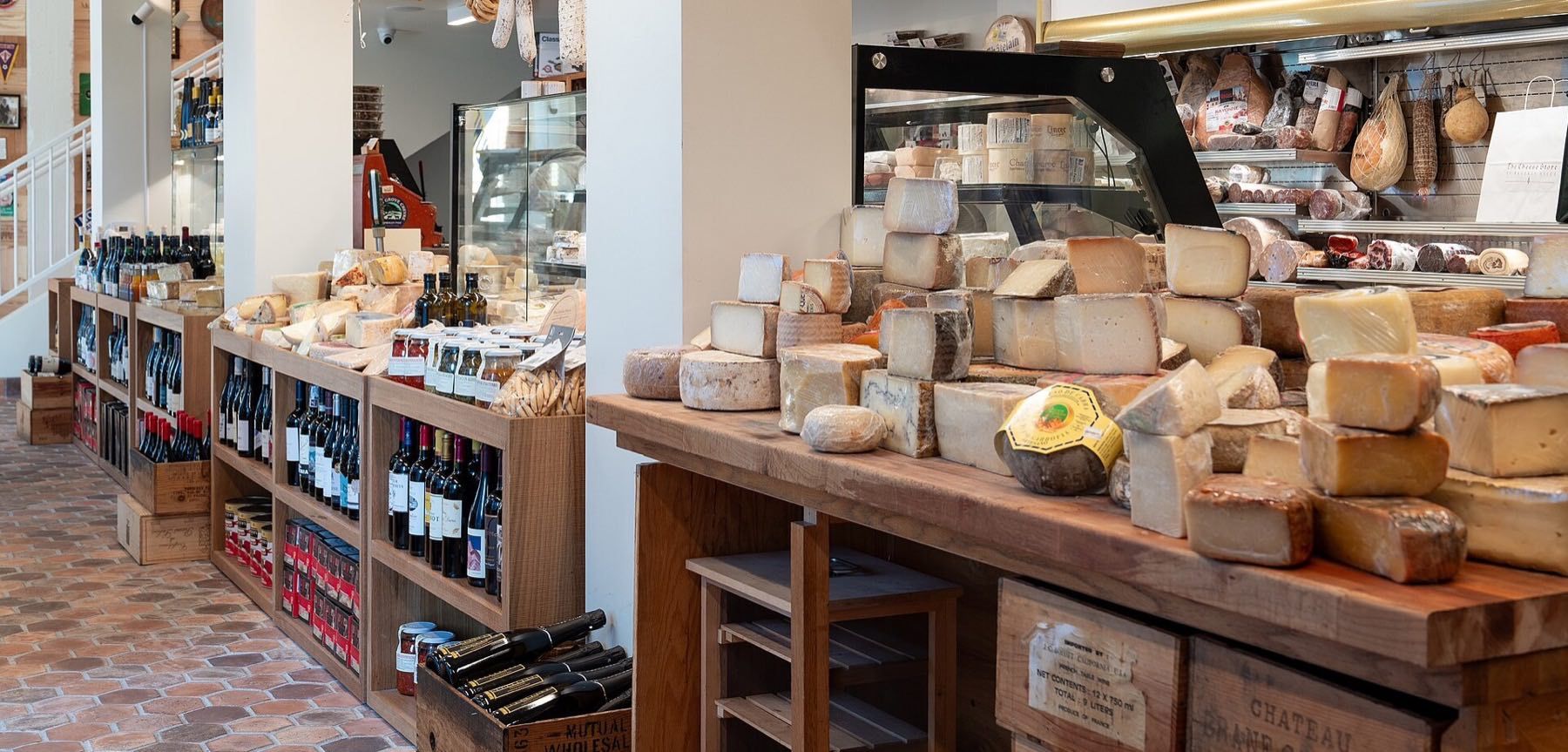
Cheese is a fatty, living food that goes on aging after you buy it, and the deli counter’s answer to it is to wrap it as tightly as possible in plastic. Sometimes that plastic is the same soft PVC cling film that has been shown, for nearly 40 years, to shed plasticiser into fatty food. Sometimes it’s a vacuum pack, a “cheese paper” or a shiny coat on the rind that you may not realise is plastic at all.
This piece covers the cheese-specific side of things: what the counter uses, what moves into the cheese, whether the plastic is earning its keep, and what to ask for. For cling film in general, beeswax wraps and storage containers, see our food storage guide, which this builds on rather than repeats.
What’s actually around your cheese
Cling film at the counter
Counter cling film comes in two main types: soft PVC, made clingy with a plasticiser, often DEHA (di(2-ethylhexyl) adipate), and polyethylene, which doesn’t need one. Our storage guide explains the difference. You can’t tell them apart by looking.
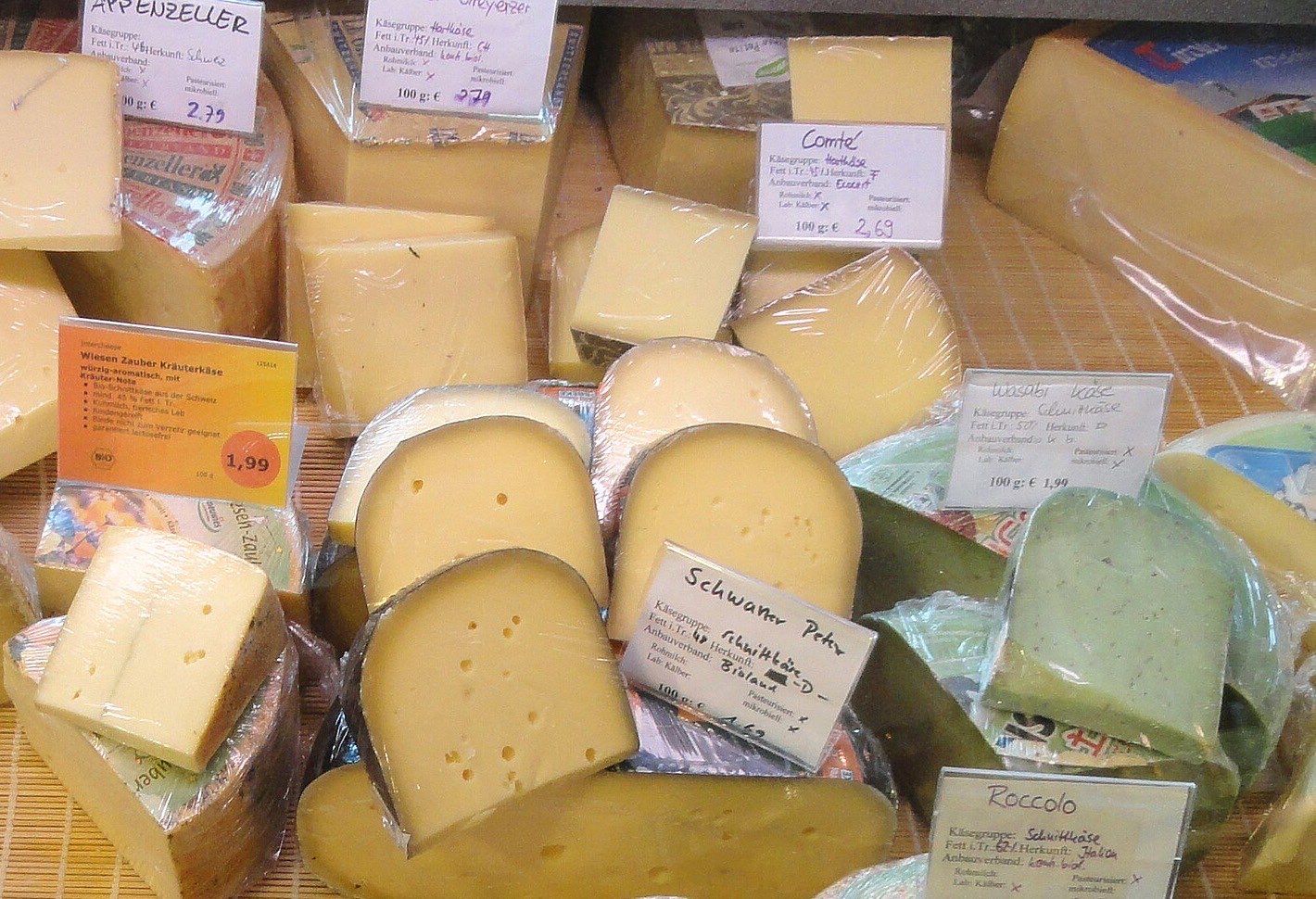

How common is the PVC kind today? Honestly, nobody seems to have checked recently. A Health Canada survey of 118 meat, fish and cheese samples, published in 2014, found DEHA in most of the cling films, and concluded that DEHA-plasticised film was being used by most of the grocery stores sampled, with some using non-plasticised polyethylene film instead. That’s one country, more than a decade ago, and we found no recent survey of what counters in the US, UK, EU or Canada use now. DEHA film hasn’t vanished, though: in a 2020 study by German researchers, the highest DEHA intake they calculated was in people who had eaten food wrapped in DEHA-containing cling film. So the studies below describe a wrap that is still around, but your counter may or may not use it.
Vacuum packs and shrink bags
Most supermarket cheese never meets a cheesemonger’s knife. The UK’s Academy of Cheese notes that supermarket block cheddar is vacuum packed in thick plastic before leaving the factory for a longer shelf life that survives cold cabinets and customer handling. The migration studies below are about soft cling film, and we found none measuring what moves into cheese from vacuum packs, so we can’t say how they compare. What is documented is the plastic waste and, for some cheeses, the effect on flavour (more below).
“Cheese paper” (often not just paper)
Cheese paper is sold as the grown-up alternative to cling film. The best-known brand, Formaticum, sells a “two-ply” paper, and its own FAQ says of its classic bags and sheets: “This material is made with polyethylene, the most common type of plastic used for food packaging.” Its newer “Zero” range is, in the maker’s words, plastic-free, made of greaseproof paper and vegetable-based wax. Its reusable bags and sheets are 60% polyethylene, the rest calcium carbonate. (We report what the maker says; we haven’t vetted any of these.)
So “cheese paper” can mean paper with a plastic layer facing the cheese. Polyethylene doesn’t need a plasticiser, so it avoids the DEHA problem. But it’s still plastic touching fatty food, and under our product standard, plastic-lined paper that touches food is a disqualifier. If a cheese paper doesn’t say what’s on the inside, don’t assume it’s plastic-free.
Wax and plastic coats on the rind
The glossy yellow, red or black skin on a Gouda-type cheese isn’t rind in the usual sense. The Netherlands’ government-funded Nutrition Centre explains that after ripening, cheese is given a layer of plastic to stop mould, followed by a layer containing an antifungal antibiotic, and that the plastic layer around hard cheese isn’t edible. One study testing edible alternatives on Cheddar used polyvinyl acetate as the “commercial coating” to compare against.
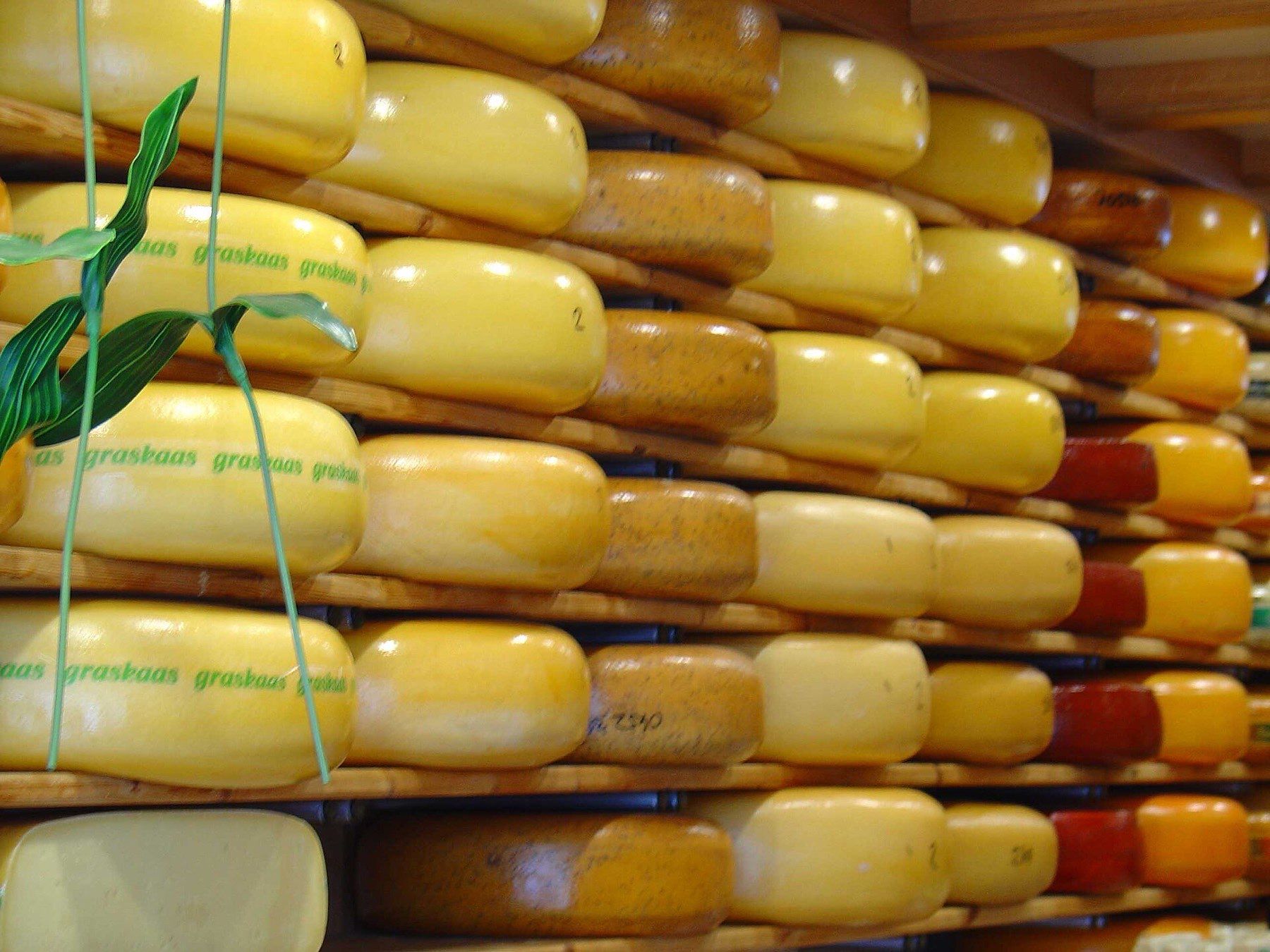

EU law doesn’t count these coatings as food additives. The EU’s food additives regulation excludes substances in coatings that “do not form part of foods and are not intended to be consumed together with those foods”. It has a separate category for edible cheese rind. One antifungal used on cheese surfaces, natamycin, is allowed by EU rules at up to 1 mg per square decimetre of surface, only on the outside of uncut hard, semi-hard and semi-soft cheese, and not present 5 mm down.
Traditional cheeses dipped in wax are a different case. Wax is a coating too, and it isn’t food, but it isn’t a plastic film.
What moves into the cheese
Plasticiser from PVC film: the strongest evidence
DEHA is oily, cheese is fatty, and the two find each other.
- In the Canadian survey, all 30 cheeses wrapped in DEHA-plasticised film contained DEHA, from 0.71 to 879 mg/kg, averaging 203 mg/kg. None of the 10 cheeses packed in rigid, non-plasticised plastic had any. Meat and fish in the same films averaged 2.5 to 9.1 mg/kg, far less than cheese. The authors noted that most of the cheese levels exceeded the EU’s limit.
- A Greek lab study wrapped three cheeses in PVC film and kept them at 5°C. After 10 days, DEHA had reached about 345 mg/kg in hard Kefalotyri, 223 mg/kg in Edam and 134 mg/kg in feta. Migration rose with contact time and depended on fat, moisture and texture. Edam approached equilibrium after about 100 hours; feta still hadn’t after 10 days.
- Older UK and Danish work found the same pattern: 27.8 to 135 mg/kg in shop cheese, and 45 mg/kg after two hours in the fridge, rising to 150 mg/kg after 10 days. Our storage guide covers those studies in detail.
One genuinely useful detail from the Greek study: the plasticiser stayed near the surface. After 10 days, DEHA was found only in the outer 3.6 mm of the Edam and the outer 2.4 mm of the other two, and not deeper. A rind helped too. Under Edam’s rind, none was detected in the first millimetre; under Kefalotyri’s, 22.4 mg/kg.
DEHA isn’t the only additive in cling film. A plasticiser called ATBC (acetyl tributyl citrate), used in some PVDC-type films, migrated into foods at 0.4 to 79.8 mg/kg in a UK home-use study, highest when the film was in close contact during microwaving. Epoxidised soybean oil, another additive in some PVC and PVDC wraps, moved into oily test liquids but not watery ones. What about phthalates? The Canadian survey found DEHP in only a few cheeses, at 0.29 to 15 mg/kg, and the authors judged it very likely environmental contamination rather than from the wrap.
What the rules allow
In the EU, DEHA has a specific migration limit of 18 mg/kg of food. Epoxidised soybean oil’s limit is 60 mg/kg. DEHA, epoxidised soybean oil, ATBC and other listed plasticisers also share a group limit: together, no more than 60 mg/kg. Overall, a plastic may release no more than 10 mg of everything per square decimetre of surface. For lab testing, the regulation assigns sliced cheese and cheese with an edible rind to vegetable oil, the fatty-food stand-in. Because oil extracts more than cheese does, the result may be divided by three. Whole cheese with an inedible rind is tested as a dry food. Even with that allowance, the real-world cheese results above often sit far over the limit.
In the US, DEHA appears on the FDA’s list of approved plasticisers for food-contact polymers with no specific numerical limit, beyond using no more than the amount “reasonably required” for the job.
How much is that, really?
The tolerable daily intake used in the Danish study was 0.3 mg of DEHA per kg of body weight, set by the EU’s former Scientific Committee for Food. It’s an old figure, but researchers were still using it in 2020, and we found no newer EU value. For a 70 kg adult, that’s 21 mg a day. Our arithmetic: a 40 g portion of cheese at the Canadian average of 203 mg/kg carries about 8 mg, roughly 40% of that allowance. A portion at the survey’s highest level, 879 mg/kg, would carry about 35 mg, well over it for that day. For comparison, the highest real-world intake in the 2020 German study, in people who’d eaten cling-wrapped food, was 0.114 mg per kg of body weight a day, a bit over a third of the TDI.
So this isn’t a poison story. A TDI is an amount you could take every day for life, with safety margins built in, so an occasional portion over it, even a heavily contaminated one, isn’t cause for alarm. But regular cheese eaters who buy from counters using PVC film could get a meaningful share of a tolerable intake from an additive the cheese never needed. Nobody has shown harm in people from this. It is, though, one of the best-documented plastic-to-food transfers in the kitchen.
Microplastics
Two 2026 studies looked for microplastics in cheese. A Slovak team made six cheeses themselves in traditional, small and industrial dairies, and found microplastics in every one, 249 to 1,548 particles per sample, mostly polyethylene, polyamide and polypropylene fragments. A Turkish method study found 40 to 50 particles per 100 g in three commercial white cheeses. Both groups suggest packaging may contribute, but neither isolated retail wrapping as the source. The Slovak team found particles in traditionally made cheese too. For what’s known about health effects, see our evidence review.
Is the plastic earning its keep?
This is where the anti-plastic case needs to be honest.
Cheese’s climate footprint is almost all cheese. In the global food dataset compiled by Poore and Nemecek, cheese comes to about 23.9 kg of CO₂-equivalent per kilogram. Packaging accounts for 0.17 kg of that, about 0.7% by our arithmetic. The share the dataset attributes to losses (cheese that’s lost or wasted) is 2.58 kg, about 11%, and 15 times the packaging. A US life-cycle study of cheddar put its footprint at 8.6 kg CO₂-equivalent per kg, found raw milk to be the main contributor, and flagged cutting cheese loss across the supply chain as important. If a vacuum pack stops a wedge from going mouldy in a warehouse, it has probably paid its carbon debt many times over.
Unwrapped cheese dries out. In a Spanish study of a PDO cheese kept at 4°C for up to six months, the unpackaged cheeses lost moisture and firmed up. Plastic stops that. (The same study’s trained tasters still preferred the unpackaged cheese.)
But the waste argument doesn’t excuse PVC on cut cheese. Shelf life is a case for packaging, not for plasticised film touching the fat. Polyethylene film, rigid tubs and paper all keep cheese without dosing it with DEHA. In the Canadian survey, the rigid-packed cheese had none.
Thin film is hard to recycle. Cheesy, greasy film is about the worst candidate for recycling there is. In England, councils must collect plastic film packaging and plastic bags with plastic recycling from 31 March 2027 (as of November 2026). Until your area does, cling film goes in the bin.
What cheesemongers say
The cheese trade’s own objection to plastic is about quality, not chemistry. The Academy of Cheese, a UK body that trains and certifies cheese professionals, tells consumers that cheese is a living thing that needs to breathe: “Anything plastic will suffocate it; whilst clingfilm might be how you saw your cheeses wrapped in the shop (and there are reasons for this), this is the last thing you should wrap it in at home.” It recommends cheese paper, wax paper or wax wraps.
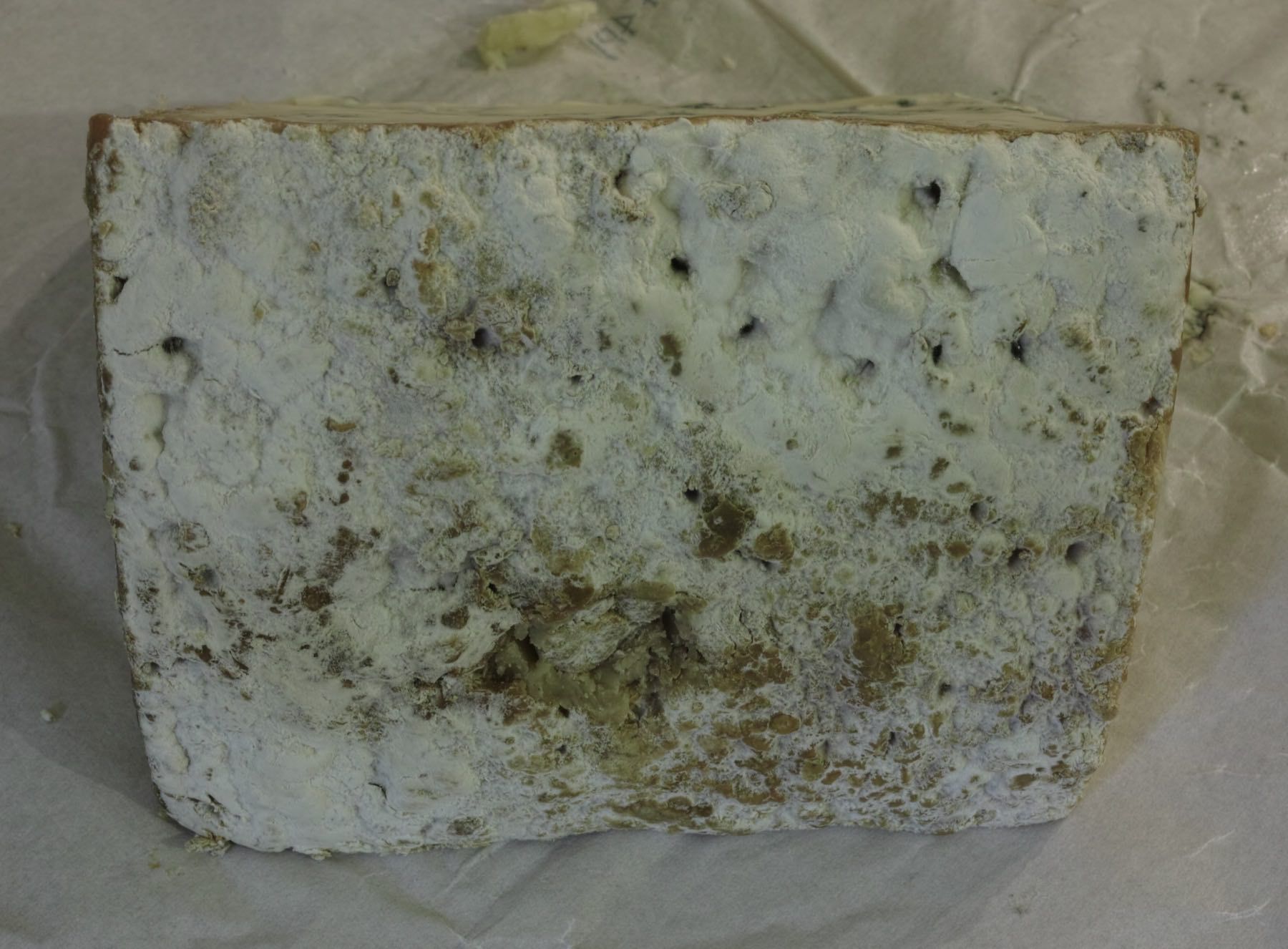

There’s some research behind the “breathing” idea, at least for certain cheeses. An ETH Zurich doctoral study found that vacuum-packing surface-ripened semi-hard cheese often spoils the texture and smell of the rind’s bacterial smear, enough to cause complaints and delistings. The Spanish taste panel above preferred cheese stored without plastic.
Cheese-paper makers push the same message, with an obvious interest. Formaticum’s homepage declares that “Cheese was not put on this earth to be wrapped in plastic”, on a site that sells a paper made with polyethylene. The quality argument for letting cheese breathe is real. It just isn’t the same as plastic-free.
What you can do
At the counter
- Ask for it cut fresh and wrapped in paper. If the counter cuts your piece from a bigger block kept under film, you can’t undo the time the block spent there, but you can skip another round of plastic on your piece.
- Ask what the film is. If staff know it’s polyethylene, that’s the better option. If they don’t know, assume it could be PVC.
- Bring your own container, where it’s allowed.
- In the US, the FDA’s 2026 model Food Code now lets staff or customers fill customers’ containers with food if the container is made for reuse, has been cleaned and sanitised, and staff inspect it. Filling must not touch the counter’s food-contact surfaces. States adopt the model code on their own schedule, so your local rules may lag.
- In the EU, shops that offer refill must tell you which containers they accept and what the hygiene rules are. They may refuse a container they consider unhygienic or unsuitable, and they aren’t liable for problems it causes (rules in force from 12 August 2026; the law lets shops offer refill but doesn’t make them).
- In the UK, we found no Food Standards Agency guidance on it, so it’s largely up to the shop. Ask.
- Buy less, more often. It’s the Academy of Cheese’s first storage rule, and it’s also the best defence against waste, the bigger part of cheese’s footprint.
At home
- Unwrap film-wrapped cheese when you get home, especially soft PVC film on cut faces. Rewrap it in plain waxed or greaseproof paper, then put it in a lidded glass or steel box, or the fridge’s cheese drawer. That’s the Academy’s advice too: paper, then a drawer or lidded container, so the cheese doesn’t dry out.
- If a piece sat in PVC film for days, shaving a thin slice off the cut faces is a reasonable precaution. That’s our inference from the Greek finding that DEHA stayed in the outer few millimetres.
- Beeswax wraps work for hard cheese, but they aren’t a clean slate. Every wrap in a German study carried chlorinated paraffins. Our food storage guide has the details.
- A cheese dome or bell is just a lidded container you can see through. Fine, as long as the base isn’t plastic.
- Vacuum packs: leave them sealed until you open the cheese. That’s what they’re built for, and opening early just shortens the cheese’s life. Once opened, rewrap as above rather than resealing in cling film.
Rinds
- Peel off plastic coatings. The glossy coat on Gouda-type cheeses is a plastic layer, often topped with an antifungal. It isn’t meant to be eaten. Cut a little inside it rather than chewing your way through.
- Wax is a coating too. Remove it.
- Natural rinds are different. The Dutch Nutrition Centre says the white rind of brie and camembert is edible. Whether you like it is your business.
The bottom line
The plastic around cheese does two different jobs, and they deserve different verdicts. Packaging that keeps cheese from drying out or going mouldy accounts for less than 1% of cheese’s climate footprint, and probably prevents more waste than it causes. Soft PVC cling film on cut cheese is the indefensible part. It has been shown again and again to load the outer layer of the cheese with plasticiser, sometimes many times over the EU limit, and it’s easy to avoid: ask for paper, bring a box, and unwrap what you can when you get home.
For how we judge storage products, see our standards. More in our kitchen section.
Sources
- Cao XL, Zhao W, Churchill R, Hilts C (2014). Occurrence of di-(2-ethylhexyl) adipate and phthalate plasticizers in samples of meat, fish, and cheese and their packaging films. Journal of Food Protection.
- Goulas AE, Anifantaki KI, Kolioulis DG, Kontominas MG (2000). Migration of di-(2-ethylhexylexyl)adipate plasticizer from food-grade polyvinyl chloride film into hard and soft cheeses. Journal of Dairy Science.
- Castle L, Mercer AJ, Startin JR, Gilbert J (1987). Migration from plasticized films into foods. 2. Migration of di-(2-ethylhexyl)adipate from PVC films used for retail food packaging. Food Additives and Contaminants.
- Petersen JH, Naamansen ET, Nielsen PA (1995). PVC cling film in contact with cheese: health aspects related to global migration and specific migration of DEHA. Food Additives and Contaminants.
- Nehring A, Bury D, Ringbeck B, Kling HW, Otter R, Weiss T, Brüning T, Koch HM (2020). Metabolism and urinary excretion kinetics of di(2-ethylhexyl) adipate (DEHA) in four human volunteers after a single oral dose. Toxicology Letters.
- Castle L, Jickells SM, Sharman M, Gramshaw JW, Gilbert J (1988). Migration of the plasticizer acetyltributyl citrate from plastic film into foods during microwave cooking and other domestic use. Journal of Food Protection.
- Choi MS, Rehman SU, Kim H, Han SB, Lee J, Hong J, Yoo HH (2018). Migration of epoxidized soybean oil from polyvinyl chloride/polyvinylidene chloride food packaging wraps into food simulants. Environmental Science and Pollution Research.
- European Commission (2011). Commission Regulation (EU) No 10/2011 on plastic materials and articles intended to come into contact with food (consolidated text of 14 July 2026). Official Journal of the European Union.
- US Food and Drug Administration (2026). 21 CFR 178.3740 Plasticizers in polymeric substances. Electronic Code of Federal Regulations.
- Zajác P, Čapla J, Ailer L, Tulipánová A, Imreová Z (2026). Microplastic contamination in cheese from traditional and industrial production systems. Scientific Reports.
- Demir FH, Yilmaz E, Damar I (2026). Development of a digestion method for microplastic quantification in white cheese and detection by micro-Raman imaging. Food Research International.
- Poore J, Nemecek T (2018). Reducing food's environmental impacts through producers and consumers. Science.
- Kim D, Thoma G, Nutter D, Milani F, Ulrich R, Norris G (2013). Life cycle assessment of cheese and whey production in the USA. International Journal of Life Cycle Assessment.
- Franco I, Bargiela V, Tovar CA (2023). Effect of vacuum packaging on the biochemical, viscoelastic, and sensory properties of a Spanish cheese during chilled storage. Foods.
- Ritschard JS (2015). Characterization of the surface microbiota of smear-ripened cheese and its role in the development of a smear defect after vacuum film-prepackaging. Doctoral thesis, ETH Zurich.
- Academy of Cheese (2026). Presenting and serving cheese. Academy of Cheese (UK cheese education body).
- Formaticum (2026). Cheese storage FAQ. Formaticum (cheese paper maker).
- Formaticum (2026). Formaticum homepage. Formaticum (cheese paper maker).
- Voedingscentrum (Netherlands Nutrition Centre) (2026). Kaas. Voedingscentrum encyclopedie.
- Pourmolaie H, Khosrowshahi Asl A, Ahmadi MR, Zomorodi S, Naghizadeh Raeisi S (2018). The effect of Guar and Tragacanth gums as edible coatings in Cheddar cheese during ripening. Journal of Food Safety.
- European Parliament and Council (2008). Regulation (EC) No 1333/2008 on food additives (consolidated text of 18 August 2026). Official Journal of the European Union.
- US Food and Drug Administration (2026). Food Code 2026. US Public Health Service / FDA.
- European Parliament and Council (2025). Regulation (EU) 2025/40 on packaging and packaging waste. Official Journal of the European Union.
- Department for Environment, Food & Rural Affairs (2025). Simpler Recycling: household recycling in England. GOV.UK guidance (updated 13 May 2025).
Spotted an error? Tell us and we'll correct it and note the change.