Plastic-free deodorant: paper tubes, refills, tins and what's actually inside
Paper tubes, refill cases and tins cut the plastic, but linings, lids and formulas vary. The closest options today, and what 23 deodorants are made of and where they're sold, in their makers' words.
If you’ve searched for “Native plastic free deodorant”: as of 21 November 2026, it isn’t on Native’s website. Native, which Procter & Gamble lists among its brands, sold a paper push-up stick it described as coming in “100% plastic-free packaging”. More on that below.
Plenty of other makers sell deodorant in paper tubes, refill cases, tins and jars. What’s less obvious is where plastic still turns up: inside the tube, in the case you keep, under the lid, and sometimes in the formula itself. Here’s what comes closest today, what 23 alternatives are made of according to their makers, where each is sold, and whether the health scares are worth switching for.
If you want one today
No deodorant has been vetted against our standard yet, because every maker still leaves at least one part unconfirmed. So we can’t list one or link you to buy. But going by our rules (the least plastic, and the maker tells you the most about it), these three come closest as of 21 November 2026. All three are sold from US online stores. Links go to the makers’ own pages because that’s where our facts come from.
- Paper tube: Meow Meow Tweet Deodorant Stick (US). Meow Meow Tweet says “the entire construction is paper”, including the disc you push with, and its ingredient list has no synthetic polymers. Still to confirm: what the “seal” listed on the product page is made of. It ships in the US, to Canada and to the “Rest of the World”.
- Paper tube, fragrance-free option: Ethique (from New Zealand). Ethique says its tubes are “made from cardboard and a water-based lining”, with “no sneaky plastic liners”, and it sells a fragrance-free version. Still to confirm: what the water-based lining is made of. Its US store ships to the US but not Canada.
- Glass jar: Little Seed Farm Deodorant Cream (US). It comes in “a glass jar with recyclable metal lid”, and the maker calls it plastic-free. Its ingredient list has no synthetic polymers. Still to confirm: whether the lid has a liner and what it’s made of, and an ingredient list in the standard INCI form our standard asks for (it gives everyday names with Latin names alongside). It’s “made in the USA”; the maker doesn’t say which countries it ships to.
Outside the US: in the UK, Earth Conscious sells paper tubes it says have “zero plastics or hidden liners” and ships only within the UK. In Australia, Woohoo sells a case it says is “100% aluminium” that takes its cardboard sticks as refills. The table has the rest, including what each maker hasn’t said.
Whatever you buy:
- Use up what you have first. A half-used stick in the bin is waste either way. See less plastic on a budget.
- Judge a refill system by the refill. It’s the part you keep buying and throwing away. “Compostable” can mean home or industrial composting, and those are different claims.
- Ask about the inside. If a paper tube says “plastic-free” but nothing about its lining, disc or seal, or a jar says nothing about its lid liner, that’s a gap, not an answer.
- Go fragrance-free if you can. It’s the change with real evidence behind it, for phthalates and for skin (details below).
- Don’t pay extra for a health claim. Aluminium-free is fine if you’d rather sweat, but the evidence doesn’t say antiperspirant gives you cancer or Alzheimer’s.
What happened to Native’s paper stick
Native’s product page, as archived on 10 February 2025, said “Our packaging is 100% paperboard and printed with soy-based inks” and that the formula was the same as its regular deodorant. It didn’t mention a lining or what the base disc and cap were made of, and it already showed the unscented version as sold out.
On 21 November 2026, Native’s old plastic-free links redirected to its general deodorant page or to a “last chance” page that returns “Not Found”, and none of the 105 products in its public product feed was a paper version. We found no statement from Native on why. A missing page doesn’t tell you that, or whether shops still have stock. We also found no paper-tube version on the sites of Old Spice or Secret, two other P&G brands.
Why deodorant is a plastic problem
A typical twist-up stick is a small, multi-part plastic object: a barrel, a twist dial, a spindle that pushes the stick up, and a cap. When it’s empty, the whole thing goes in the bin or the recycling, and we’ve covered why the recycling symbol tells you so little about which of those it really ends up in.
Even makers of refill systems say so about their own products. Wild, a UK refill brand, says its reusable cases are “made from aluminium and plastic and roadside recycling systems are not equipped to handle products made from multiple materials like ours”, and it runs a postal return scheme for them.
We found no reliable figure for how many deodorant sticks are thrown away each year, so we won’t give one.
Paper push-up tubes, and what’s inside them
Paper tubes are the format closest to plastic-free, and the one with the most hidden questions. A deodorant stick is mostly oils, butters and waxes, so the question for every tube is what, if anything, is on the inside surface. It might be wax, a plastic film, a “plant-based” film or nothing. Then there’s the disc you push with, the cap and the label.
Here’s what the makers we checked say:
- Ethique says its tubes are “made from cardboard and a water-based lining. That’s it! No sneaky plastic liners here.” It doesn’t name what the lining is.
- Earth Conscious (UK) says its cardboard push-up tubes come “with zero plastics or hidden liners”.
- Meow Meow Tweet (US) says “the entire construction is paper”, including the inner disc you push. Its product page lists the parts as “Paper Tube + Seal” without saying what the seal is.
- Ben & Anna (Germany) says its paper tubes are plastic-free (“Unsere Papertubes sind plastikfrei”) but doesn’t describe a lining.
- Woohoo (Australia) says its tube is “100% plastic free, recyclable and home compostable”, with a cardboard cap. MooGoo (Australia) says its stick comes in “100% Plastic Free, Recyclable Cardboard Packaging”. Neither describes a lining.
- Raw Nature (New Zealand) calls its tube “Plastic-free”; its FAQ mentions an “inner lining” without saying what it’s made of.
- Humble Brands (US) says its “paperboard deodorant tubes are made from FSC-certified paper” and that choosing paperboard “means no new plastic at all”. The same page’s packaging line reads “75% Post Consumer Recycled Plastic (PCR) and Plastic Free Paper packaging”. We’ll ask Humble which applies to the paper tube.
- PAPR (US) names what its lining is made of. It says its tube is 99.98% paper and the rest is “a super thin layer of PLA membrane (cornstarch)”. PLA is polylactic acid, a plastic made from plants. Under our standard, plant-based plastic counts as plastic: “made from corn” tells you where the plastic came from, not whether it is plastic. Our compostables explainer covers what PLA does and doesn’t do when it’s thrown away.
- Slo Naturals (New Zealand) lists its packaging as “Certified FSC compostable cardboard (98.7%) & cornstarch film (1.3%)” and calls it “Plastic Free Compostable Packaging”. It doesn’t say what the film is made of. If it’s PLA, like PAPR’s cornstarch membrane, our standard would count it as plastic; we’ll ask.
PAPR’s and Slo’s disclosures are more than most makers give, and they’re the reason we can say anything about those tubes at all. When a maker says “plastic-free” and nothing about the lining, we record the lining as “maker doesn’t say” and ask.
Refills, jars and tins
Refill cases. You buy a case once, then buy refills. The case is the part you keep. The refill is the part you throw away, so it decides how much plastic you’re really buying.
- Wild (UK) says its stick refills are “100% plastic-free”, wrapped in “a paper-like material” made from bamboo, and can be recycled “alongside any paper or cardboard”. Its case is aluminium and plastic; Wild doesn’t say which parts are which.
- Fussy (UK) says its refills are “made from waste sugarcane”, plastic-free and home compostable in “6-12 months”. Its case is “durable ABS plastic”, “made with recycled plastic”. Fussy explains that a metal case “would have required plastic parts and glue”.
- Woohoo (Australia) says its cases are “made from 100% aluminium. Plastic free.”, “without any plastic bits and bobs”. The refill is its ordinary cardboard stick: you take off the cap and “slide the cardboard tube into the case”. So the open question is the same as for the tube: what, if anything, lines it.
- Ben & Anna sells a reusable case with refill sticks in paper packaging but doesn’t say what the case is made of.
We couldn’t read Dove’s pages on its refillable deodorant: its website refused our requests. Myro, another refill brand, had only an “Under Construction” page, and by Humankind’s online store showed “This store is currently unavailable”.
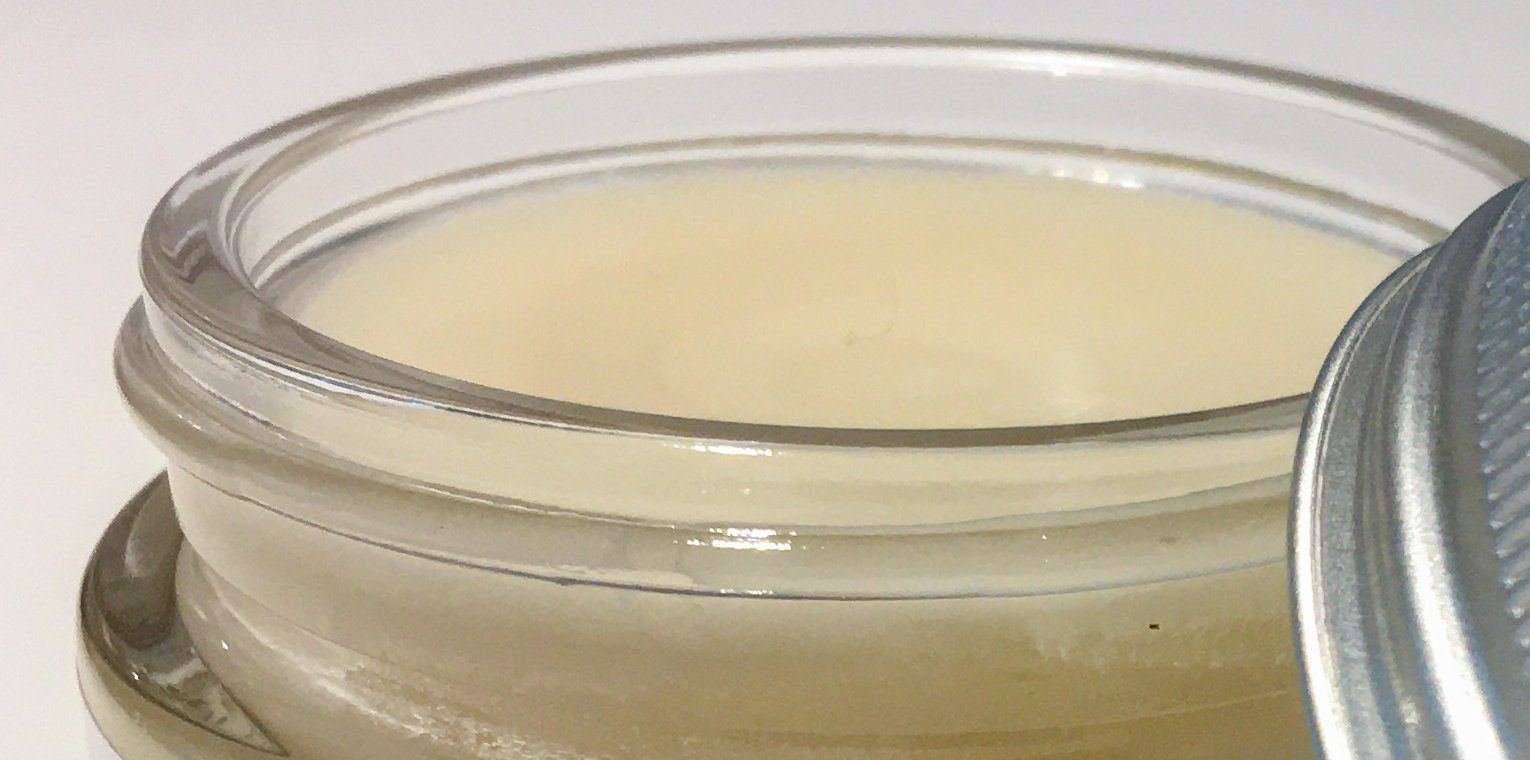
Creams in tins and jars. No moving parts, so no spindle or twist base: you scoop the cream out with your fingers. The open question is usually the lid, which can have a sealing liner.
- Fat and the Moon (US) is the one maker we found that names its lid liner: its glass jar has a “Tinplate Plastisol-Lined Top” (it also sells the cream in an aluminium tin). Our jar-lid explainer covers what plastisol lid seals are usually made of. A liner that touches the cream counts under our standard, so that jar could be plastic-minimal at best.
- Little Seed Farm (US) uses “a glass jar with recyclable metal lid”. Routine (Canada) sells its creams “in glass jars”, plus a refill pouch whose material it doesn’t state.
- Ben & Anna sells a deodorant cream in a tinplate tin, “ohne Kunststoffverpackung” (without plastic packaging). Meow Meow Tweet uses “a refillable metal tin”, though an older post on its blog says glass jar.
- In Australia, No Pong sells a “plastic-free and aluminium-free tin” made of tinplate. Black Chicken Remedies sells its Axilla paste in an “Aluminium Tin” labelled “Plastic Free”, but its larger “Signature” size comes in a “PET Jar”. Noosa Basics sells its cream in a “reusable metallic tin”; its sticks are “PCR (Post-Consumer Recycled) plastic”.
As with toothpaste jars, none of these makers except Fat and the Moon says whether the lid has a liner.
Plastic in the formula itself
Packaging is the obvious plastic. Some deodorants also contain synthetic polymers in the stick you rub on your skin.
Take a mainstream antiperspirant. The US drug label for Secret Delicate Rose Invisible Solid, a P&G product, lists cyclopentasiloxane and PPG-14 butyl ether among its inactive ingredients. Cyclopentasiloxane is D5, a small ring-shaped siloxane; D4, D5 and D6 are also used as monomers to make silicone polymers, a use the EU rule on them carves out (see our silicone explainer). PPG-14 butyl ether is a polypropylene glycol, a synthetic polymer. The same label lists corn starch/maltodextrin crosspolymer, which the EU’s cosmetic ingredient database describes as corn starch and maltodextrin “crosslinked with Citric Acid”. That is a natural starch that has been chemically changed, and under the EU’s definitions a chemically modified natural polymer is no longer a natural one, so we count it as a synthetic polymer too. The label also lists ozokerite, a mineral or petroleum wax. It’s made of hydrocarbon chains but isn’t a polymer, so we don’t count it, though we’d name it on a listing.
Two EU laws matter here, as of November 2026:
- D4, D5 and D6. The EU identified these cyclic siloxanes as very persistent and very bioaccumulative in 2018. Under Regulation (EU) 2024/1328, D4 and D5 in wash-off cosmetics have been restricted since 2020. For all other cosmetics, which includes deodorant, the 0.1% limit applies after 6 June 2027. That’s an environmental rule about persistence, not a finding that D5 harms the person wearing it. The Secret label we quoted is a US label, and the EU rule covers products sold in the EU.
- Microplastics. Regulation (EU) 2023/2055 restricts intentionally added synthetic polymer microparticles, meaning solid, water-insoluble polymer particles of 5 mm or less. For leave-on cosmetics like deodorant, it applies from 17 October 2029. Polymers that dissolve in water at more than 2 grams per litre are outside it, and so are polymers shown to break down under the law’s tests and natural polymers that haven’t been chemically modified. A chemically modified natural polymer, such as a cross-linked starch, is covered if it’s a solid particle and doesn’t dissolve or break down. Liquid and dissolved polymers generally aren’t covered.
What this means for you: in the EU, solid polymer particles that don’t dissolve or break down are microplastics by law. Dissolved polymers and silicones aren’t, and we found no evidence that they harm the people who use them. That’s the same position we took on toothpaste. Whether microplastics in general affect health is a separate and still-open question; see what’s known about microplastics inside you.
None of the alternative-format products in our table lists a silicone, and only one lists an ingredient we count as a synthetic polymer. Their sticks and creams are held together by plant and animal waxes (candelilla, sunflower, rice bran, sumac, beeswax), butters, starches and oils. Plant and animal waxes and gums aren’t synthetic polymers, and we don’t count them.
The exception is Fat and the Moon, which lists “Cera Bellina (Polyglyceryl-3 Beeswax)” separately from its plain beeswax. Polyglyceryl ingredients are made by heating glycerol until its molecules join into chains, then attaching fatty acids (here, beeswax’s). The glycerol may come from plants, but the chain is built in a reactor, and under the EU’s polymer definition a chain averaging three or more glycerol units usually counts as a polymer. So under our standard polyglyceryl-3 counts as a synthetic polymer, like PEG: the cream can be plastic-minimal at most, in the tin as well as the jar, unless the maker or its supplier shows that most of the ingredient’s weight is in shorter chains. It isn’t a microplastic: it’s melted into the cream, not added as solid particles. Woohoo’s deodorant paste, which we left out of the table because Woohoo says its pastes are “out of stock until late November”, lists “Polyglyceryl-3 Tetrastearate”, which we’d count the same way. Woohoo’s stick, which is in the table, doesn’t list one. We’ll ask both makers for the chain-length data.
How we’ll judge deodorant formulas. On 21 November 2026 we added a formula rule to our standard:
- A product must publish its full ingredient list, using the standard (INCI) names required on the label.
- PFAS, solid polymer microparticles and D4, D5 and D6 rule a product out.
- Other synthetic polymers and dimethicone can only ever be “plastic-minimal”, and we name them on the listing. Chemically modified starches and celluloses that don’t dissolve, such as “crosspolymers”, count as synthetic polymers.
- Mineral waxes such as ozokerite aren’t polymers and don’t change the rating, but we name them.
- Polyglyceryl ingredients with three or more glycerol units (polyglyceryl-3, -4, -10 and so on) count as synthetic polymers. Polyglyceryl-2 doesn’t, but we name it.
- Paper tubes count as single-use, so every part must be plastic-free, linings included.
Listings will follow once makers confirm the parts their pages don’t cover.
Aluminium, parabens and cancer: what the evidence says
If you’re switching to cut plastic, good. If you’re switching out of fear, read this first: the evidence is more reassuring than the internet.
Deodorant and antiperspirant aren’t the same thing. In the US, an antiperspirant is a drug that “reduces the production of perspiration”, and its active ingredients are aluminium compounds. A deodorant only tackles smell, so it’s a cosmetic. Products that do both must meet both sets of rules. Every alternative-format product in our table is a deodorant, with no aluminium salt.
Breast cancer: no good evidence of a link. In a 2002 US study, 813 women with breast cancer and 793 without reported similar use of antiperspirant (odds ratio 0.9) and deodorant (1.2), and neither was a significant difference. A 2017 study of 209 cases and 209 controls did find higher risk in women who said they used underarm products several times a day from before age 30. Its confidence interval was wide, 1.03 to 14.66. All of these are case-control studies, which ask women with and without cancer to remember years of habits. Women with a diagnosis may remember differently, and that can skew results. A 2024 meta-analysis pooling seven case-control studies found no association (odds ratio 0.96). Its authors said cohort studies, which follow people forward in time, are still needed. Cancer Research UK says plainly that using deodorants and antiperspirants “does not increase the risk of cancer”. The US National Cancer Institute says “no scientific evidence links” them to breast cancer. Evidence of harm: limited. Evidence of no large effect: moderate.
How much aluminium gets through skin: very little. Two studies applied antiperspirant made with a traceable form of aluminium to 12 women each. The first estimated that on average 0.0094% was absorbed. The follow-up used a 25-times-higher dose and got a best estimate of 0.00052%, with most of the aluminium staying in the outer layers of skin. Both were fully funded by Cosmetics Europe, the European cosmetics industry association. A separate study of 21 people using an antiperspirant daily for two weeks found no measurable rise in aluminium in their blood or urine. The EU’s scientific advisers on cosmetics consider aluminium safe in deodorants and antiperspirants at set maximum levels. They also note that total exposure from cosmetics and food together may exceed safe limits for people at the highest exposure. Moderate evidence that skin absorption is tiny, mostly from industry-funded work.
Alzheimer’s: not supported. We found no systematic review linking antiperspirants to Alzheimer’s disease. A small 1990 study relied on answers from patients’ friends and relatives, and its authors called it “provocative but inconclusive”. A Canadian study following 4,615 older people for five years found no significant association with antiperspirant use. Evidence: no review found, and the studies we found don’t support a link.
Parabens: found in breast tissue, not shown to cause cancer. A 2004 study found parabens in 20 breast tumour samples. It didn’t compare them with healthy tissue, and it couldn’t show cause. A 2012 follow-up found parabens in 7 women who said they’d never used underarm products, so underarm products can’t be the only source. Cancer Research UK says “Parabens do not cause cancer”. None of the products in our table lists a paraben anyway.
Fragrance: the better reason to choose carefully. Fragrance blends can hide phthalates. In a three-day study of 100 girls who switched to fragrance-free products (or ones labelled phthalate-free), one phthalate marker fell 27.4%. There was no control group, and two other phthalate markers didn’t change. That’s why choosing fragrance-free toiletries is number four on our list of what to change first (moderate evidence). Fragrance is also a common cause of skin allergy: in a Danish study of eczema patients with fragrance allergy, deodorants were the product most often blamed, in 25% of cosmetic-linked cases. Several products in our table list “parfum” or “fragrance” without naming every component; others name only essential oils.
Deodorants compared
As of 21 November 2026. Everything is taken from each maker’s own pages, and for the Secret antiperspirant, from its US drug label. “Where it’s sold” is what each maker’s own shipping page or FAQ says; “not stated” means it names no countries. “Maker doesn’t say” means we couldn’t find it in writing. We didn’t test anything. This isn’t a list of recommendations, and none of these products is listed on LPP yet; see our standard for what we’d need. Every product below is a deodorant (no aluminium salt) unless it says otherwise.
| Product | Format | Where the plastic is (container and inner parts, maker’s words) | Refill and its packaging | Plastic in the formula | Where it’s sold |
|---|---|---|---|---|---|
| Meow Meow Tweet Deodorant Stick, Eucalyptus Lemon (US) | Paper push-up | “The entire construction is paper”, inner disc included. “Seal”: material not stated | None | None listed. Named essential oils | US, Canada, “Rest of the World” |
| Ethique Eucalyptus + Cedarwood (NZ) | Paper push-up | “Cardboard and a water-based lining”; lining material not named; base and cap not described separately | None | None listed. Named essential oils; a fragrance-free version exists | US store: US only, not Canada. Separate NZ and Australian stores. UK store: “We no longer ship to the UK”. EU: not stated |
| Humble Brands Black Spruce Plastic-Free Deodorant (US) | Paper push-up | “Paperboard deodorant tubes … made from FSC-certified paper”. Same page’s packaging line: “75% Post Consumer Recycled Plastic (PCR) and Plastic Free Paper packaging”. Cap, base and lining not stated | None | None listed. Essential oils and extracts named | All 50 US states and Puerto Rico; not Canada |
| PAPR Bright Shiny Morning (US) | Paper push-up | 99.98% “FSC certified” paper and “a super thin layer of PLA membrane (cornstarch)”: PLA is plastic. Base and cap not described separately | None | None listed. Named essential oil | US; “We do ship worldwide” |
| Earth Conscious Lemon & Rosemary stick (UK) | Paper push-up | “Recyclable paperboard tube”, “zero plastics or hidden liners”; base and cap not described separately | None | None listed. Named essential oils | UK only |
| Ben & Anna Deo Papertube Persian Lime (Germany) | Paper push-up | Paper tube, “ohne Kunststoffverpackung” (without plastic packaging); lining, base and cap: maker doesn’t say | Separate refill case (below) | None listed. “Parfum” from essential oils, components listed | Germany and Europe, except Malta, Cyprus and some islands. UK, US, AU, NZ: not stated |
| Woohoo Natural Deodorant Stick (Drift) (Australia) | Paper push-up | “100% plastic free, recyclable and home compostable” cardboard tube; cardboard cap; lining and base: maker doesn’t say | Also the refill for Woohoo’s case (below) | None listed. “Natural Fragrance”, blend not disclosed. (Woohoo’s paste, not in this table, lists polyglyceryl-3 tetrastearate: see above.) | Australia; worldwide by Australia Post, “with built-in tariffs for USA”; not the EU |
| MooGoo Deodorant Stick, Coconut Cream (Australia) | Paper push-up | “100% Plastic Free, Recyclable Cardboard Packaging”; lining and lid material: maker doesn’t say | None | None listed. “Fragrance (Phthalate Free - Coconut Reef)”, blend not disclosed | Australia. Local MooGoo sites for NZ, UK, Ireland, Europe, US and Canada, but the US site listed no stick on 21 Nov 2026 |
| Raw Nature Cedarwood + Rosemary (NZ) | Paper push-up | “Plastic-free tube”; FAQ mentions an “inner lining”, material not stated | None | None listed. Named essential oils | NZ, Australia, “Rest of World” |
| Slo Naturals Cedar + Sage (NZ) | Paper push-up | “Certified FSC compostable cardboard (98.7%) & cornstarch film (1.3%)”; film material not stated | None | None listed. Named essential oils | NZ and Australia; “international orders” mentioned without naming countries |
| The Natural Deodorant stick and jar (Australia) | Paper push-up; glass jar | Stick: “recyclable cardboard push stick”, lining and cap not stated. Jar: “reusable glass jar”, lid and spatula not stated | None | None listed. “Essential Oils”, not all named. Everyday names, not INCI | Australia; international by quote, contact before ordering |
| Wild Refillable Stick Deodorant (UK) | Refill case | Case: “aluminium and plastic”; which parts are plastic: maker doesn’t say | Bamboo “paper-like material”, “100% plastic-free” | None listed. “Parfum (Fragrance)”, blend not disclosed | UK, EU, “most countries worldwide”; a US store sells the case and refills |
| Fussy refillable deodorant (UK) | Refill case | Case: “durable ABS plastic”, “made with recycled plastic” | “Made from waste sugarcane”, home compostable “in 6-12 months” | None in Fussy’s list, which uses everyday names. A retailer’s copy of one scent’s INCI list adds maltodextrin (not a polymer we count). “Parfum”, allergens listed | UK, most EU countries, US, Canada, Australia, NZ; US store sells case and refills |
| Woohoo Refillable Deodorant Case (Australia) | Refill case | Case: “100% aluminium. Plastic free.” | The cardboard Drift stick above; its lining: maker doesn’t say | As for the stick | As for the stick |
| Ben & Anna Refill Case + Deostick Refill (Germany) | Refill case | “Wiederverwendbaren Case” (reusable case); material not stated | Refill sticks “in Papierverpackung” (paper packaging) | None listed | As for Ben & Anna above |
| Meow Meow Tweet Deodorant Cream, Tea Tree (US) | Cream in tin | “Refillable metal tin” with paper sleeve; lid liner: maker doesn’t say | None | None listed. Named essential oil | As for Meow Meow Tweet above |
| Little Seed Farm Lavender Deodorant Cream (US) | Cream in glass jar | “Glass jar with recyclable metal lid”; lid liner: maker doesn’t say | None | None listed. Named essential oils. Everyday names with Latin names, not INCI | US maker, “made in the USA”; countries not stated |
| Fat and the Moon Deodorant Cream (US) | Cream in glass jar or aluminium tin | Jar: “Tinplate Plastisol-Lined Top”: a plastisol lid liner (see our jar-lid explainer). Which size comes in which container: maker doesn’t say | None | “Cera Bellina (Polyglyceryl-3 Beeswax)”: a synthetic polymer under our rule, so plastic-minimal at most unless chain-length data shows otherwise (see above). Named essential oils | US; “We can ship anywhere in the world” |
| Routine So & So Deodorant jar (Canada) | Cream in glass jar | “In glass jars”; lid and liner: maker doesn’t say | Bulk refill pouch, material not stated | None listed. “Fragrance/parfum (natural)”, blend not disclosed, plus named oils | Canada, US, UK, Switzerland, rest of Europe; elsewhere by contact |
| Ben & Anna Deocreme Persian Lime (Germany) | Cream in tin | “Weißblechdose” (tinplate tin); lid liner: maker doesn’t say | None | None listed. “Parfum” from essential oils | As for Ben & Anna above |
| No Pong Original (Australia) | Cream in tin | “Plastic-free and aluminium-free tin”, tinplate; lid liner: maker doesn’t say | None | None listed. Named essential oils. Everyday names, not INCI | Australia; “international shipping to most countries”, some suspended |
| Black Chicken Remedies Axilla Paste, Plastic Free tin (Australia) | Paste in tin | “Aluminium Tin” “with a paper label”; lid liner: maker doesn’t say. (The 75 g “Signature” size is a “PET Jar”.) | None | None listed. Named essential oils | Australia, NZ, “All other countries” |
| Noosa Basics Organic Deodorant Cream (Australia) | Cream in tin | “Reusable metallic tin”; lid liner: maker doesn’t say | None | None listed. Named essential oils. Everyday names, not INCI | Australia; lists NZ, Canada, UK, US and several EU countries |
| For comparison: Secret Delicate Rose Invisible Solid (US; antiperspirant, aluminium zirconium tetrachlorohydrex gly 17%) | Twist-up stick | Label says “Cylinder”; material not stated | None | Cyclopentasiloxane (D5, silicone); PPG-14 butyl ether; corn starch/maltodextrin crosspolymer (chemically modified starch). Also ozokerite (mineral wax, not counted). “Fragrance”, blend not disclosed | US (US drug label) |
Bottom line: most of these list no synthetic polymer in the formula, but most also leave part of the pack unexplained, usually a tube lining or a lid liner.
“Plastic in the formula” means synthetic polymers: fully synthetic ones, such as acrylates copolymers, carbomer, PEG and PPG ingredients, PVP, polyquaterniums, polyethylene and nylon powders, plus silicones, and chemically modified starches and celluloses that don’t dissolve, such as “crosspolymers”. Plant and animal waxes, natural gums and starches, and cellulose gum (the one modified gum our standard treats as dissolving) aren’t counted. Mineral and petroleum waxes such as ozokerite aren’t polymers and aren’t counted, but we note them. Several makers list ingredients in everyday names rather than the INCI names our standard requires; we say so where it applies. We’ll recheck this table every six months (next: May 2027), because formulas, packaging and shipping change.
Common questions
Can I compost a paper deodorant tube?
It depends on the tube, and only the maker can tell you. Ethique says its tubes are “home-compostable”, and Earth Conscious says its cardboard packaging “can be composted at home”. PAPR, whose tube has a PLA membrane, tells customers to put it in “the blue recycling bin”. Humble Brands says its paperboard tubes “can’t be recycled due to deodorant residue”. If a tube has a plastic lining, PLA included, read what compostable plastics actually do before it goes on a garden heap. Scrape out leftover product either way.
General information, not medical advice. Talk to a doctor about your own health, or your child's. More.
Sources
- Native (Procter & Gamble) (2025). Native Plastic Free Deodorant | Unscented (archived product page). Internet Archive Wayback Machine snapshot of nativecos.com, 10 February 2025; read 21 November 2026.
- Native (2026). Shop All Underarm Deodorant (nativecos.com), plus the site's product catalogue. Native website, read 21 November 2026.
- Procter & Gamble (2026). Brands. P&G US website, read 21 November 2026.
- Procter & Gamble (Old Spice, Secret) (2026). Old Spice and Secret product sitemaps. oldspice.com and secret.com, read 21 November 2026.
- Ben & Anna (2026). Deo Papertube Persian Lime. Ben & Anna product page (German), read 21 November 2026.
- Ben & Anna (2026). FAQs. Ben & Anna website (German), read 21 November 2026.
- Ben & Anna (2026). Refill Case und Deostick Refill 'Persian Lime'. Ben & Anna product page (German), read 21 November 2026.
- Ben & Anna (2026). Deocreme Persian Lime. Ben & Anna product page (German), read 21 November 2026.
- Ethique (2026). Eucalyptus + Cedarwood Natural Deodorant. Ethique product page, read 21 November 2026.
- Ethique (2026). What are our tube packaging made from and how can you dispose of them?. Ethique blog, read 21 November 2026.
- Ethique (2026). Product FAQ. Ethique website, read 21 November 2026.
- Meow Meow Tweet (2026). Deodorant Stick, Eucalyptus Lemon. Meow Meow Tweet product page, read 21 November 2026.
- Meow Meow Tweet (2026). Get to know deodorant sticks. Meow Meow Tweet blog, read 21 November 2026.
- Meow Meow Tweet (2026). Deodorant Cream, Tea Tree. Meow Meow Tweet product page, read 21 November 2026.
- Meow Meow Tweet (2026). Our plastic-free, low-waste packaging. Meow Meow Tweet blog (undated), read 21 November 2026.
- PAPR (Paper Cosmetics, Inc.) (2026). Sustainable packaging. PAPR website, read 21 November 2026.
- PAPR (Paper Cosmetics, Inc.) (2026). FAQs. PAPR website, read 21 November 2026.
- PAPR (Paper Cosmetics, Inc.) (2026). Bright Shiny Morning. PAPR product page, read 21 November 2026.
- Earth Conscious (2026). Natural Deodorant Stick, Lemon & Rosemary. Earth Conscious product page (UK), read 21 November 2026.
- Earth Conscious (2026). Plastic-free, recyclable, truly sustainable packaging. Earth Conscious website (UK), read 21 November 2026.
- Earth Conscious (2026). FAQs. Earth Conscious website (UK), read 21 November 2026.
- Wild (2026). Refillable Stick Deodorant. Wild product page (UK), read 21 November 2026.
- Wild (2026). Return your case. Wild website (UK), read 21 November 2026.
- Wild (2026). What our refills are made of. Wild website (UK), dated March 2026, read 21 November 2026.
- Wild (2026). Ingredients. Wild website (UK), read 21 November 2026.
- Fussy (2026). Frequent Fussy questions. Fussy help centre (UK), read 21 November 2026.
- Fussy (2026). FAQs. Fussy website (UK), read 21 November 2026.
- Fussy (2026). Full deodorant ingredients list. Fussy help centre (UK), read 21 November 2026.
- Lookfantastic (retailer listing of Fussy) (2026). Fussy Natural Deodorant Refill Coconut Milk 40g. Lookfantastic product page (UK retailer), read 21 November 2026.
- European Commission (2018). CosIng: Corn Starch/Maltodextrin Crosspolymer (inventory reference 95257). EU cosmetic ingredient database (entry last updated 30 January 2018), read 21 November 2026 via a mirror of the CosIng record because CosIng itself needs JavaScript.
- The Procter & Gamble Manufacturing Company (2026). Secret Delicate Rose Invisible Solid (aluminum zirconium tetrachlorohydrex gly) stick: drug label. DailyMed, US National Library of Medicine (label version published 30 July 2026), read 21 November 2026.
- US Food and Drug Administration (2026). 21 CFR Part 350: Antiperspirant drug products for over-the-counter human use. Electronic Code of Federal Regulations, read 21 November 2026.
- US Food and Drug Administration (2024). Is it a cosmetic, a drug, or both? (Or is it soap?). FDA website (content current as of 11 September 2024), read 21 November 2026.
- European Commission (2023). Commission Regulation (EU) 2023/2055 amending Annex XVII to REACH as regards synthetic polymer microparticles. Official Journal of the European Union L 238/67, 27 September 2023.
- European Commission (2024). Commission Regulation (EU) 2024/1328 amending Annex XVII to REACH as regards D4, D5 and D6. Official Journal of the European Union, L series, 17 May 2024.
- National Center for Biotechnology Information (2026). PubChem Compound CID 10913: decamethylcyclopentasiloxane. PubChem, read 21 November 2026.
- National Center for Biotechnology Information (2026). PubChem Substance SID 49970152: polypropylene glycol butyl ether. PubChem, read 21 November 2026.
- Myro (2026). mymyro.com home page. Myro website, read 21 November 2026.
- Mirick DK, Davis S, Thomas DB (2002). Antiperspirant use and the risk of breast cancer. Journal of the National Cancer Institute.
- Linhart C, Talasz H, Morandi EM, Exley C, et al. (2017). Use of underarm cosmetic products in relation to risk of breast cancer: a case-control study. EBioMedicine.
- Trinh TTK, Myung SK, Tran TH, Choi KS (2024). Use of antiperspirant products and risk of breast cancer: a meta-analysis of case-control studies. Cancer Investigation.
- National Cancer Institute (2016). Antiperspirants/Deodorants and Breast Cancer. NCI fact sheet (reviewed 9 August 2016), read 21 November 2026.
- Cancer Research UK (2024). Do cosmetics cause cancer?. Cancer Research UK (last reviewed 19 December 2024), read 21 November 2026.
- de Ligt R, van Duijn E, Grossouw D, et al. (2018). Assessment of dermal absorption of aluminum from a representative antiperspirant formulation using a 26Al microtracer approach. Clinical and Translational Science.
- de Ligt R, Westerhout J, Grossouw D, et al. (2022). Assessment of dermal absorption of aluminium from a representative antiperspirant formulation using a (26Al)Al microtracer approach: a follow-up study in humans. Toxicology Research.
- Letzel M, Drexler H, Göen T, Hiller J (2020). Impact of daily antiperspirant use on the systemic aluminum exposure: an experimental intervention study. Skin Pharmacology and Physiology.
- Scientific Committee on Consumer Safety (SCCS) (2024). Opinion on the safety of aluminium in cosmetic products, Submission IV (SCCS/1662/23). European Commission, final version adopted 27 March 2024.
- Graves AB, White E, Koepsell TD, Reifler BV, van Belle G, Larson EB (1990). The association between aluminum-containing products and Alzheimer's disease. Journal of Clinical Epidemiology.
- Lindsay J, Laurin D, Verreault R, et al. (2002). Risk factors for Alzheimer's disease: a prospective analysis from the Canadian Study of Health and Aging. American Journal of Epidemiology.
- Darbre PD, Aljarrah A, Miller WR, Coldham NG, Sauer MJ, Pope GS (2004). Concentrations of parabens in human breast tumours. Journal of Applied Toxicology.
- Barr L, Metaxas G, Harbach CA, Savoy LA, Darbre PD (2012). Measurement of paraben concentrations in human breast tissue at serial locations across the breast from axilla to sternum. Journal of Applied Toxicology.
- Harley KG, Kogut K, Madrigal DS, et al. (2016). Reducing phthalate, paraben, and phenol exposure from personal care products in adolescent girls: findings from the HERMOSA intervention study. Environmental Health Perspectives.
- Heisterberg MV, Menné T, Andersen KE, et al. (2011). Deodorants are the leading cause of allergic contact dermatitis to fragrance ingredients. Contact Dermatitis.
- Ethique (2026). Fragrance-Free Natural Deodorant. Ethique US product page, read 21 November 2026.
- Ethique (2026). Shipping (US store). ethique.com, read 21 November 2026.
- Ethique (2026). Shipping (NZ store). ethique.co.nz, read 21 November 2026.
- Ethique (2026). FAQs (Australian store). ethique.com.au, read 21 November 2026.
- Ethique (2026). Shipping (UK store). ethique.co.uk, read 21 November 2026.
- Ben & Anna (2026). Versandrichtlinie (shipping policy). Ben & Anna website (German), read 21 November 2026.
- Meow Meow Tweet (2026). FAQ. Meow Meow Tweet website, read 21 November 2026.
- Earth Conscious (2026). Shipping and delivery. Earth Conscious website (UK), read 21 November 2026.
- Wild (2026). Where do you ship to?. Wild help centre (updated 18 November 2026), read 21 November 2026 via the help centre's public article API because the page refused automated requests.
- Wild (2026). Refillable Deodorant Stick (US store). Wild US website, read 21 November 2026.
- Fussy (2026). Where do you ship to?. Fussy help centre, read 21 November 2026.
- Fussy (2026). Refillable Natural Deodorant (US store). Fussy US website, read 21 November 2026.
- Humble Brands (2026). Black Spruce Plastic-Free Deodorant. Humble Brands product page, read 21 November 2026.
- Humble Brands (2026). FAQ. Humble Brands website, read 21 November 2026.
- Woohoo Body (2026). Woohoo Natural Deodorant & Anti-Chafe Stick (Drift) 60g. Woohoo Body product page (Australia), read 21 November 2026.
- Woohoo Body (2026). Woohoo Natural Deodorant Paste (Drift) 60g. Woohoo Body product page (Australia), read 21 November 2026.
- Woohoo Body (2026). Refillable Deodorant Case. Woohoo Body product page (Australia), read 21 November 2026.
- Woohoo Body (2026). Shipping policy. Woohoo Body website (Australia), read 21 November 2026.
- MooGoo (2026). Deodorant Stick - Coconut Cream 65g. MooGoo product page (Australia), read 21 November 2026.
- MooGoo (2026). Terms and conditions. MooGoo website (Australia), read 21 November 2026.
- MooGoo USA (2026). moogoousa.com product catalogue. MooGoo US website, read 21 November 2026.
- Raw Nature (2026). Natural Deodorant - Cedarwood + Rosemary. Raw Nature product page (NZ), read 21 November 2026.
- Raw Nature (2026). FAQs. Raw Nature website (NZ), read 21 November 2026.
- Raw Nature (2026). Shipping policy. Raw Nature website (NZ), read 21 November 2026.
- Slo Naturals (2026). Natural Deodorant - Cedar + Sage. Slo Naturals product page (NZ; aotearoad.com redirects here), read 21 November 2026.
- Slo Naturals (2026). Shipping policy. Slo Naturals website (NZ), read 21 November 2026.
- The Natural Deodorant (2026). The Natural Deodorant Stick – 70g. The Natural Deodorant product page (Australia), read 21 November 2026.
- The Natural Deodorant (2026). The Natural Deodorant Jar 70g. The Natural Deodorant product page (Australia), read 21 November 2026.
- The Natural Deodorant (2026). Shipping policy. The Natural Deodorant website (Australia), read 21 November 2026.
- Little Seed Farm (2026). Lavender Deodorant Cream. Little Seed Farm product page (US), read 21 November 2026.
- Little Seed Farm (2026). Natural deodorant cream FAQ. Little Seed Farm website (US), read 21 November 2026.
- Little Seed Farm (2026). Shipping policy. Little Seed Farm website (US), read 21 November 2026.
- Fat and the Moon (2026). Deodorant Cream. Fat and the Moon product page (US), read 21 November 2026.
- Fat and the Moon (2026). FAQ. Fat and the Moon website (US), read 21 November 2026.
- Routine (2026). So & So Deodorant JAR. Routine product page (Canada), read 21 November 2026.
- Routine (2026). FAQ. Routine website (Canada), read 21 November 2026.
- Routine (2026). So & So Deodorant - Family Size (1 kg refill bag). Routine product page (Canada), read 21 November 2026.
- No Pong (2026). No Pong - Original 35g. No Pong product page (Australia), read 21 November 2026.
- No Pong (2026). FAQ. No Pong website (Australia), read 21 November 2026.
- No Pong (2026). Shipping. No Pong website (Australia), read 21 November 2026.
- Black Chicken Remedies (2026). Axilla Natural Deodorant Paste Original - Plastic Free - 60g. Black Chicken Remedies product page (Australia), read 21 November 2026.
- Black Chicken Remedies (2026). Axilla Natural Deodorant Paste Original - Signature 75g. Black Chicken Remedies product page (Australia), read 21 November 2026.
- Black Chicken Remedies (2026). Shipping and delivery. Black Chicken Remedies website (Australia), read 21 November 2026.
- Noosa Basics (2026). Organic Deodorant Cream - Coconut. Noosa Basics product page (Australia), read 21 November 2026.
- Noosa Basics (2026). Organic Deodorant Stick - Coconut. Noosa Basics product page (Australia), read 21 November 2026.
- Noosa Basics (2026). Shipping policy. Noosa Basics website (Australia), read 21 November 2026.
- by Humankind (2026). byhumankind.com home page. by Humankind website, read 21 November 2026.
Spotted an error? Tell us and we'll correct it and note the change.