Glass and ceramic, explained: Pyrex, lead glazes, crystal and the lids that let them down
Glass and ceramic are the classic swaps for plastic, but they have their own red flags: shattering bakeware, lead glazes, leaded crystal, painted rims and PVC lid seals. What to buy and what to skip.
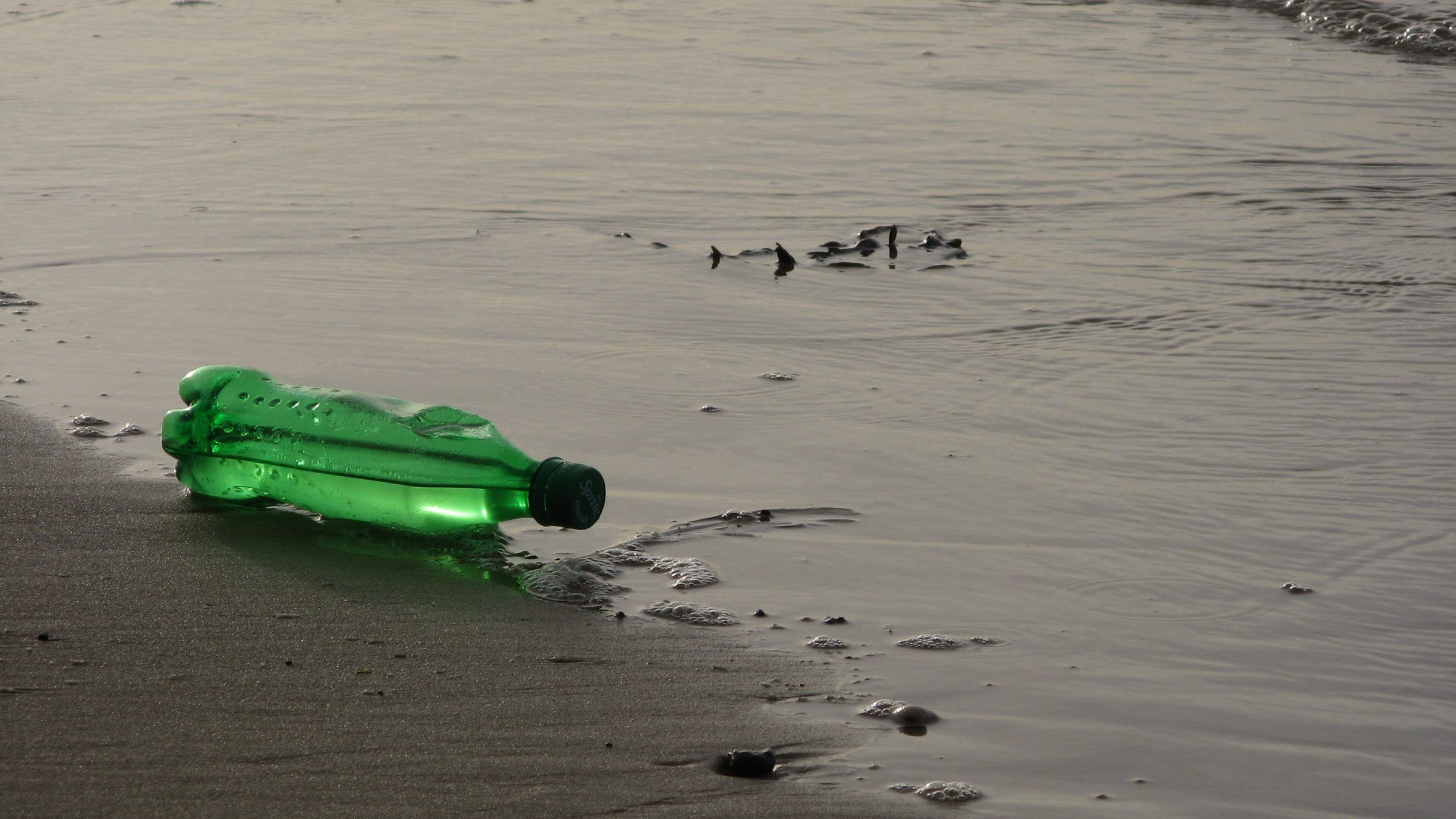
Glass and ceramic are the grown-ups of the kitchen. They don’t shed microplastics, they don’t need a “BPA-free” sticker, and a good glass dish will outlive your phone, your car and possibly your marriage. Swapping plastic containers for them is one of the easiest wins in the kitchen.
But “it’s glass” and “it’s ceramic” aren’t safety certificates. Glass can shatter when it changes temperature too fast. Ceramic glazes can contain lead. Crystal is leaded on purpose. The pretty painted logo on your pint glass may be mostly lead. And the jar that replaced your plastic tub probably has a plastic seal in the lid. Here’s what each material is, where the real problems are, and how to shop around them.
Glass: the easy part, mostly
Ordinary glass, the stuff in jars, drinking glasses and most bakeware, is about as inert as food-contact materials get. When Japanese government scientists tested imported glassware decorated with gold that was leaching lead and cadmium, they traced the metals to the gold decoration, not to the glass itself. That pattern repeats throughout this article: the glass is fine, and the trouble comes from what’s added to it or painted on it.
Borosilicate vs soda-lime
There are two main types of glass in kitchens, and the difference is heat, not chemistry.
- Soda-lime glass is the everyday kind: bottles, jars, most drinking glasses and, in the US, most glass bakeware. It expands quite a lot when heated.
- Borosilicate glass contains boron oxide and expands about a third as much. That’s why it’s used for lab glassware, and why it copes better with sudden temperature changes.
How much better? A 2012 analysis in the Bulletin of the American Ceramic Society used standard engineering formulas to estimate the sudden temperature change each glass can take before it cracks. It came out at about 55°C (99°F) for soda-lime and about 183°C (330°F) for borosilicate, roughly a threefold gap. A textbook method that included heat transfer gave higher numbers for both (about 80°C vs 270°C), but the same threefold gap. The authors noted that none of their calculations suggested soda-lime glass would be likely to survive sudden contact with boiling water.
Neither type leaches anything meaningful into food. The question is whether your casserole dish ends up as shrapnel.
The Pyrex story
For most of the 20th century, “Pyrex” meant borosilicate. Corning introduced it as consumer cookware in 1915, sold as “oven to icebox” glass. Then the glass changed and the name didn’t.
According to the 2012 analysis, Corning switched its cookware to soda-lime glass, and in the late 1990s it left the consumer cookware business and licensed the Pyrex name to other companies. By 2012, the authors reported, Pyrex-branded cookware sold in the Americas was soda-lime, while a separate company made Pyrex-branded cookware for Europe, the Middle East and Africa that was still borosilicate. They checked with an electron microscope: only the European-market glass showed a boron peak. The other major US glass bakeware maker also used soda-lime.
The manufacturers say their soda-lime glass is heat-strengthened, which makes it tougher when dropped. The authors found little sign of it: six new dishes showed no strong residual-stress patterns under polarised light, and broken US dishes produced long, sharp shards instead of the small cubes that properly tempered glass breaks into. Their conclusion was that the safety margin against thermal shock for soda-lime cookware is “borderline” for normal home cooking. One disclosure: the lead author had served as an expert witness in glass cookware lawsuits, which he stated in the article.
This is a 14-year-old analysis, and brand ownership has changed since. The lesson that lasts is that a famous name doesn’t tell you what the glass is. The label might.
What to look for in glass
- For bakeware, kettles and anything going from hot to cold: look for “borosilicate” stated plainly on the product or spec sheet. If it doesn’t say, assume soda-lime and treat it gently.
- For soda-lime bakeware: no hot dish on a wet or cold counter, no cold liquid into a hot dish, no frozen food straight into a hot oven, and no stovetop or broiler use unless the maker says so. Throw out chipped or scratched pieces, because damage weakens glass.
- For storage jars and drinking glasses: soda-lime is fine. The things to check are the decoration and the lid (see below).
Ceramic: the glaze is the question
Ceramic covers earthenware, stoneware and porcelain. Earthenware is porous and needs a glaze, a thin glassy coating, to hold food or liquid. For centuries, potters added lead to glazes because it helps them melt and flow at lower temperatures, and cadmium to make bright reds, oranges and yellows.
The FDA puts it simply: when lead-glazed pottery is fired at the right temperature for long enough, “essentially all the lead is bound into the glaze.” If it isn’t, lead can leach into food. Even potters who have switched to lead-free glazes can contaminate their work by firing it in old kilns used for lead glazes. And the FDA warns that “no amount of washing, boiling, or other process can remove lead from pottery.”
(Not to be confused with “ceramic” nonstick pans, which are metal pans with a coating. That’s a different story, covered in our nonstick pans explainer.)
What US law allows
The US doesn’t ban lead in glazes. It limits how much lead can leach out when the dish is filled with a weak acid for 24 hours. FDA’s limits, unchanged since 2005, depend on the shape of the item:
| Item | Lead limit (µg/mL) | Cadmium limit (µg/mL) |
|---|---|---|
| Flatware (plates, 25 mm deep or less) | 3.0 (average of 6) | 0.5 (average of 6) |
| Small bowls and other small hollowware | 2.0 | 0.5 |
| Cups and mugs | 0.5 | 0.5 (as small hollowware) |
| Large hollowware (1.1 litres or more) | 1.0 | 0.25 |
| Pitchers | 0.5 | No separate category (0.25 or 0.5, by size) |
Sources: FDA’s lead and cadmium compliance policy guides. Cups, mugs and pitchers get the tightest lead limits because they hold hot or acidic drinks.
Pieces that fail can still be sold as decorative if they carry a permanent “Not for Food Use” warning on the base, or have a hole drilled through them. Take that warning literally.
California makes the FDA limits state law: it’s illegal to sell tableware there that releases lead or cadmium above them. California’s Proposition 65 adds a separate warning requirement, and private enforcers use it to go after lead in exterior decorations too. In one 2016 settlement over ceramic jars with decorated exteriors, the seller agreed to limit lead to 90 ppm and 1.0 µg on a surface wipe (without admitting any violation). That’s why so many ceramic listings carry a “Prop 65 compliant” line. It’s useful when backed by test data, and meaningless when it isn’t.
Traditional and handmade pottery: where poisonings happen
Most lead-poisoning cases tied to dishes involve traditional, low-fired, lead-glazed earthenware, often bought abroad or carried home in luggage.
- In New York City, a family of five had blood lead levels of 5 to 53 µg/dL, which health officials linked to cooking, storing food and making coffee in glazed ceramics bought in Mexico (spices and home renovation couldn’t be fully ruled out). The glaze tested at 15.7 mg of lead per square centimetre. After they stopped using the pots, their levels fell to 1–6 µg/dL over 14–16 months. The city’s health department has investigated poisonings linked to ceramics from Ecuador, Mexico, Morocco, Turkey, Uzbekistan and the US.
- A 2026 study bought 33 glazed clay pots in Reynosa, on the Mexico–US border. Seven of the eight tested under the Mexican standard failed it. Acidic dishes cooked in the pots carried a median of 103.4 mg/kg of lead, nine times more than non-acidic dishes.
- Another 2026 study found the inner surfaces of traditional lead-glazed pots were about 20% lead (a median of 202,400 ppm). Rice cooked in them for 30 minutes picked up 1.27 ppm of lead, against a Mexican limit of 0.5 ppm, and acidic liquid left in them for 24 hours reached 637 ppm. Pots made with lead-free glazes, and Talavera ware, released little or none. Both Mexican studies are small, and the blood-lead estimates are modelled, but they agree on what matters: heat, acid and time pull lead out.
“Lead free” stamped on the bottom isn’t proof either. The FDA has said it received reports of traditional Mexican pottery labelled “lead free” that released lead at levels comparable to lead-glazed ware. Its current import alert for unsafe food additives lists hundreds of ceramic and clay foodware entries flagged for lead, including items whose own product descriptions read “Free Lead” and “Lead Free Mud.”
The FDA’s list of “problem types” is the best quick guide: pottery that is handmade with a crude or irregular look, antique, damaged or worn, bought from street vendors or flea markets, or brightly decorated in orange, red or yellow. It says factory-made everyday ware is much less likely to have lead problems.
Handmade pottery from a local studio isn’t automatically suspect, but a potter’s word isn’t a test result. Ask whether the glaze contains lead and whether finished pieces have been leach-tested.
Everyday factory ceramics: mostly fine, watch the rim
Routine testing suggests mass-market ceramics mostly pass. Polish inspectors tested 1,273 samples of ceramics and glassware between 2010 and 2012. Lead and cadmium release was usually below detection, and the few failures were mainly imported items.
The catch is where the decoration sits. In that same survey, most of the high results came from decorated rims of glass drinking vessels. A 2025 study of new and second-hand mugs found the insides released very little: no more than 6 µg/L of lead and 9 µg/L of cadmium over 24 hours. The decorated outer lip, where your mouth goes, released up to about 934 µg/L of lead and 115 µg/L of cadmium, especially where the rim was painted with cadmium-based colours. Regulators test the inside of a cup. The EU doesn’t regulate the lip area at all, and the US limits are written for the food-contact surface. Those exterior numbers come from a different test, so they aren’t directly comparable with FDA’s limits. They still point one way: a plain rim is the safer rim.
Lead crystal and vintage glassware
Crystal is glass with lead oxide added on purpose for sparkle and weight. One commercial crystal analysed in a 2016 study was 28% lead oxide by weight. It’s the one kind of glass where lead release is a feature of the material itself, and the research is clear on what drives it: contact time and acidity.
- Storage is the problem. In a 1991 study, port stored in crystal decanters rose from 89 to 3,518 µg/L of lead after four months. Wines and spirits that had sat in decanters for a long time contained up to 21,530 µg/L.
- That lead gets absorbed. When volunteers drank sherry that had been stored in a crystal decanter, their average blood lead rose from 0.10 to 0.18 µmol/L, and about 70% of the lead they swallowed was absorbed. That was a single dose in a small study, but it shows crystal-derived lead isn’t locked away.
- A quick drink is a smaller deal, but not zero. In tests on crystal wine glasses, about half of the lead released in 30 minutes came out in the first minute. Release fell with repeated refills.
- Rest resets it. A 2024 German study found lead release from crystal fell or held steady over repeated tests, but after a four-month rest it was higher than before. So the crystal that sits in a cabinet all year and comes out for the holidays may release more on its first use.
The practical rule follows the evidence. Drinking from crystal now and then is a small exposure. Storing drinks in it, especially acidic wine or spirits, is a big one. Pregnant people and children should skip it. Vintage and antique glassware deserves extra suspicion, mainly because of how it’s decorated (see below).
Painted glasses: the lead is on the outside
The logo on a beer glass, the colourful pattern on a tumbler, the gold band on a wine glass: these are usually enamels fused onto the outside, and enamels are traditionally made with lead and cadmium.
A 2018 study tested 72 decorated drinking glasses, new and second-hand, including tumblers, beer glasses, shot glasses, wine glasses and jars. Lead turned up in 139 of 197 tests on different colours and areas, at a median of 63,000 µg/g, or about 6% of the paint. Cadmium turned up in 134. When 14 positive glasses were put through a standard test of the decorated lip area, 13 released lead above the 0.5 mg/L limit, and three released more than 100 mg/L. Five broke the cadmium limit. Even with a fizzy cola as the test liquid instead of acid, all five glasses tested still failed for lead. The products were made in China and in Europe.
The fix is easy: use glasses with no decoration within about 2 cm of the rim, which is the zone the test covers. Keep the novelty and souvenir glasses on a shelf.
The lid problem
You’ve moved your leftovers into glass jars. Now look at the lid. Most metal twist-off and canning-style lids have a ring of sealing compound inside, and on many it’s plasticized PVC (a “plastisol”). PVC needs plasticizers to be soft, and those plasticizers don’t stay put when they touch oil.
- In a survey of 69 lids used for oily foods on the European market, epoxidized soybean oil was the main plasticizer in 62% and a phthalate in 25%, and the authors judged that many or possibly all of the compositions were non-compliant.
- Danish inspectors tested 19 jarred foods. Plasticizers from the lid turned up in the food, with phthalates up to 173 mg/kg, highest in garlic and tomatoes in oil, sauce béarnaise and peanut butter. Five unused lids tested against the EU’s overall limit of 60 mg/kg released 76 to 519 mg/kg into an olive-oil simulant, and those products were withdrawn.
- A European survey of jarred baby food found epoxidized soybean oil in 95 of 248 samples, and 4% exceeded 60 mg/kg.
- A 2008 study concluded that migration from PVC gaskets “usually far exceeds the legal limits if the packed food contains some free oil”.
There has been progress: Czech surveys found fewer products over the limit in 2012 than in 2009. But these are European surveys, mostly more than a decade old, and we found no comparable US data. For more on what phthalates do, see our phthalates explainer.
Caps can shed, too. When France’s food safety agency tested drinks, glass bottles were the most contaminated containers, and most particles matched the colour and outer paint of the caps, which the researchers suspected as the main source. We cover that in our bottled water article.
What this means for your jars:
- Keep oily and fatty foods away from the lid. Leave headspace, store jars upright, and don’t fill a twist-off jar to the brim with pesto, oil-packed vegetables or nut butter.
- Prefer seals that aren’t PVC. Glass lids with a separate rubber or silicone ring, swing-tops and all-glass stoppers keep plastisol out of the picture. We found no studies on migration from natural-rubber or silicone jar seals in normal home use. Silicone isn’t inert, and our standards explain how we treat it.
- Don’t heat a sealed jar’s lid. Microwaving and hot filling speed up migration. Our microwave explainer has the details.
- Retire old, cracked or sticky gaskets.
What to do, ranked by evidence
Strongest evidence first:
- Don’t cook in, store food in or drink from traditional lead-glazed pottery or anything marked “Not for Food Use.” This is the only item on this list with documented poisonings, and acidic food makes it much worse. If a family member has used such pottery, ask a doctor about a blood lead test, which the FDA recommends for children.
- Don’t store drinks in lead crystal. Use it for serving, not storing, and skip it if you’re pregnant or serving children.
- Choose drinking glasses and mugs with plain rims. The decorated lip area is where the worst lead and cadmium results turn up, and it’s barely regulated.
- Keep oily food off PVC lid seals. The migration evidence is strong. What it does to health at these doses is less clear.
- Buy borosilicate for oven-to-table, stovetop or kettle use, and handle soda-lime gently. This is about injuries, not chemicals.
- When buying ceramics, ask for a lead and cadmium test result, not just a “lead-free” claim. Our product standard won’t list glazed ceramic, enamel or crystal for food without a published lead and cadmium compliance statement. Home swab kits can flag high-lead surfaces, but a negative swab isn’t a lab leach test.
- Treat vintage, antique and souvenir pieces as decorative unless they’ve been tested.
Where the evidence is thin
- Pyrex and thermal shock rests mainly on one 2012 analysis using textbook calculations, plus consumer testing we couldn’t access. We couldn’t confirm what every brand uses in 2026, so check labels.
- Lip-area exposure is shown in lab tests with acid, not in measurements of what people actually swallow.
- Lid gaskets: good data on what migrates, mostly from Europe and from before 2016. Little is known about non-PVC seals.
- Vintage painted bakeware and dishes: we found no peer-reviewed study measuring lead release from them in normal use, though the enamel findings above give reason for caution.
The bottom line is reassuring. Plain glass and decent, undecorated, factory-made ceramic are still the best swaps for plastic in the kitchen. Just look at what’s painted on them, what they’re glazed with and what’s in the lid.
Sources
- Bradt RC, Martens RL (2012). Shattering glass cookware. American Ceramic Society Bulletin 91(7):33–38.
- The American Ceramic Society (2012). Shattering glass cookware: new paper addresses causes (press release). ScienceDaily, 13 September 2012.
- Hosogai T, Ito S, Sakurai H, et al. (1993). Elution of lead and cadmium from imported gold-decorated glassware. Eisei Shikenjo Hokoku (Bulletin of National Institute of Hygienic Sciences).
- US Food and Drug Administration (2005). CPG Sec. 545.450 Pottery (Ceramics); Import and Domestic – Lead Contamination. FDA Compliance Policy Guide.
- US Food and Drug Administration (2005). CPG Sec. 545.400 Pottery (Ceramics); Import and Domestic – Cadmium Contamination. FDA Compliance Policy Guide.
- US Food and Drug Administration (2010). Questions and Answers on Lead-Glazed Traditional Pottery. FDA (content current as of 27 October 2017).
- US Food and Drug Administration (2026). Import Alert 99-45: Detention Without Physical Examination of Food Products That Are or Contain an Unsafe Food Additive. FDA import alert (published 10/09/2026).
- Castellanos-Carrizal C, Castillo-Ruiz O, Ramírez-Quintanilla LY, Carrizales-Yañez L, et al. (2026). Enhanced leaching of soluble lead by cooking acidic food in glazed pottery sold at the Mexico-US border. Journal of Public Health Management and Practice.
- Cantoral A, Betanzos-Robledo L, Sefton E, Valverde F, et al. (2026). Lead leaching from traditional Mexican ceramics during cooking and implications for population health risk. Science of the Total Environment.
- Hore P, Alex-Oni K, Bardhi N, Sedlar S (2022). Notes from the field: lead poisoning in a family of five resulting from use of traditional glazed ceramic ware — New York City, 2017–2022. MMWR Morbidity and Mortality Weekly Report 71(22):743–744.
- Rebeniak M, Wojciechowska-Mazurek M, Mania M, Szynal T, Strzelecka A, Starska K (2014). Exposure to lead and cadmium released from ceramics and glassware intended to come into contact with food. Roczniki Państwowego Zakładu Higieny.
- Turner A (2025). Migration kinetics of cadmium and lead from ceramic mugs. Journal of Hazardous Materials.
- State of California (1996). Health and Safety Code §108860 (Control of Lead Release from Tableware). California Health and Safety Code, Div. 104, Part 3, Ch. 9.
- California Attorney General (Proposition 65 settlement filing) (2016). Settlement agreement: ceramicware with exterior designs containing lead. Proposition 65 settlement 2016-00151S5040.
- Angeli F, Jollivet P, Charpentier T, Fournier M, Gin S (2016). Structure and chemical durability of lead crystal glass. Environmental Science & Technology 50(21).
- Graziano JH, Blum C (1991). Lead exposure from lead crystal. The Lancet 337:141–142.
- Graziano JH, Blum CB, LoIacono NJ, et al. (1996). A human in vivo model for the determination of lead bioavailability using stable isotope dilution. Environmental Health Perspectives 104(2):176–179.
- Hight SC (1996). Lead migration from lead crystal wine glasses. Food Additives and Contaminants 13(7).
- von Leliwa S, Schmidt R, Andrievskih S, Tietz T, Merkel S, Luch A, Kappenstein O (2024). Element release from lead crystal ware and metallic hip flasks. Food Additives & Contaminants: Part A.
- Turner A (2018). High levels of migratable lead and cadmium on decorated drinking glassware. Science of the Total Environment 616–617.
- Chaïb I, Doyen P, Merveillie P, Dehaut A, Duflos G (2025). Microplastic contaminations in a set of beverages sold in France. Journal of Food Composition and Analysis 144:107719. Our summary
- Biedermann-Brem S, Biedermann M, Fiselier K, Grob K (2005). Compositional GC-FID analysis of the additives to PVC, focusing on the gaskets of lids for glass jars. Food Additives and Contaminants 22(12).
- Pedersen GA, Jensen LK, Fankhauser A, Biedermann S, Petersen JH, Fabech B (2008). Migration of epoxidized soybean oil (ESBO) and phthalates from twist closures into food and enforcement of the overall migration limit. Food Additives & Contaminants: Part A 25(4).
- Fantoni L, Simoneau C (2003). European survey of contamination of homogenized baby food by epoxidized soybean oil migration from plasticized PVC gaskets. Food Additives and Contaminants 20(11).
- Biedermann M, Fiselier K, Marmiroli G, Avanzini G, Rutschmann E, Pfenninger S, Grob K (2008). Migration from the gaskets of lids into oily foods: first results on polyadipates. European Food Research and Technology.
- Hanušová K, Vrbík K, Rajchl A, Dobiáš J, Sosnovcová J (2015). Migration of epoxidised soybean oil from PVC gaskets of commercial lids: simulation of migration under various conditions and screening of food products from Czech markets. Food Additives & Contaminants: Part A 32(3).
Spotted an error? Tell us and we'll correct it and note the change.