Paper, plastic or cotton bags: what the life-cycle studies actually say
Why a cotton tote needs '131' or '7,100' uses depending on who's counting, what those studies leave out, and what bag bans and charges really did to litter, paper and bin-bag sales.
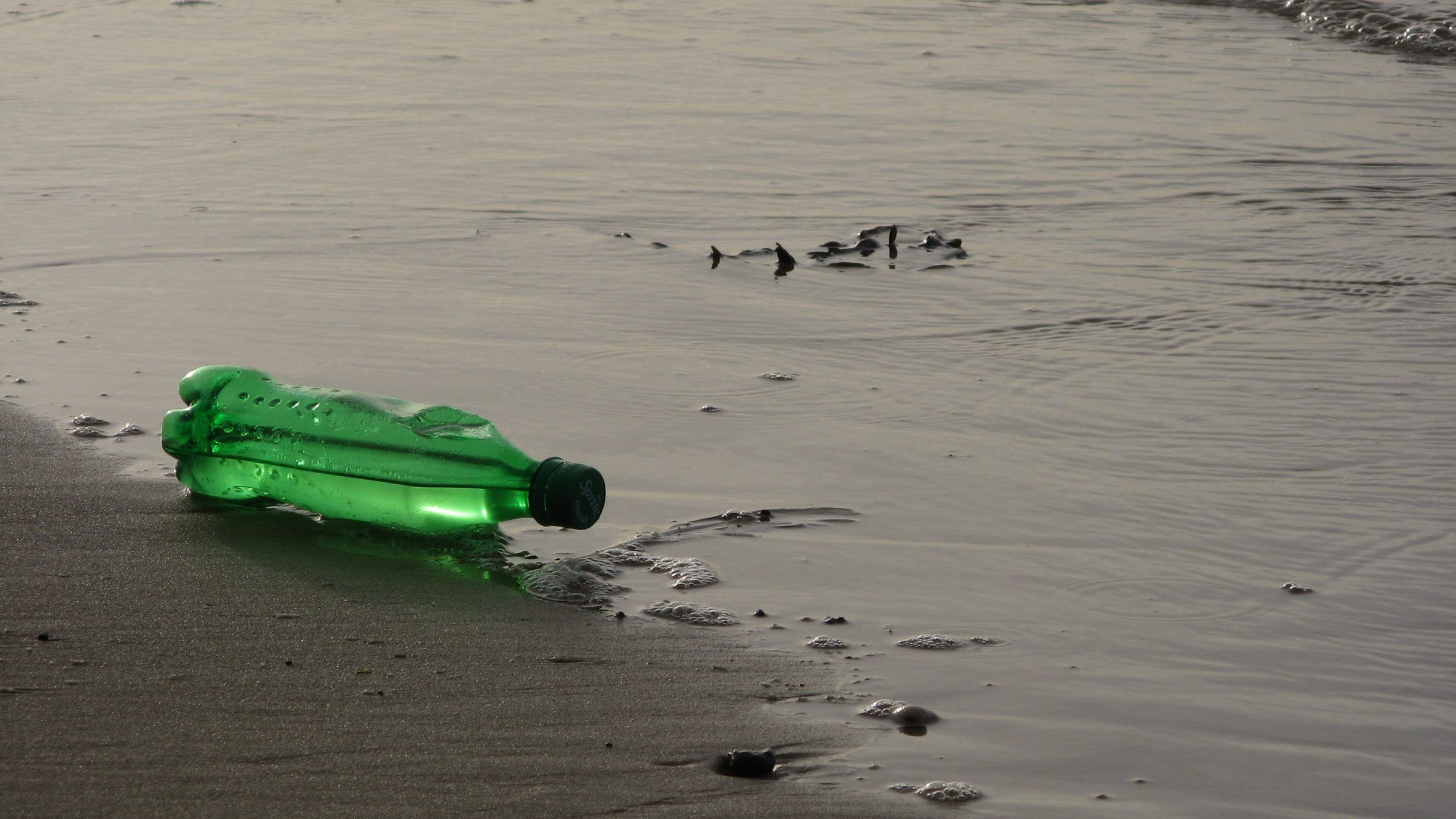
You’re at the till, the bag question comes up, and whatever you say feels wrong. Plastic? Turtles. Paper? Trees, and the handles snap. The cotton tote? Somebody on the internet told you it has to be used 7,100 times, and you’ve used yours four.
All three bags have a footprint, and the studies behind the famous numbers measure different things. Once you see what each one counts, the answer gets much simpler.
Bags come up all over this site, so this piece won’t repeat what’s covered elsewhere: produce bags are in our grocery shopping guide, “biodegradable” bags that still hold shopping after three years are in our bioplastics guide, and the laws themselves are on our policy tracker, with a short list of which countries ban what in our FAQ.
What a bag life-cycle study measures
A life-cycle assessment (LCA) adds up the environmental cost of a product from raw material to disposal: growing the cotton or pumping the oil, making the bag, shipping it, and burning, burying or recycling it. It then turns that into scores for a list of impacts: climate change, water use, acidification, ozone depletion, toxicity and so on.
For bags, the question is usually: how many times must a heavier reusable bag be used before its footprint per shopping trip drops below a thin plastic bag’s? That’s where the “131 times” and “7,100 times” numbers come from. They are break-even points, not lifetimes.
Three studies dominate the debate:
- England’s Environment Agency (2011). It compared seven types of carrier bag, nearly all of them sold in UK supermarkets in 2006/07, against a conventional thin HDPE carrier.
- Denmark’s Environmental Protection Agency (2018). It compared 14 bag types sold in Danish supermarkets in 2017, against an average LDPE carrier, across 15 impact categories.
- The UN Environment Programme (2020). Rather than run a new study, it reviewed seven bag LCAs published in English since 2010: four from Europe, two from Asia and one from North America.
How many uses each bag needs
Here is what each study says a reusable bag needs to match one thin plastic bag. These are minimum numbers of uses for shopping.
| Bag | UK, climate only (2011) | Denmark, climate only (2018) | Denmark, all indicators (2018) | UNEP review (2020) |
|---|---|---|---|---|
| Paper | 3 | 0 to 1 | 43 | 4 to 8 |
| Thicker polyethylene (“bag for life”) | 4 | 1 (recycled LDPE) | 2 (recycled LDPE) | 5 to 10 |
| Non-woven polypropylene | 11 | 6 | 52 | 10 to 20 |
| Conventional cotton | 131 | 52 | 7,100 | 50 to 150 |
| Organic cotton | not studied | 149 | 20,000 | not given |
Sources: Environment Agency, executive summary; Danish EPA, Table IV; UNEP, executive summary and recommendations. The UK figures compare against a plastic bag used once and then thrown away. The Danish figures compare against a plastic bag reused once as a bin liner. UNEP’s cotton, polypropylene and polyethylene ranges are for climate; its paper range (4 to 8) is the number of uses at which reusable bags beat a single-use plastic bag in most impact categories, not climate alone.
On climate alone, the studies broadly agree. Thin plastic carriers are light, and light things are cheap to make and move. A cotton bag needs somewhere between about 50 and 150 trips to catch up. In the UK and Danish studies, paper needs a handful or fewer.
Why the cotton tote figure ranges from 52 to 20,000
The headline numbers differ because the studies ask different questions.
Which impacts count. The 7,100 figure is the number of uses before a cotton bag beats an LDPE bag on every one of 15 indicators at once. The bag has to win even on its worst category. The Danish authors say plainly that the very high cotton numbers are “primarily due only to the ozone depletion impact category”, where their cotton-growing dataset scored badly. On climate, the same study says 52. Quoting 7,100 as “the climate cost of a tote bag” is wrong.
What you compare against. The UK study’s thin HDPE bag weighed 8.12 grams. The Danish reference was an average LDPE carrier sized to carry 22 litres and 12 kilograms of shopping. UNEP points out that weight drives everything: a bag of the same material but double the weight has double the impact unless it’s used more.
What happens to the plastic bag afterwards. Reusing a thin carrier as a bin liner is counted as a win for it, because it saves buying a bin bag. In the UK study, the cotton bag’s break-even rose from 131 to 173 uses if 40.3% of plastic bags were reused as bin liners, and to 327 if all of them were.
Bag size and design. The Danish organic cotton bag was too small to hold the reference load, so the model needed two of them per trip. That doubling, plus organic cotton’s lower crop yields, is why the organic bag’s numbers (149 for climate, 20,000 for everything) are so much higher than conventional cotton’s. The report’s own sensitivity analysis says the choice of reference flow was decisive for organic cotton. It says more about that bag than about organic cotton.
Where the waste goes. In countries that burn waste, paper and cotton bags release plant carbon, while plastic releases fossil carbon. Where waste is landfilled, rotting paper and cotton make methane. UNEP found paper bags usually have the bigger climate impact, but can beat plastic on climate if the plastic bag is heavy, the mills use renewable fuel, the paper bags are reused, or waste is incinerated rather than landfilled.
How old the data is. The UK study modelled bags available in 2006. UNEP notes that most of its seven LCAs were five to ten years old when it reviewed them, with some input data significantly older.
What the studies leave out: litter and the sea
Here’s the part the “plastic bags are greener” crowd tends to skip. Neither of the two studies that produced the famous numbers counted litter.
- The Environment Agency study says it does not consider “the effects of littering”.
- The Danish study says littering effects “were considered negligible for Denmark and not considered”.
That’s a reasonable choice for a rich country with good waste collection. It isn’t a statement about the world. When UNEP pulled the seven studies together, it found the single-use plastic bag is “a poor option in terms of litter on land, marine litter and microplastics”, even though it scores well on climate, acidification, eutrophication, water use and land use. UNEP adds that bags are a significant share of litter but a very small share of total climate change. And it says the case against single-use plastic bags is stronger in countries with weak waste collection, where littering is greater.
Litter is a real harm, not a matter of looks. In an expert survey on threats to seabirds, sea turtles and marine mammals, plastic bags ranked among the greatest entanglement risks (with fishing gear and balloons) and, with plastic utensils, the greatest ingestion threats. That’s expert judgement, not a body count, but it points the same way as the cleanup data below.
A paper bag that blows into a river breaks down. A plastic one breaks into smaller plastic. Life-cycle studies have no good way to score that yet, so they mostly leave it out. That doesn’t mean it scores zero.
What bag bans and charges actually did
Policies are judged on what they target. For bags, that’s mostly litter and waste, and on that the evidence is good.
Litter went down. A 2025 study in Science used data from 45,067 shoreline cleanups across the US, comparing places with and without bag policies. Bans and fees cut plastic bags’ share of collected litter by 25 to 47%, and taxes may have cut shoreline litter further. It’s observational, and it measures bags’ share of items rather than tonnes, but the patchwork of local laws gives it a lot of comparisons to work with. On the seabed, 25 years of UK surveys (39 surveys, 2,461 trawls) found no overall trend in plastic litter. Of the few categories with a clear trend, all were rising except plastic bags in the Greater North Sea, which fell. The authors don’t pin that on any one policy.
Bag numbers collapsed in England. Since 5 October 2015, large shops in England have had to charge for single-use plastic carrier bags; the charge rose from 5p to 10p and covered all shops from 21 May 2021. In the year to April 2026, the seven main supermarkets sold 126 million single-use bags, down 90% since 2016-17; four of the seven reported selling none at all. Against the 7.6 billion they handed out in 2014, Defra puts the drop at 98%. As of November 2026, the 10p minimum applies to plastic bags 70 microns thick or less.
But some of the plastic moved. Three leaks show up again and again:
- Thicker “reusable” plastic bags. England’s charge doesn’t cover woven bags or bags for life replaced free, and the bag for life became the new default for many shoppers. An NGO survey found the top ten UK supermarkets issued more than 1.58 billion plastic bags for life in 2019, almost 57 per household, up 4.5% on the year before. A “bag for life” bought every week is a heavier single-use bag. California had the same problem: its 2014 ban allowed stores to sell thicker plastic bags, which the author of the 2024 law that closed the loophole blamed for rising plastic bag waste. As of November 2026, California grocery, pharmacy, convenience and liquor stores may provide only recycled paper checkout bags, for at least 10 cents. The policy tracker has the details and figures.
- Bin bags. People used to reuse carrier bags as bin liners. Take away the free ones and they buy bin bags instead. A study of California’s local bans found that cutting 40 million pounds of plastic carrier bags was offset by 12 million pounds more bin-bag purchases, with sales of small bin bags up 120%. Before the bans, 12 to 22% of carrier bags were already being reused as bin liners. By our arithmetic from those two figures, about 70% of the plastic cut was a real cut, not 100%, and that’s before counting the extra paper.
- Paper. Where plastic is banned and paper merely charged, paper fills the gap. In Bay Area stores, a plastic ban led to significant increases in paper bag use, with the author’s later write-up putting the rise at 47 percentage points. Given the LCAs above, swapping one single-use bag for a heavier single-use bag trades litter for carbon. UNEP warns about exactly this: bans that favour other single-use options result in environmental trade-offs.
Our reading of the evidence from both sides of the Atlantic: charge for every bag at the till, including paper and thick plastic, and the habit changes. Ban only the thinnest one and the plastic finds a way round.
Bags in proportion
Bags are a good target because they’re visible, easily replaced and prone to blowing away. They aren’t the main event. The Great Pacific garbage patch is mostly fishing gear, not shopping bags, and UNEP calls bags a very small share of total climate change. Bag policies work best as a first step towards less packaging, not a substitute for it. Our packaging industry piece explains why the focus on what shoppers carry home suits the companies making the packaging inside the bag.
What to do at the till
Ranked by how solid the evidence is:
- Use the bags you already have, for as long as they last (strong evidence). Every LCA agrees the number of uses is what matters. UNEP’s summary line: “The shopping bag that has the least impact on the environment is the bag the consumer already has at home.”
- Don’t collect tote bags (strong evidence). A free tote from every conference is a bag that will never reach its 50 to 150 trips. Say no to them. Our budget guide makes the same point about buying new reusables.
- Don’t treat a bag for life as a weekly purchase (good evidence). It’s a heavier plastic bag. If you forgot yours, a paper bag you then reuse, or a box from the shop, is a reasonable fallback.
- If you must take a single-use bag, give it a second life (good evidence). Reuse as a bin liner counts in its favour in both the UK and Danish studies.
- Back charges on all bags, not bans on one (moderate evidence). Fees and bans both cut litter; designs that leave paper free or thick plastic cheap leak.
If a reusable bag is synthetic (polyester or polypropylene), it’s plastic. Our product standard excludes textiles more than 5% synthetic, so if we ever vet a bag, it will be cotton, jute or another natural fibre, and we’ll still want you to use it hundreds of times.
Common questions
Is a paper bag better than a plastic one?
On climate, usually not: UNEP’s review found paper bags in most cases have a larger impact on the climate than a thin plastic bag, though they contribute less to litter. UNEP puts the number of uses at which a paper bag beats a single-use plastic one in most impact categories at 4 to 8, so a paper bag you reuse several times closes most of the gap.
Can I recycle plastic bags?
Usually not in a household recycling bin today, although that is changing in some places. As of November 2026, councils in England must start collecting plastic film and bags with household recycling by 31 March 2027; our cheese article has the source. Elsewhere, check local rules, and read our recycling guide before trusting a label.
Sources
- Edwards C, Fry JM (Environment Agency) (2011). Life cycle assessment of supermarket carrier bags: a review of the bags available in 2006 (Report SC030148). Environment Agency (England and Wales).
- Bisinella V, Albizzati PF, Astrup TF, Damgaard A (eds.), Danish Environmental Protection Agency (2018). Life Cycle Assessment of grocery carrier bags (Environmental Project No. 1985). Danish Environmental Protection Agency.
- United Nations Environment Programme, Life Cycle Initiative (2020). Single-use plastic bags and their alternatives: Recommendations from Life Cycle Assessments. UNEP.
- Papp A, Oremus KL (2025). Plastic bag bans and fees reduce harmful bag litter on shorelines. Science 388: eadp9274.
- Maes T, Barry J, Leslie HA, Vethaak AD, et al. (2018). Below the surface: Twenty-five years of seafloor litter monitoring in coastal seas of North West Europe (1992-2017). Science of the Total Environment 630: 790-798.
- Wilcox C, Mallos NJ, Leonard GH, Rodriguez A, Hardesty BD (2016). Using expert elicitation to estimate the impacts of plastic pollution on marine wildlife. Marine Policy 65: 107-114.
- Department for Environment, Food and Rural Affairs (2026). Single-use plastic carrier bags charge: data for England 2025 to 2026. GOV.UK.
- Department for Environment, Food and Rural Affairs (2026). Carrier bag charges: retailers' responsibilities. GOV.UK.
- Environmental Investigation Agency, Greenpeace UK (2021). Checking Out on Plastics III. EIA / Greenpeace UK.
- Taylor RLC (2019). Bag leakage: The effect of disposable carryout bag regulations on unregulated bags. Journal of Environmental Economics and Management 93: 254-271.
- Taylor RLC, Villas-Boas SB (2016). Bans vs. Fees: Disposable Carryout Bag Policies and Bag Usage. Applied Economic Perspectives and Policy 38(2): 351-372.
- Taylor RLC (2017). It's Not Easy Being Green: Lessons from Disposable Carryout Bag Regulations (PhD dissertation). University of California, Berkeley (eScholarship).
- Office of Senator Catherine Blakespear (2024). Governor signs legislation to ban plastic bags at grocery store checkouts. California State Senate.
Spotted an error? Tell us and we'll correct it and note the change.