Cleaning with less plastic: refills, microfibre cloths and sponges
Spray bottles, plastic sponges and microfibre cloths all shed or waste plastic. What the evidence says about refill tablets, concentrates, cloths and sponges, and where it runs out.
Cleaning is the one household chore where the plastic is the point of the product. The bottle is plastic, the trigger is plastic, the sponge is plastic foam glued to a plastic scouring pad, and the miracle cloth is plastic split so fine it grabs dust. Then most of it goes in the bin or down the drain.
Some swaps here are well supported. Others are sold harder than the evidence allows. Here’s which is which, and where the research simply hasn’t been done.
Refill tablets and concentrates: the shipping-water logic
A ready-to-use spray cleaner is a small amount of cleaning chemistry diluted in water, sold in a new plastic bottle with a new plastic trigger, and driven to a shop. A tablet or concentrate asks you to add the water from your own tap to a bottle you already own.
Does that matter? The best data we found comes from the cleaning industry itself, so read it with that in mind. A.I.S.E., the European detergent industry body, commissioned life-cycle studies of common products, carried out with consultants and staff from Unilever, Henkel and Procter & Gamble. For bathroom trigger sprays, the biggest drivers of environmental impact were plastic packaging, transport to the retailer and specific ingredients. For window sprays, packaging alone accounted for 57% of the climate impact and about two-thirds of the energy used across the product’s life. Transport to retail was the largest source of acid-rain-type pollution from bathroom sprays.
For laundry and dishwashing detergents, by contrast, the same studies found the big impacts came from heating water and from dosing. That’s the key distinction. For sprays, the container and the trucking are a large part of the product’s footprint, which is exactly what refills cut.
The EU’s own ecolabel bakes in the same logic. To carry the EU Ecolabel, a hard-surface cleaner’s spray bottles must be refillable and reusable, and the packaging limit for concentrates is a tenth or less of that for ready-to-use products: 15 grams of packaging per litre of cleaning solution, against 150 to 200 grams.
The ecolabel also rewards the reuse itself. Its packaging formula gives a container a better score if the maker can show it’s reused for the same purpose and sells refills for it. In other words, the EU’s rulebook already treats “buy the bottle once, then buy the cleaning part” as the better design. It just doesn’t require it.
The catches
- It only works if you reuse the bottle. A tablet bought with a new plastic bottle every time saves the shipping weight but not the bottle.
- Check the wrapper. Some tablets and pods come individually wrapped in plastic film or in dissolvable PVA film (more on that below). A “refill” in a plastic sachet still means plastic.
- Dose properly. More product than you need doesn’t clean better. For laundry, dosage was one of the main drivers of impact in the industry studies.
- We found no independent study comparing tablets or concentrates with ready-to-use sprays head-to-head. The logic is sound and the industry’s own numbers support it, but nobody without a stake has measured it. If you know of one, tell us.
What we’d require of a refill product is a gap in our product standard right now, so we don’t list any yet.
Dishwasher and laundry tablets
Many dishwasher tablets and almost all liquid laundry pods are wrapped in polyvinyl alcohol (PVA), a water-soluble plastic film. Whether that film fully biodegrades after it dissolves is a genuine scientific fight, with money on both sides. We’ve covered it in detail in our explainer on laundry pods and PVA, so we won’t repeat it here.
The short version for dishwashers: the same study that started the PVA argument estimated Americans use around 12 billion dish pods a year, on top of the laundry pods. If you want to sidestep the question entirely, unwrapped powder or tablets in a cardboard box avoid both the film and the plastic tub. Some tablets are wrapped in conventional plastic film you peel off; that’s just single-use plastic.
Microfibre cloths: probably shedding, nobody’s measured
Microfibre is plastic. The term covers very fine synthetic fibres, typically polyester and nylon, one denier or finer. That fineness is why the cloths pick up dirt so well with just water.
Here’s the problem: we couldn’t find a single published study measuring how many fibres household microfibre cleaning cloths shed in the wash or in use. Plenty of studies cover clothing, and they consistently find synthetic fabrics shed. Real household washing of synthetic garments released 124 to 308 mg of microfibres per kilogram of fabric. In clothing studies, loose, fuzzy fabrics made of short fibres shed most. It’s reasonable to expect cleaning cloths to shed too. It’s not measured, so we won’t put a number on it. Our synthetic clothing explainer covers the laundry evidence and the filters that catch fibres.
A related clue comes from disposable wipes. In lab tests on non-woven wipes, dry wipes shed 77 to 568 fibres per sheet, against 21 to 190 for wet ones, and shedding rose with more wiping and harder pressure. Those were disposable wipes, not reusable cloths, but the direction is plausible for any synthetic cloth: dry, hard scrubbing sheds more.
Do microfibre cloths at least clean better? When new, maybe. In one hospital lab study, microfibre cloths removed the most bacteria when new, but after 10 and 20 hot washes, cotton cloths did best overall. That’s one study on tiles, not your kitchen counter, but it undercuts the idea that you need microfibre to clean properly.
Our standard excludes cleaning cloths that are more than 5% synthetic, which rules out microfibre. If you already own microfibre cloths, don’t throw them away; that’s waste too. Use them until they wear out, wash them in full, cool loads, and replace them with cotton or linen.
Sponges: the study, finally
The classic yellow-and-green kitchen sponge is polyurethane foam with a scouring pad, usually synthetic too, glued on top. It wears away as you scrub, and the worn-off bits go down the drain.
Until this year, there was very little measurement of that for ordinary kitchen sponges. A 2026 study from the University of Bonn and partners combined lab abrasion tests with households in Germany and North America using different sponges. It found sponges release between 0.68 and 4.21 grams of microplastic per person per year, depending on the type. The sponge with the least plastic (15.9% by weight, sold as “organic”) released the least. A sponge with more plastic (59.3%) released more.
Two things stand out:
- “Organic” didn’t mean plastic-free. The best performer in the study was still about one-sixth plastic. Read what each layer is made of, not the word on the front.
- Your tap matters more than your sponge. The study’s life-cycle analysis found most of the environmental damage from hand washing-up came from the water, not the sponge. The university put water’s share at 85 to 97% of the total impact. Fill a bowl or a sink. Don’t wash under a running tap.
Grams per year sounds small, and per person it is. Scaled up, the Bonn team estimated up to 355 tonnes a year for Germany if every household used one particular sponge type. The university says most is retained at sewage works, but several tonnes a year still reach water or soil.
Melamine “magic erasers”
Melamine foam sponges work by being abrasive, which means they’re designed to wear away. In a lab study, worn melamine sponges released 6.5 million microplastic fibres per gram of sponge lost, more on rougher surfaces. A follow-up found those fibres killed water fleas in a concentration-dependent way over 21 days, though not in 24 hours. That’s an animal lab study, not evidence of harm to people. We cover magic erasers alongside other kitchen swaps in our kitchen guide.
Whatever you use, it gets dirty
A sponge is a damp, food-soaked foam that sits by the sink for weeks, and microbes love it, whatever it’s made of. When researchers tested 98 sponges from people’s homes, they found high and very variable contamination, including Enterobacteriaceae and Pseudomonas, and a sponge’s appearance didn’t predict how contaminated it was. Swapping plastic for cellulose doesn’t change that. What helps is something you can clean hard: cotton dishcloths survive a hot wash, and the hospital study above put cloths through 20 cycles at 90 °C. Wring sponges out, let them dry, and replace them regularly; a cellulose sponge can go in the compost or bin when it’s done.
What to use instead
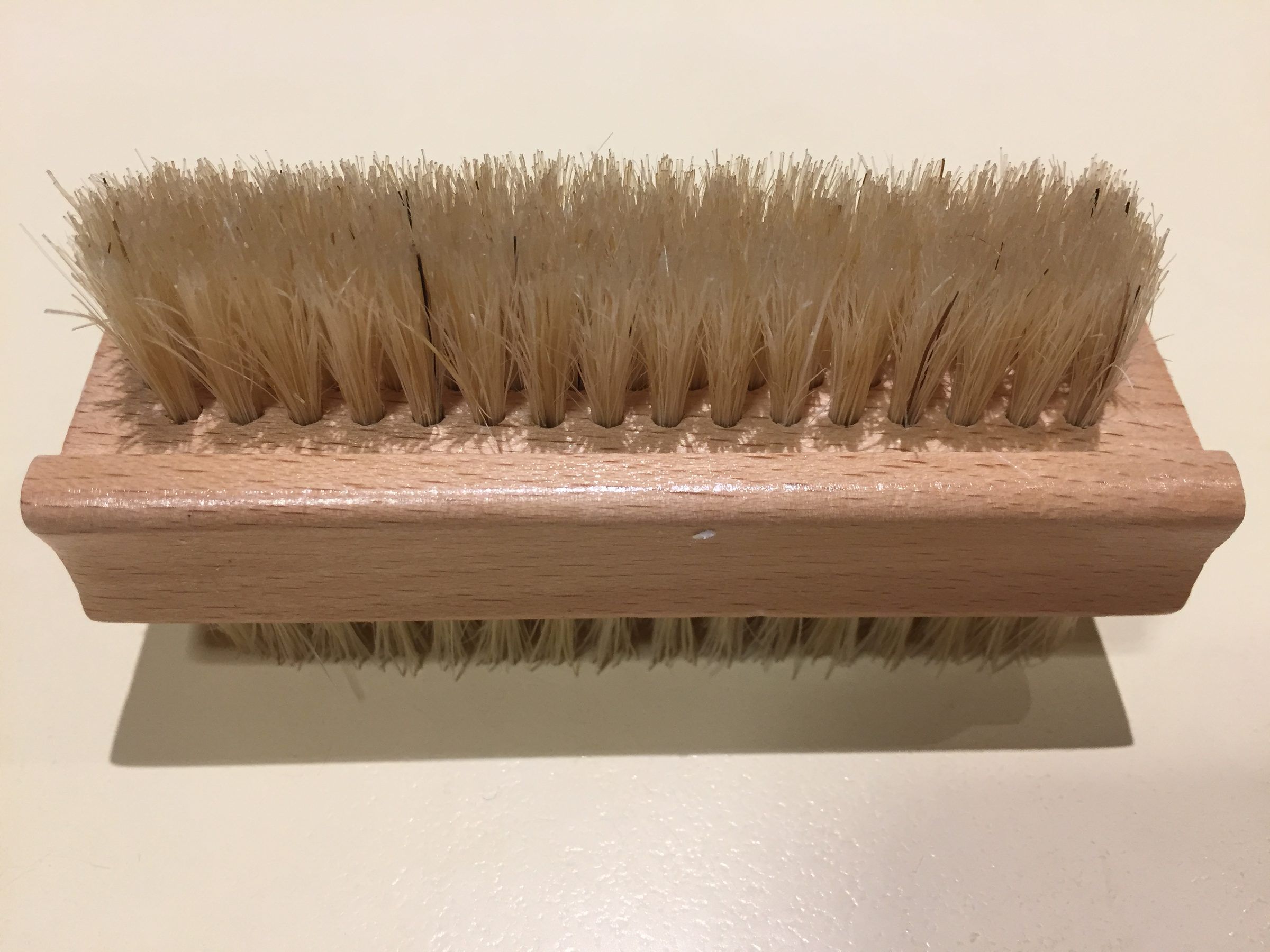
Regenerated cellulose sponges (made from wood pulp, often reinforced with cotton), cotton or linen dishcloths, and brushes with wooden handles and plant-fibre bristles. Our standard lists sponges and brushes only when every layer is named and the packaging is plastic-free, because the scrubbing side is often the plastic part.
Disinfecting wipes and antibacterial sprays
For most homes, most of the time, these are overkill. The US Centers for Disease Control and Prevention says cleaners with soap or detergent remove germs and dirt, and that “In most situations, cleaning regularly is enough to prevent the spread of germs”. It advises disinfecting mainly when someone at home is sick or at higher risk.
Disposable cleaning wipes are also on their way out in the UK. The coming ban on plastic-containing wipes covers household cleaning wipes, including wet-mop pads. Our wet wipes explainer has the dates and what the ban misses.
What you can actually do
Ranked by how strong the evidence is:
- Don’t wash up under a running tap. The best-supported finding in this piece: in the sponge study, water use dwarfed the sponge’s own impact. It also saves money.
- Clean with soap or detergent and a washable cloth; save disinfectant for illness. Official health guidance supports this, and it cuts out a whole category of single-use plastic.
- Swap synthetic sponges for cellulose sponges, cotton dishcloths or wooden brushes. Lower-plastic sponges shed less in the one study of ordinary kitchen sponges we found. Check every layer.
- Skip melamine erasers, or use them rarely. They’re built to wear away, and the lab evidence on what they shed is clear.
- Refill one spray bottle instead of buying new ones. Use tablets or concentrates, and avoid ones wrapped in plastic. Strong logic and industry data support it; independent studies are missing.
- Replace microfibre cloths with cotton or linen as they wear out. This is precaution: they’re plastic, but how much they shed hasn’t been measured.
- For dishwasher and laundry tablets, read our PVA explainer and decide for yourself. Unwrapped powder in cardboard avoids the question.
On a budget? Most of these cost nothing or save money. See less plastic on a budget for more.
Sources
- Golsteijn L, Menkveld R, King H, Schneider C, Schowanek D, Nissen S (2015). A compilation of life cycle studies for six household detergent product categories in Europe: the basis for product-specific A.I.S.E. Charter Advanced Sustainability Profiles. Environmental Sciences Europe.
- European Commission (2017). Commission Decision (EU) 2017/1217 establishing the EU Ecolabel criteria for hard surface cleaning products. Official Journal of the European Union L 180/45.
- Rolsky C, Kelkar V (2021). Degradation of Polyvinyl Alcohol in US Wastewater Treatment Plants and Subsequent Nationwide Emission Estimate. International Journal of Environmental Research and Public Health.
- Hamann L, Galafton C, Rühr PT, Blanke A, Thonemann N (2026). From sink to sea: Microplastic release from kitchen sponges and potential environmental effects. Environmental Advances.
- University of Bonn (2026). Kitchen sponges release microplastics (press release 045/2026). uni-bonn.de (17 March 2026).
- Su Y, Yang C, Wang S, Li H, Wu Y, Xing B, Ji R (2024). Mechanochemical Formation of Poly(melamine-formaldehyde) Microplastic Fibers During Abrasion of Cleaning Sponges. Environmental Science & Technology.
- Li H, Song W, Wang S, Wang Y, Ma Y, Su Y, Ji R (2025). Ingestion of melamine cleaning sponges-derived microplastic fibers affects the survival and reproduction of Daphnia magna. Ecotoxicology and Environmental Safety.
- University of Washington, Department of Environmental & Occupational Health Sciences (2011). Microfiber fact sheet. deohs.washington.edu.
- De Falco F, Di Pace E, Cocca M, Avella M (2019). The contribution of washing processes of synthetic clothes to microplastic pollution. Scientific Reports.
- Li F, Ni Y, Cong J, Shen C, Ji P, Wang H, Yin L, Xu C (2022). Wiping conditions and fabric properties influenced the microfiber shedding from non-woven products. Environmental Science: Processes & Impacts.
- Diab-Elschahawi M, Assadian O, Blacky A, et al. (2010). Evaluation of the decontamination efficacy of new and reprocessed microfiber cleaning cloth compared with other commonly used cleaning cloths in the hospital. American Journal of Infection Control.
- De Lella A, Nappi R, Anzalone A, et al. (2026). Microbiological contamination of domestic kitchen sponges and associated hygiene practices. Frontiers in Microbiology.
- US Centers for Disease Control and Prevention (2025). When and how to clean and disinfect your home. cdc.gov (page dated 31 January 2025).
- Department for Environment, Food & Rural Affairs (2025). Plastic wet wipes ban. GOV.UK guidance (published 17 December 2025).
Spotted an error? Tell us and we'll correct it and note the change.